I am thrilled that you have taken some time out of your busy mama schedule to tune in and listen to our conversation today.
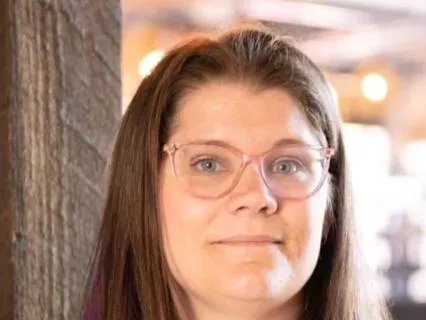
Today we are joined by Monica.
Welcome.
Welcome to me.
Thank you so much.
I'm so glad to be here.
Yeah,
I'm thrilled to have you on the show today.
I'm looking forward to our conversation.
So Let's dive right in,
Shall we?
Yeah,
That'd be great.
Could you share a little bit of your story and what brought you to work in the space?
Yes,
It's a bit of a trifold story,
I would say.
The first part of this is I spent a big chunk of my life aspiring to be a perfectionist.
And that worked pretty well.
For a big chunk of it.
Like I was that overachieving perfectionist that everyone was like,
Oh,
Wow.
Like,
How do you do it?
Like you have all these achievements,
Like you're a straight A student and you do all these extracurriculars.
Like this was all growing up.
Um,
But that really hit a fever pitch in college for me.
And while on the outside,
I looked like everything in my life was together.
On the inside,
I was completely falling apart.
And so I went into therapy,
I checked myself in and got some immediate help.
It was one of those times where I hope this doesn't happen to like any person,
But maybe other people can relate.
I went to the counseling office at my university and filled out an intake form and handed it over the counter.
And they said,
Sit down for a few minutes while we review it.
I'm like,
Okay.
And they called me back up to the front desk and they said,
Please come in.
They don't do that.
They don't just let you come right in.
Like normally it's an intake and they're like,
Okay,
Great.
Well,
We'll schedule you.
We'll see you in like a week or two or,
You know,
On a state.
But it was like,
Please come right in.
Like it was an immediate,
We need to get this girl help.
This minute.
And I say that because it was a very significant time in my life where everything crumbled down about who I thought I was,
What I thought mattered,
And also how to be a person and doing the things that I thought mattered.
So my perfectionistic model kind of got diced apart.
And because of that,
I went into these years,
Honestly,
A decade where I was terrified to try.
For things that matter to me personally.
For my work,
I was a teacher before I became a mom,
And then I became a stay-at-home mom with my kids.
For those things I could show up.
I could do my responsibilities and fulfill them.
But for myself,
For my own habits and hobbies and passions and goals,
Everything was on the sidelines because I had paid too steep a price before.
And I thought the only way to get those things or to work on things or to improve or to change is the all of the all or nothing model.
And then around 30,
So 10 years later,
This is the second fold.
I was in the same place as I was when I was almost 20.
I was severely depressed as a young mom of then three kids.
I really felt like I didn't know what the point of my life was anymore.
Thankfully got coupled with another great therapist.
It took a couple of tries,
But I finally found the right one.
And part of how we recovered together was her pointing out to me that I was a perfectionist.
And when she told me that,
I laughed in her face because I thought I'd had a decade of proving that I was not someone who was good at things anymore or trying.
I hadn't done anything or worked towards anything.
I hadn't so much as picked up a goal planner for years.
Whereas before,
Like every minute of my day was planned out.
But she helped me see that perfectionism is a spectrum.
And it bounces between the all or nothing pendulum swings of what we think it takes to grow.
And because of her insight,
I.
.
.
Decided that I wanted to find a new way to change and to grow.
And that's what began a now decade long experiment of progress outside of perfectionism.
I'm now approaching my 40th birthday,
And I can tell you,
Emily,
I know,
It's kind of fun.
I can tell you I have grown exponentially the last decade as I've learned to make the goal progress,
Not perfection,
As I've made space for failure and mess and being a human and the nuance of life and being more compassionate towards myself.
I have made exponential progress the last 10 years that I for sure did the 10 years prior,
But even as an overachieving perfectionist.
Yeah,
Yeah,
Because.
Well,
Thank you,
First of all,
For sharing your story before my brain gets too mumble jumbled.
Because our habits.
Let me get my thought out here.
Bear with me a second,
Friends.
No,
You're doing great.
Take your time.
So.
.
.
Perfectionism.
Is a coping strategy.
And it is fueled by your beliefs.
And your beliefs inform your habits.
That's what I was trying to get through.
Yes.
Bye!
Did you begin?
To Did you reverse engineer it and address your habits first,
Or did you work on your beliefs first?
Well,
Let me share two parts of this.
First,
I had no intention to work on my habits at all,
Actually.
And I didn't for several years of working on this experiment.
It was more about figuring out who I was outside of my outcomes.
As you wisely noted,
Perfectionism is a coping mechanism and often comes about with people who have exhibited trauma,
Who've been through trauma.
But it's also,
At its heart,
It transcends that experience.
It's a coping mechanism to life.
It's misplacing your identity on your outcome,
On your outcomes,
And whether or not you have them.
Many people base our identity on the outcomes they do not have,
The failures that they've had,
The ways they haven't tried,
That they don't follow through,
That they're lazy,
That they're a procrastinator.
That's the way they see themselves.
So I never intended to.
The reason I got into habits is because after years of working to redefine who I am outside of my outcomes,
I made a lot of progress.
But then I hit a plateau.
And that plateau was because my day-to-day life was not supporting that identity.
I was exhausted.
I wasn't taking care of myself.
I didn't feel like myself because my life wasn't allowing for that to happen in the most basic ways.
So I began to work on the habits more by necessity to ensure my life was matching what I knew about myself.
Now,
The second part I wanted to bring up is another thing you wisely brought up.
There's a cycle.
To our identity and our behaviors.
And the cycle is the way we see ourselves,
Our identity,
Affects the way we behave.
And the way we behave.
Shapes the way we see ourselves.
And this becomes a cycle.
Of thinking and being.
Believing and doing.
That becomes not just a core of who we are,
But also how we behave.
And the question here is in what do we fix?
Because we wanna fix,
Like,
How do we fix this?
Do we fix the behaviors?
Do we fix identity?
And it's the chicken and the egg question.
We don't really know.
Yeah,
We don't really know what comes first,
Right?
With the chicken and the egg question,
But it's the same with identity and behaviors.
Here's the cool thing about this though.
Is you as you work on one,
The other will change.
And as the other change,
It will help affect the other.
So however you piecemeal it out,
You are both trying to see yourself differently and behave differently.
And as you behave differently,
Affirm the way you actually see yourself.
So they work hand in hand,
And it's less about here's a 10-step process that you have to follow exactly on how to change either side of this cycle,
And it's more of,
A general awareness of the cycle.
Of noticing these patterns of thoughts and behaviors and how they work together.
And working to shift them.
And with that awareness,
There's one other part I would add.
So with the how we have awareness,
The second thing we need to have is self-compassion.
Oh man,
Yeah,
That's critical.
It's critical,
Right,
Emily?
Shame thrives.
Sorry,
Let me say this differently.
Perfectionism thrives off of shame.
It's Fueled to the Perfectionistic Engine.
That's right.
Compassion is the antidote to shame,
And it's what allows you to actually change.
And there's a lot of people are scared to have self-compassion,
In other words,
To be kind to themselves,
To allow themselves to not be perfect,
To be human,
Because they think that that will make them apathetic or lazy or that they won't try,
But that's actually perfectionism.
Shame drives those behaviors.
Self-compassion is the antidote to shame because it allows you to stay on the path to progress.
Shame boots you off from it.
It pushes you off of the path.
Either you pay a price,
Like I did,
And you're booted off,
Or you burn out.
Or you veer off because of life circumstances.
And things that happened to you that you didn't even choose,
Like I'm sure many of your listeners have been through.
And so you're off this path because you can't do the all of all or nothing.
And you can't,
With the shame being the fuel for that.
Instead,
Self-compassion allows the path to be curvy.
It's allowed to be windy.
It's allowed to be kind of like a roller coaster.
You're allowed to go off the path and rest.
You're allowed to go on a dirt path as you get there.
You're allowed to tweak,
Just like you're driving in the car,
You know,
And you have to make adjustments all the time.
So compassion allows you to have the space to make those adjustments so you can stay on the path.
One thing I say to my clients a lot is as long as you are facing the right direction and you are trying,
You're doing it right.
Because in the trying is the doing.
Doing isn't doing it perfectly,
Trying is the doing.
So I can just give you three kind of answers to your question.
One is awareness,
Second is self-compassion,
And the third is trying.
It comes down to those three things.
And as you do that more,
Emily,
It's a miracle for me to say that,
But it's the same with any other way you want to grow.
Those three things are going to help you actually get there.
Yeah,
Yeah,
I would agree.
What would you say to the mama?
Who's listening.
And who struggles with perfectionism and fighting that all or nothing mentality.
And is really feeling the shame.
Mm-hmm Yeah,
That that shame has become perhaps a deeply rooted identity.
And.
She's tired of it.
Yes.
And she wants help.
Watts out,
Yeah.
One,
So glad.
That's actually a really good thing.
It doesn't feel good and it's not fun and we don't want you to stay there,
But that's a really good thing to acknowledge.
I hate it here.
And I'm ready for it to change.
The second thing I would say to this woman is,
This is kind of like that whole story of the fish swimming in the sea and one of them coming up to the other fish and saying,
How's the water boys?
And they're like,
What's water?
Because they're swimming in it,
They don't even know.
That's this perfectionistic model as moms that we are swimming in.
It's so entrenched.
It's so part of our culture,
Our families,
Our social media,
Our day-to-day lives that we don't fully comprehend just how deep this water goes.
I would say internally.
So a big part of this is actually accepting it's not your fault.
No,
It's actually not your fault.
Like this is how.
Our lives have shaped us to be in many ways.
But we also have a choice now.
We can take ownership of saying,
I'm out of here,
Or I'm going to go to different waters.
Okay,
It's time for me to take ownership that this isn't working,
This isn't right,
This doesn't feel good,
And I reject this,
And I'm gonna rebel against it.
In a healthy,
Good way.
By doing things differently.
And that's part of that.
You have to do something.
That may sound kind of absurd,
But it's so true.
You have to have an immense amount of courage.
It takes so much courage.
Crazy courage.
Crazy courage.
I love that way you phrased it.
It takes crazy courage to do things differently.
And with that crazy courage to know that self-compassion is actually the fuel I need to have now to change,
Not shame.
Yeah.
That the small things I do,
The trying.
Is actually what counts,
Not the all or nothing model.
The trying is actually what counts.
It takes so much courage to believe in that because we only see the other alternative.
People only show their highlight reels.
They only show the trophies or crossing the finish line or the big accolades and achievements.
They don't show the times they failed or messed up or had a bad day or their period started or baseball season began.
Like they don't show the reality of it very often,
If at all.
And so it takes a tremendous amount of crazy courage.
Back to that,
To believe in a different way.
And then practice a different way.
Yeah,
Yeah,
It does.
It takes a tremendous amount of courage to Say you know what?
Enough is enough.
And then to keep going when it gets harder because in my experience,
When you make the decision to to do something different.
There's a point or maybe a lot of points.
Early on in your journey where you're like,
Oh man,
This is so hard.
It would be so much easier if I just went back to the other way.
Because the other way is familiar,
And I know what to expect.
And I know I'm not going to fall on my face because I already know what it is.
Um.
.
.
And it takes crazy courage to keep going and resist that urge.
Especially because- So true.
Yeah,
It's so much of it is internal and so small.
That it's frustrating.
And we kind of believe,
Well,
Maybe I'm doing it wrong.
Or maybe I need to try harder.
I need to just have more self-discipline or do it in a different way or like do what all those those self-help bros say on the internet,
Because maybe it's not working when really that is what sustainable change looks like.
Yeah,
It's very painfully slow.
Painfully slow and in fact Emily what I'll say is Early on in my recovery,
Like when I went to that therapist at the university,
I was so mad.
A couple months in because I was trying so hard to do things differently.
I was trying so hard to change my thoughts and my behaviors.
And like I said,
Things got worse.
And I felt despair over that.
I felt despair because it felt like things were never going to change and that I was going to stay stuck like this forever.
And I went to him and I basically got mad.
I don't remember exactly what I said,
But I was clearly upset and feeling despair about it.
And he told me something that I think a lot of people would be like,
That's not a good thing to tell someone early on in the recovery.
But it was for me.
He said,
Monica,
You are likely going to struggle with this the rest of your life.
And when he said that to me.
I no longer felt despair,
I actually felt relief.
Because I knew that I didn't have to fix it overnight.
I knew it was allowed to be hard.
I could own that my grit wasn't going to change overnight.
I was allowed to do it imperfectly now.
And because of that permission.
I don't struggle now,
Like I said.
But it took time.
It took several years for me to even begin to see.
Oh,
I'm actually not struggling with this in the same way I was before.
I'm still struggling,
But not as bad,
Or it's getting a little easier.
It's not such a moment-to-moment fight.
And then a couple of years later,
I'd be like,
Oh,
I'd like.
I'm not fighting anymore.
I'm just kind of being aware of it and like working on it and tweaking on it.
And then a couple years later,
It was like,
Huh,
Those thoughts don't come up very much often anymore.
And now it's like now that I'm almost 40 and it's been 20 years,
I'm like,
Sometimes it pops up here and there,
But I can just it's like it's like a little fly now.
Yep.
You know,
So that,
But that is,
This is not just anecdotal.
This transcends any way we need to grow and heal and change in our lives.
It's small wins build over time.
That is the way we change.
It's so true.
That's been my experience,
Too.
And it's so painful.
I wish overnight success existed,
But it's a lie.
It's a lie.
It doesn't exist.
It doesn't exist.
It's a social media lie.
It doesn't happen.
Yep.
And if it looks like it,
I can promise you.
They are paying prices.
That you don't see.
Yeah.
Well,
Thank you so much,
Monica.
It was a pleasure to have you on the show today.
And I- Thank you.
Yeah,
It was a pleasure.
Thank you so much.
Oh,
It was my honor to be here.
Thank you so much.
Thank you so much for tuning in today.