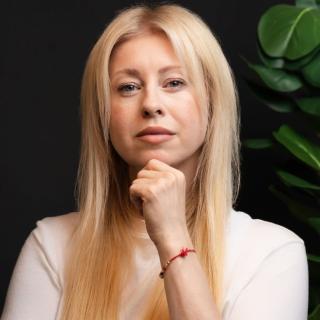
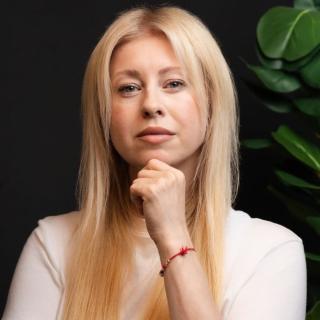
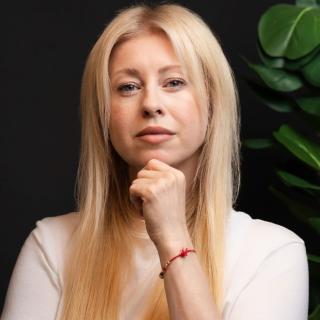
My name is Christina Erlova and I want to talk a little bit about kind of,
You know,
What treatment really is going to be the best for OCD?
I think a lot of people get confused at times.
I think there's a lot of discussion about,
You know,
Medication,
CBT,
Cognitive behavioral therapy with exposure response prevention,
Which I think most people do here know that it is the number one gold standard treatment of choice for folks with OCD.
But then we hear about things like ketamine and some studies and trials that are being done with that.
Then we also know about acceptance commitment therapy,
Which is kind of known as the third wave of cognitive behavioral therapy,
Where the focus is on using your values and to this concept of willingness to have an uncomfortable experience versus escape it.
And using your values to really drive your behavior and your actions so that you're not doing it based on your compulsion and anxiety.
And then there's something called inference-based therapy.
And this was originated as a form of cognitive therapy specifically for treating OCD.
And kind of one of the things that this discusses is that.
Folks with OCD tend to essentially really put a lot of emphasis and hyper focus on imagined possibilities and imagined outcomes of what if scenarios right what if you know XYZ goes wrong or what if this bad thing happens,
Even if it might be 1%,
But what if that 1% becomes true,
And people don't city gets so stuck on that,
That essentially they're basically.
They're getting kind of confused between,
You know,
This imagined potential catastrophe versus real life that's actually happening here now and using your five senses.
Right,
To perceive the real events and the actual reality happening now.
So.
.
.
Um.
.
.
Basically a person replaces reality with imagined possibilities.
So here's the thing.
This is again,
Just my take.
I'm not giving you any clinical advice here.
So please listen with an open mind,
Do your own research and do what feels right.
But here's what I want to say.
When I think about for myself when my OCD flares up,
And when I suddenly get really triggered,
Whether it's relationship-based OCD,
Whether it's perfectionism,
I also have a little bit of social anxiety where there's this fear of doing something wrong.
And of course,
Being human,
Things do go wrong and we do make mistakes.
And we do say things sometimes that might be perceived as,
You know,
Or not taken well,
And then somebody might get upset and you might get upset.
So all that kind of stuff,
Like that's kind of the mess of life,
Right?
And that's the beauty of life.
And I think what I want to talk about in kind of clarifying to just share my opinion on is.
I think to treat OCD,
I don't think it's this either or approach.
Just say,
Okay,
I'm either going to do medication or I will do this new ketamine trial,
Or I'm only going to do CBT,
ERP,
Or I will only do inference-based,
Or I will only do acceptance commitment therapy-based,
Or even TMS,
Transmagnetic stimulation.
The reality is with these different approaches,
And these different therapies.
I think what we want to recognize is that they're all there to help us.
Better understand ourselves and our experience.
OCD is still to this day and it's 2022.
Significantly misunderstood.
OCD to this day gets looked at as.
Um you know like we all have it or that oh i like to keep things clean um and there there's a there's a really grave misunderstanding about the fact that in general people have intrusive thoughts we all have random stuff that pops in our head It's just that a person with an OCD brain,
The parts of the brain that are kind of not sorting that data correctly are impacted.
Meaning a person without OCD brain can recognize some random intrusive thought exactly as that.
It was random.
It's insignificant.
The possibility of anything around that thought coming true are minimum to none.
And they don't even take it seriously.
They literally toss it and they move on with their life.
They don't even think about it.
If you ask them 10 minutes later,
They might not even remember.
Now,
If you take a person with an OCD brain,
We have to remember there's a biological component involved here.
The brain is not processing information correctly so the very same.
Event can take place for somebody with an OCD brain where they'll have some random interest of thought.
But because it's paired with and it triggers your fight,
Flight,
Or freeze response.
Immediately you're going to perceive that event as potentially threatening and dangerous because that part of our brain,
The fight,
Flight,
Or freeze is designed to keep us safe.
It's part of the limbic system.
It's like the oldest part of the brain.
So if you think about it,
Yes,
We've in many ways evolved,
And I mean,
Look at all the technology and everything else we have going on at this day and age.
But the reality is our brains are still operating in that old system.
We need that firefighter and freeze response to turn on because that's our internal alarm system that keeps us safe.
Now,
When that alarm system gets tripped up,
Any time over a whole bunch of different things,
It gets really hard to tell the difference.
Between,
You know,
Is this in fact a threat or is it not?
And how much of a threat is it?
Could it be a threat in the future?
How much of a threat could it be in the near future or in a distant future?
Can I do anything about it?
Can I prevent it?
Right?
These are all the kinds of questions that you start to wonder and analyze and think through because you're attempting to essentially,
You know,
Try to get some relief,
Right?
And here's the thing,
Most everybody who has OCD,
You know,
Is looking for.
A treatment.
That can be as fast as possible,
Kind of like a magic bullet that could just,
Bam,
And you'll be done with everything and you will never have intrusive thoughts and you won't feel anxious.
And so when looking through different treatment options that are out there,
And when people do research,
They'll come up with things like,
Okay,
I have the option of medication.
Then I have therapy,
Which will be CBT exposure response prevention and or acceptance commitment therapy.
Now we're talking about inference-based therapy.
Then we're talking about,
Well,
What about these trials with ketamine?
What about TMS?
So it's like six different things I just mentioned there.
One thing that I want to.
.
.
Kind of have you globally understand is.
OCD.
It's a part of kind of how your brain works.
So you have to kind of recognize that you're gonna be living with this brain of yours.
For the rest of your life.
And so when you're trying to.
.
.
You know,
Get some relief,
That makes sense,
Right?
But if you're trying to do something that's going to be like as fast as possible,
And that things will never appear again,
That's not realistic.
Because the truth is,
Just the act of living on its own,
Means you are going to be facing uncertainty,
Means you're going to be having triggers.
You know,
We'd like to say that we'll never have a flare up,
But the fact is you will because you're living and things happen when we live.
Somebody might say something you didn't anticipate.
You might step into a situation that you didn't anticipate for,
And suddenly you got triggered,
Or you're watching a movie and for whatever reason,
Suddenly it triggers you,
Or you're reading something in the news,
It triggers you,
Or you're looking at something on social media,
It triggers you.
So what's really important is to actually know your triggers,
To get really,
Really familiar with yourself and what is actually your vulnerability,
What kind of things trigger you,
Because then you will start to actually understand yourself so much better in terms of,
Okay,
These are the situations,
These are the kind of places these are these are the kind of sometimes people.
Or these are the kind of thoughts that really trigger me that that get my whole city cycle to come up where I get extremely anxious or I feel guilty or I feel shame.
Any kind of state of discomfort,
Not just anxiety,
Even though it's an anxiety disorder,
But really discomfort where I just feel really stuck.
And I feel like I can't really move on,
Right?
That's what you really need to learn.
So learn those patterns for yourself because You know,
OCD is really the same in terms of how it operates across the board.
Now,
How it's experienced as individualized,
Because every single one of us has our own unique um,
Kind of upbringing and,
And,
Um,
You know,
Beliefs and views.
And so we need to take those things into account.
So what I invite you to do is not look at this as,
Okay,
I'm now going to only look for and do acceptance commitment therapy.
And that'll be like the one thing and the one way where I'm going to make sure to,
You know,
Beat this and I'll never have this again.
Right.
But what I want you to look at is saying,
Hey,
Look,
We're always looking for different ways how to treat and help people heal,
Right?
Humans are always looking for something that can be more efficient and better.
And I think that's wonderful.
What I also think is it's important to kind of stay open to the different modalities because sometimes you might need to do,
You know,
Exposure response prevention as well as medication.
Sometimes we might need to spend a little time doing maybe more inference-based therapy approaches in terms of cognitive approaches to help you separate and learn,
You know where and how.
Your OCD keeps you locked into trying to guess about something about the future and that you're actually not in the here and now.
We might even incorporate mindfulness training because that's a really great skillset to learn how to actually be in the moment instead of constantly thinking about the future or the past that's already done,
But you might still be ruminating on it and not being able to release yourself from that process.
So,
The reality is that we're going to use different things at different times and depending on the individual so it's very individualized.
So what I'd like to put out there is my opinion is,
I wouldn't say you know,
Like just toss everything else only use this one approach,
I'd say,
Let's stay open and flexible because To this day,
Sometimes it can be really helpful to be able to kind of connect and rank to yourself like wait a minute my kind of is this like my like a mid or high level anxiety,
Just to kind of,
I can orient myself to this experience.
It might be really helpful to create kind of a hierarchy,
Which is more from the traditional exposure response prevention,
To look at,
Okay,
What are the steps that I want to work on to work on my OCD?
Other times it might be better to say,
Hey,
Let's really anchor into understanding what's actually really important to you in your life.
And let's make sure we're using that to drive your behavior and drive this process.
So for me,
In living with OCD,
I will say that I've pulled from different strategies,
From different aspects,
Because sometimes I would get really sticky thoughts.
And honestly,
I would have to sit down and do an imaginal script.
And then there's other times I might have kind of this urge to want to mentally ruminate,
Because that's one of my strong compulsions.
I used to do a lot of mental over analysis and trying to figure things out.
Um,
And repeat and review.
And so that's a time when I will anchor myself into,
Okay,
Christina,
You know,
Overthinking this,
Is it really going to help or,
Uh,
Will it actually be better to kind of remember what's actually important to me and,
And what do I want to do right now?
That'll actually move me more towards that versus staying stuck.
In this place of rumination.
So I've had to use different strategies.
And if I'm more baseline and I'm more calm,
That's when I do actually kind of step back and think through globally,
Like,
Okay,
What am I learning about this?
What am I observing?
What am I noticing?
And then I will do mindfulness.
I like to do guided meditations.
So I will use different tools from different schools of thought because they all help.
It's just a matter of learning the principles and then really learning how to apply them in your life day by day.
So I think,
You know,
We have to remember the one caveat with OCD is that anything can become a compulsion.
Right,
Including your ERP work,
You can start to use that as a reassurance.
You know,
Inference-based therapy,
This cognitive work,
You can also start to use that as a reassurance.
So we always have to remember,
Just because you're learning,
You know,
The most,
The best kind of current evidence-based treatment or using the gold standard treatment to treat OCD,
You can still use that in itself as a compulsion,
Because that's just how OCD brain works.
Because as humans,
We really don't like feeling uncomfortable and who would?
Who's going to want to sit there and feel like you're getting these constant anxiety attacks or this impeding doom or a sense of guilt that you just can't seem to shake.
I mean,
Nobody's going to want to feel that.
So it makes sense that we're going to try everything possible to get rid of those things.
But the fact is.
When you understand how OCD actually works.
And you start to pay closer attention to what are your actual triggers and then what kind of behaviors do you engage in to try to solve this and then bring awareness to see do those behaviors actually truly solve this in the long run.
Or do they not?
Because if they do not,
Which they usually don't,
That's a time to pause and reflect on,
Okay,
I need to do something different.
I need to practice something different.
And what will that mean?
And usually in any and all scenarios,
It will mean learning how to feel uncomfortable,
Learning how to be with discomfort.
Living life doesn't mean that you never have triggering events or that you're never uncomfortable.
Living a full,
Happy,
Healthy,
Fulfilling life,
Meaningful life means that you will have triggers,
You will have times you're going to be uncomfortable.
That's the name of the game.
Otherwise,
You're going to be living in a tiny little room.
Thinking that you're preventing stuff,
But the reality is OCD will just keep growing more and more.
It doesn't stop.
You know,
When you're looking for kind of the right approach,
You know,
Always consult with,
You know,
A specialist,
Talk to your,
You know,
MD or prescribing provider,
You know,
Make sure you do some homework and look at what might be the best combination for you.
Right.
And most importantly is learn the different tools and strategies and really make them yours.
Really make sure you actually practice these tools and strategies so that you truly integrate them so that then you're prepared and you know,
Because you have a really well trained and it's conditioned into your system so that then anytime if there's a flare up or something happens,
You know what to do.
You can reach for your tools and you can use them as quickly as possible so that you don't let OCD get ahead of your life again.
And,
You know,
Take your freedom,
Really,
And take the most precious thing that we all only have a certain amount of,
Which is time.
We all only have 24 hours in a day.
None of us can negotiate that.
It doesn't matter who you are,
Where you are.
We all only have 24 hours in a day to work with.
That's my opinion and take on when looking at the right treatment.
Of course,
Again,
The gold standard treatment is exposure response prevention.
And no matter what other therapies or approaches you're trying,
The fact is there will still be some element of exposure work there.
And you will still have to make sure that you are being really clear on what is your compulsive response and what do you want to practice instead of engaging in that compulsion.
All right,
Guys,
Thanks for listening and see you in the next one.