Let me ask you something.
When was the last time you did something purely for you?
Not for your partner,
Not for your kids,
Not for a friend who is struggling,
A parent who needed support,
Or a colleague who is overwhelmed.
Just for you?
If that question made you pause,
If the answer came slowly,
Or felt slightly uncomfortable,
Or brought up a flicker of guilt just for being asked,
Then this conversation is exactly where you need to be today.
Because in nearly 30 years of sitting with people in my therapy practice,
This is one pattern I encounter more quietly,
More consistently,
And more painfully than almost any other.
It is the slow disappearance of the self.
Not a dramatic breakdown,
Not a crisis that announces itself,
Nothing that looks from the outside like anything at all.
It is quiet.
It is gradual.
And it almost always happens to the kindest people in the room.
The ones who are always there for everyone else.
The ones who say yes when they mean no.
Who smooth things over,
Who hold everyone else's feelings,
Who put themselves last,
Not once,
Not occasionally,
But as a fundamental way of moving through the world.
And one day,
Sometimes in my office,
Sometimes at three in the morning,
They look in the mirror and they ask,
Who am I?
What do I actually want?
Do I even know anymore?
Today,
We are going to answer that question together.
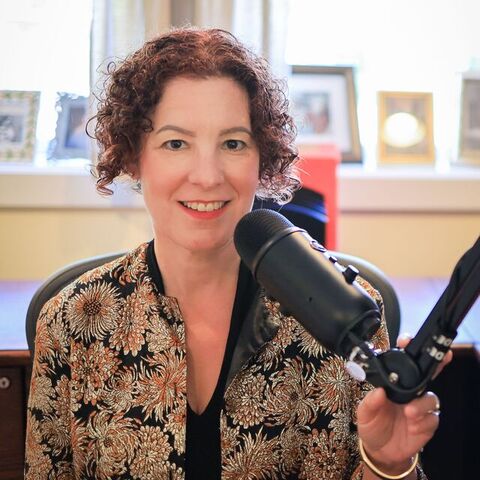
I'm Esther Kane,
Psychotherapist,
Highly sensitive person,
And someone who has had her own relationship with disappearing and finding her way back.
Imagine that we're sitting together in my therapy office,
Soft lamp lit,
A cup of tea in your hands,
A gentle quiet around us.
We are going to talk about how kind people disappear from their own lives.
Why it happens,
What it costs,
And most importantly,
How to come home to yourself.
So take a deep breath.
Get that cup of tea and settle in.
What disappearing actually means.
Now when I say disappearing,
I don't mean literally vanishing.
I mean something far more subtle and in some ways far more devastating.
Disappearing from your own life looks like this.
You have a strong opinion about something,
But you let it go unspoken because you're anticipating the reaction.
You desperately need rest,
But guilt keeps you moving.
You say yes to something and feel a drop in your stomach the moment the word leaves your mouth.
And you go anyway,
Or perhaps this.
You realize you can't quite remember what kind of music makes you feel something.
What you dream about for your future.
What you would do with a whole day entirely freely yours.
Because your energy has been oriented so consistently outward for so long that your inner world has gone very,
Very quiet.
That is disappearing.
Why?
Because when we pour everything outward and receive nothing inward,
The self doesn't break,
It softens.
It fades.
Not all at once,
But in increments.
In the small moments we choose someone else's comfort over our own truth.
And here is the first thing I want you to hold before we go any further.
It is not your fault.
This is not weakness.
This is not a character flaw.
This is about patterns,
Often very old patterns that were woven into you before you had the language to question them.
But,
And this is the part that matters,
It is your responsibility to change.
Not weakness,
Wiring.
Not broken,
Conditioned.
And what has been conditioned can,
With gentleness and intention,
Be relearned.
Let me tell you about a woman I'll call Caroline.
Caroline came to see me at 47.
By every external measure,
She was living a full life,
A devoted mother of three,
A loving wife,
A respected colleague at work.
Someone everyone around her described as warm,
Generous,
Completely dependable.
She sat down in my office,
Looked at her hands for a long moment.
And said,
With a kind of flat exhaustion I have come to recognize deeply in this work.
I think I've lost myself.
I can't even explain it.
I just feel like I don't exist anymore.
She wasn't in a crisis.
She hadn't experienced a specific trauma.
Her life from the outside looked absolutely fine.
But inside,
She hadn't done anything purely for herself in years.
She genuinely could not remember what she had enjoyed before the children arrived.
She said yes to every social event she didn't want to attend,
And then quietly resented the people she loved for inviting her.
She had stopped expressing needs to her husband so long ago that he had simply stopped asking.
She had trained him,
Without meaning to,
To believe that she was always fine.
And then she said something that has stayed with me ever since.
The strangest thing is,
Nobody made me do this.
I did this to myself.
She was right.
And she was also completely wrong.
Because here is the truth I want to start with today.
When kind people disappear from their own lives,
It is almost never because someone forced them to.
It is because somewhere along the way,
Often a very long time ago,
They learned that putting themselves first was not safe,
That their needs were too much,
That love had to be earned through selflessness,
That the way to belong was to make yourself as useful and undemanding as possible.
That is not weakness.
That is conditioning.
And it starts much earlier than most of us realize.
Part 1 How kind people learn to disappear.
The first thing I want us to understand together is this.
The disappearance didn't happen overnight.
It happened in increments,
In small decisions and absorbed lessons,
In moments where choosing yourself felt dangerous and choosing others felt like the only option available to you.
Let me walk you through the four origins I see most often in nearly 30 years of practice.
Origin 1,
The emotionally sensitive child.
Many of the people I work with were,
From a very young age,
More attuned to the emotional world around them than anyone else in the room.
They could feel the tension between their parents before a single word was spoken.
They sensed when a teacher was having a hard morning.
They noticed the slight shift in a friend's tone that signaled something was wrong,
Days before anyone else picked it up.
They were reading rooms before they could read books.
For highly sensitive people especially,
And many of you will recognize this in yourselves,
This kind of attunement is simply how your nervous system is wired.
Dr.
Elaine Aron's research tells us that between 15 and 20% of the population carries this trait.
It is not a weakness.
It is a form of deep neurological processing that allows you to perceive the world with extraordinary richness and subtlety.
But here is what can happen to a highly sensitive child in a household that doesn't know how to honor that sensitivity.
They learn to use their gift.
Not to express themselves,
But to suppress themselves.
In service of regulating the emotional temperature of the room.
Why?
Because it works.
If I stay very quiet and very helpful when mommy's stressed.
Maybe the tension lifts.
If daddy comes home in a dark mood and I can keep things smooth and keep everyone calm,
Maybe the evening stays safe.
Maybe I stay safe.
Let's take a breath there.
Do you see what's happening in that child?
They are using their sensitivity as a tool for emotional management,
Not for joy,
Not for self-expression,
For protection.
And over time,
Over years,
Over decades,
That becomes a way of being in the world.
I worked with a woman I'll call Nina.
She grew up in a home that was unpredictable,
Not unkind,
But inconsistent.
Her mother loved her deeply but struggled with anxiety,
And there were days when the whole household felt like it was collectively holding its breath.
Nina told me,
From as young as I can remember,
I was always reading the room.
My whole body was on alert.
If I could just figure out what everyone needed,
Then maybe I could finally relax.
She's 51 now.
She has never in her entire life stopped reading a room.
She does it at work,
At dinner parties,
In her marriage,
In her friendships,
In the supermarket queue.
She's been managing other people's emotions since she was six years old,
And she is exhausted in a way that no amount of sleep has ever fixed.
Origin two,
The good girl or a good boy trait.
The second origin,
Particularly common for women,
Though absolutely not limited to women,
Is what I call good girl trait.
It works like this.
You are praised for being helpful,
Polite,
Selfless,
Easy to have around.
You learn very quickly that being agreeable earns approval.
That making people comfortable keeps them close.
That your worth,
Your fundamental lovability,
Is connected not to who you are,
But to what you do for others.
And when you express a need,
When you say,
I don't want to,
Or that's not fair.
Or,
What about what I want?
The response is discomfort.
Disapproval.
Sometimes an emotional withdrawal so quiet you can barely name it,
But that you feel completely.
So you learn to keep your needs very quiet.
Why?
Because quiet needs are safe needs.
Unexpressed needs can't be rejected.
I worked with a woman I'll call Lucy.
She came to me at 38.
Exhausted in a way she couldn't name.
She had,
By all accounts,
A good life.
But she said something to me in our second session that I've thought about many times since.
I can't tell you what I want for dinner tonight.
I genuinely don't know.
I've spent so long asking everyone else what they want that I've lost the ability to access my own preferences.
She wasn't being dramatic.
She meant it literally.
Her internal compass had gone so quiet from years of neglect.
From years of being trained away from herself that she could no longer hear it.
Not broken,
Silenced.
There's a profound difference.
Origin three,
The belief that your needs are too much.
The third origin sits right at the heart of what it means to be a highly sensitive person.
And it is the deep,
Quiet belief,
Often unspoken,
Often unexamined,
That your needs are simply too much for other people to hold.
If you grew up being told that you were too sensitive,
Too emotional,
Too intense,
Or if you absorbed that message without anyone ever saying it directly,
You received a very clear communication.
Your inner experience is a burden.
And so you learned to shrink it.
You stop telling people when something truly hurt you.
You began laughing off the things that wounded you.
You became the person who said,
I'm fine.
Even when you were very much not fine.
Because making others sit with your feelings felt like asking too much of them.
Why?
Because you had learned through experience,
Through repeated signals,
That your emotional reality made people uncomfortable.
So you managed it for them.
You became your own editor.
You showed the world the version of yourself that was easier to love.
Let's take a breath there.
Because if this is your story,
If any part of what I've just described resonates with you,
I want you to hear something directly from me.
Your needs are not too much.
You are not too sensitive.
You are not too much.
You are not too intense.
You have simply been surrounded for too long by spaces that were too small.
You are not alone in this.
You are not broken by this.
You are wired with a depth of feeling that is,
When properly held.
One of the most extraordinary gifts a person can carry.
Origin 4.
Adaptation to early loss or instability.
For some people,
Disappearing from themselves wasn't a slow conditioning.
It was an acute adaptation,
A survival strategy built in response to early loss,
Instability,
Or unpredictability.
When a child learns that the world is unsafe,
That relationships can disappear,
That needs consistently go unmet,
That expressing yourself leads to punishment or abandonment,
They often learn to minimize their needs entirely.
If I need nothing,
I cannot be disappointed.
If I ask for nothing,
I cannot be rejected.
If I make myself very small,
No one else can make me smaller.
This was not weakness.
This was wisdom.
The wisdom of a child doing the best they could in an environment that asked too much of them.
Not then,
Now.
You are not a child anymore and that strategy which once protected you is now the very thing keeping you from your own life.
Part 2.
8 Signs You've Disappeared From Your Own Life.
Now,
Let's get specific.
Because one of the most valuable things I can offer you in this conversation is clarity.
The ability to see what self-disappearance actually looks like in real moments in your actual daily life.
Not everyone who has lost themselves knows it.
In fact,
In my experience,
The people most invisible to themselves are often the last to recognize it.
Because their attention has been oriented outward for so long that turning inward feels almost foreign.
So I'm gonna offer you eight signs.
As I share each one,
I'd invite you to simply notice,
Not judge,
Not fix,
Not analyze,
Just notice how many of these feel familiar right now.
We are going to get to how you come back to yourself.
I promise you that.
But first,
I want to make sure that you can see yourself clearly.
Because you deserve to be seen.
Let's look at the signs.
Sine 1.
You don't know what you want,
Even in small things.
Someone asks you what you'd like for dinner,
And you genuinely don't know.
You say,
I don't mind whatever you want.
Not to be polite,
But because you actually cannot access your own preference.
Or you look at your weekend and realize that everything on your list was chosen to make someone else happy,
Comfortable,
Or less inconvenienced.
There is nothing on there that is purely,
Selfishly,
Joyfully yours.
That is a sign.
Sign too.
You feel responsible for other people's emotional states.
If someone in the room is unhappy,
You feel it is your job to fix it.
If there's tension in a conversation,
You feel compelled to smooth it over,
Even when it has nothing to do with you.
You absorb the emotional weather of every room you enter,
And you feel personally responsible for keeping the temperature comfortable.
Even if that means suppressing your own feelings entirely to do it.
Why?
Because somewhere along the way,
You learned that other people's emotional discomfort was your emergency.
That is not a truth.
That is conditioning.
Sign 3.
Saying no feels physically threatening.
I'm not talking about mild awkwardness.
I mean the tightness in your chest,
The raising pulse,
The hours of rehearsing what you're going to say before you even pick up the phone.
The days of guilt that follow even after the no has been said.
For people who have lost themselves,
Saying no,
Even to small things,
Can feel like a genuine physical threat,
Like something will break.
Like the relationship,
The approval,
The love will disappear if you put yourself first.
So you say yes.
Then you resent it.
Then you feel guilty for the resentment.
Then you say yes again.
Not a character flaw,
A learned pattern.
And learned patterns can be unlearned.
Signed for.
You are exhausted but you don't know why.
This is one of the most common things I hear in my practice.
I'm so tired,
But I haven't really done anything.
Let's take a breath there.
That sentence carries so much,
Doesn't it?
When we are constantly monitoring others,
Managing their emotions,
Suppressing our own,
And performing a version of ourselves shaped around other people's needs,
That is profoundly,
Structurally exhausting.
Even when it looks effortless from the outside.
Because your nervous system is working overtime every single day,
Keeping you in that state of vigilant attunement,
Performing,
Monitoring,
Adapting.
Rest alone doesn't fix it because rest doesn't address the root.
Sign 5.
You don't share your opinions,
Even when they matter to you.
More precisely,
You have opinions,
You simply don't say them.
You've learned to agree,
To defer,
To say whatever you think is best.
In your relationship at work with friends and family decisions.
Not because you don't care,
But because expressing your true perspective has historically felt risky.
So the opinion flickers inside you for a moment.
And then you let it go.
You practice your own disappearance before anyone even asks you to.
Sign 6.
You remember who you used to be,
But she feels like a stranger.
You think back to a version of yourself,
Maybe before a particular relationship,
Before parenthood,
Before a period that asked too much of you,
And you remember someone who had a clearer sense of herself,
Someone who knew what she enjoyed,
Who had the energy for things that were purely hers.
And now that person feels like someone you used to know.
Familiar,
But far away.
Let me name what that distance actually is.
It is grief.
One of the quietest,
Most unrecognized forms of grief I encounter in this work.
Sign 7.
You find it hard to be alone with yourself.
When the busyness finally stops,
When the house is quiet,
When you have a rare moment with no one needing anything,
Instead of relief,
You feel restless,
Uncomfortable,
Sometimes almost anxious.
Because being alone means being with yourself.
And if you have slowly drifted from that self,
The quiet can feel like a mirror you're not quite sure you want to look into.
Sign 8.
You give love freely,
But you struggle to receive it.
You are the first person to show up for others.
You are generous,
Thoughtful,
Attentive.
You remember the things that matter to the people you love.
But when someone turns that same care toward you,
You deflect.
You minimize.
Oh,
I'm fine.
Don't worry about me.
Because receiving care requires believing you deserve it.
And somewhere along the way that belief got very quiet.
Not gone.
There is a difference,
And that difference is everything.
Part three,
The hidden cost.
What you lose when you go missing.
I want to spend some time here before we move into the return,
Because understanding the true cost of self-disappearance is often what gives people the clarity and the real motivation to genuinely change,
Not to frighten you,
To help you see clearly.
The first loss,
Your voice.
Not your speaking voice,
Your inner voice.
The one that knows what you think,
What you feel,
What you believe,
What you need.
When we spend years suppressing that voice in service of others,
It doesn't vanish,
But it grows quieter,
Harder to hear,
Harder to trust.
I worked with a woman I'll call Rachel,
52 years old.
Long marriage,
Three kids she adored,
Someone deeply loved by everyone around her.
She told me very quietly something I have never forgotten.
I don't even know what I think about things anymore.
My husband has an opinion,
I seem to adopt it.
If a friend believes something,
I agree.
I feel like I have no original thoughts of my own left.
That is not a lack of intelligence.
That is the specific measurable cost of a silenced inner voice over decades.
Not lost,
Suppressed.
Why?
Because suppression,
Unlike loss,
Is completely reversible.
The second loss,
Your body's signals.
Our bodies are constantly communicating with us.
They tell us when we are hungry,
Tired,
Unsafe,
Excited,
Longing for connection.
They register emotional truth before our minds have even begun to form words around it.
But when we are trained to ignore our own needs,
We are also trained to override those signals.
We push through the exhaustion.
We ignore the tightness in the chest that says this relationship doesn't feel right.
We stay in conversations that are draining us because leaving would feel impolite.
Over time,
We stop hearing those signals clearly.
We lose connection with our own physical and emotional intelligence.
Because the body and the self are not separate things.
When you disappear from yourself,
You also gradually disappear from your own body.
And that disconnection has costs that extend far beyond self-abandonment.
It affects your health,
Your relationships,
And your capacity to protect yourself when you most need to.
The Third Loss.
Authentic Connection.
Here is the painful paradox at the heart of this pattern.
Let's take a moment before I say it because it matters.
We lose ourselves in relationships in order to protect those relationships.
We suppress our needs,
Smooth over our feelings,
Perform a more agreeable version of ourselves,
All in service of keeping the connection.
But in doing so,
We deprive the relationship of the one thing it actually needs,
The real us.
I once worked with a couple where the wife,
I'll call her Diane,
Had spent 20 years accommodating her husband,
Agreeing,
Letting his vision of their shared life quietly become the only vision.
She had done this from love,
To keep the peace.
But her husband sat in our session devastated.
He said,
I feel like I don't even know her.
I feel like I've been married to a mirror.
He hadn't been unkind.
He had simply been unaware.
Diane had disappeared so thoroughly that there was nothing left for him to be genuinely curious about,
Nothing to push back against,
Nothing to be truly in relationship with.
Disappearing doesn't protect relationships,
It hollowed them out.
The fourth loss,
Your sense of purpose.
And this,
This is perhaps the deepest cost of all.
When we lose ourselves,
We lose our access to meaning.
Why?
Because meaning comes from living in alignment with who we actually are.
Our real values,
Our actual desires,
Our particular way of making sense of the world.
When we're living in service of other people's versions of who we should be,
When we are performing a self rather than inhabiting one,
There's a hollowness,
A quiet,
Persistent sense that something important is missing.
Even when everything looks from the outside absolutely fine.
That hollowness is not ingratitude.
It is not depression.
It is the grief of a life not fully lived from the inside.
And I want you to hear this clearly.
It is completely,
Wholly reversible.
Part 4.
The Return.
A protocol for coming back to yourself.
This is the part of this work that I love the most.
Because what I've learned in 30 years of sitting with people who have lost themselves to varying degrees for varying lengths of time is this.
The self is remarkably,
Profoundly resilient.
It doesn't die.
It doesn't disappear permanently.
It goes quiet.
It goes underground.
But it waits.
It is still there,
Beneath all the layers of conditioning and accommodation and years of self-erasure.
Waiting to be remembered.
And it can come back.
Not all at once,
Not in a single dramatic revelation,
Although sometimes it does happen that way.
Usually it comes back in small accumulating moments of choosing yourself,
Of listening to the quiet voice,
Of pausing and asking simply,
Wait,
What do I actually want here?
Let me walk you through the five steps I use with clients who are working on their return.
Step one,
Get curious about your inner world again.
The first step is simply this,
Start paying attention to yourself.
Not in a dramatic way,
Not with a journal you feel obligated to fill or a meditation practice you feel guilty for abandoning.
Just a quiet daily turning of the attention inwards.
Start with the smallest questions.
What am I feeling right now?
Not what should I be feeling,
Not what it is reasonable to feel.
What am I actually feeling in this moment in my body?
What do I need right now?
Not what do I think I should need,
Not what would be least inconvenient for everyone around me.
What do I genuinely need?
These questions feel simple.
They are not.
For people who have spent years,
Sometimes decades,
With their attention oriented entirely outward,
These questions can feel almost impossibly difficult at first.
Not because you broke them.
Because the muscle has gone unused for a very long time.
I think of it like a radio that's been tuned away from its signal for years.
This station is still broadcasting.
It never stops.
We simply have to patiently,
Gently turn the dial back.
I worked with a woman I'll call Miriam,
44 years old,
A therapist herself,
Which in my experience offers absolutely no immunity to this pattern.
In fact,
People who are professionally trained to hold others' experiences often develop the most sophisticated systems for avoiding their own.
She came to me saying she felt nothing.
Not depressed,
Not anxious,
Just calm.
Unreachable by herself.
We spent the first three weeks of our work together doing nothing except this one exercise.
Three times a day,
She stopped what she was doing and asked herself two questions.
What am I feeling?
What do I need?
She didn't have to act on the answer.
She just had to notice it.
By the end of those three weeks,
She came into my office and said this.
I realized yesterday that I was angry.
Genuinely,
Clearly angry.
And I knew it in the moment.
I haven't been able to do that in years.
One small muscle beginning to wake up.
Step 2.
Practice the pause.
The second step builds directly on the first,
And it is this.
Before you automatically respond to someone else's request,
Before you say yes,
Before you smooth it over,
Before you step in to manage the emotional weather,
Pause.
Just one breath.
And in that breath,
Ask yourself.
Is this something I actually want to do?
Does this come from genuine generosity or from fear?
Now,
I'm not saying every yes needs to become a no.
Generosity is one of the most beautiful things about you.
It is real and it's worth protecting.
But there is a profound difference between a yes that comes from love,
Freely,
Joyfully chosen,
And a yes that comes from fear,
From obligation,
From the belief that saying no will cost you something you cannot afford to lose.
Why?
Because the first kind of yes nourishes you.
The second kind depletes you.
And over time,
Over years of fear-driven yeses,
That depletion becomes your baseline.
It becomes so familiar,
You forget it isn't normal.
Let's take a breath there.
The pause is the moment where you choose.
Even if you ultimately say yes,
And you often will,
Doing it after a pause means you've checked in with yourself first.
You have treated your own inner experience as worth consulting.
That is not selfishness.
That is integrity.
Step 3.
Renegotiate your relationship with your own needs.
The third step is the deepest one,
And in some ways the most important.
It is the work of changing a fundamental belief.
The belief that your needs are too much.
That asking for something will cost you love.
That expressing a genuine feeling will drive people away.
That the only safe version of you is the diminished,
Accommodating,
Infinitely patient version.
Here's what I want you to consider.
Every human being has needs,
Physical needs,
Rest,
Food,
Safety,
Warmth.
Emotional needs,
Connection,
Recognition,
Genuine intimacy,
The felt experience of being truly known by another person.
These are not optional.
These are not signs of weakness.
They are the basic structural requirements of a functioning human life.
When we tell ourselves that our needs are too much,
We are not being selfless.
We are engaging in a slow form of self-neglect.
And the cost,
As we have already explored,
Is paid not just by us,
But by every relationship we're in.
I worked with a woman I'll call Judith.
She'd spent her entire life,
59 years,
Believing that having needs made her a burden.
That the right to love someone was to require as little from them as possible.
In one of our sessions,
She said something quietly that stopped me.
My mother used to say,
The less you need,
The more you'll be loved.
And I believed her.
I still believe her,
Even though some parts of me know she was wrong.
We spent a long time with that sentence.
The part of her that knew.
Because that part,
The part that knows,
Even when it is almost completely buried under decades of conditioning,
Is the part we are working to grow.
To give more space,
More trust,
More room in your life.
Your needs are not too much.
Say it gently.
Say it again.
My needs are not too much.
I am not too much.
My inner experience is worth making space for.
And as you begin,
Slowly,
Carefully,
With appropriate discernment,
To ask for what you need,
You will discover something remarkable.
Most people in your life will not leave.
Most of them,
In fact,
Will move closer.
Because what we all actually hunger for,
What every human being longs for in genuine relationship,
Is the real person.
Not the performing,
Accommodating,
Always fine version.
The actual you.
You are worth knowing.
You always were.
Step 4.
Rebuild your identity through small acts of selfhood.
The fourth step is perhaps the most practical and one of the most quietly powerful.
It is this.
Begin doing things purely because they are yours.
Not productive,
Not useful to anyone else,
Not justified by how they benefit your family or your work or your relationships,
Just because they bring you alive.
It sounds simple.
It rarely feels simple.
When we've lost ourselves,
The question,
What do I enjoy,
Can feel genuinely bewildering.
We have been so thoroughly oriented toward external validation.
Toward what is needed,
What is appreciated.
What earns love,
That the concept of doing something purely for the pleasure of it has become almost foreign.
So we must start small.
We start with curiosity rather than commitment.
What did you love as a child before the conditioning fully set in,
Before you learned to shrink yourself?
Was there a creative act that lit you up,
A place that felt like yours?
A way of being in the world that felt natural before you learned to second guess it?
Not to return to childhood,
But to find the thread that was present before it was interrupted.
I think of one of my clients,
I'll call her Sonia.
She came to me at 46,
Having spent her entire adult life in service to others.
A devoted mother,
An exceptionally capable nurse,
A woman everyone described as a person they called when things got hard.
When I asked her what she did for herself,
She laughed.
Then she looked genuinely confused.
We discovered very slowly that she had loved drawing as a girl.
She had been told somewhere along the way that it was impractical,
That it wasn't serious.
She had to let it go.
She began drawing again.
Not in a disciplined way,
Not with goals.
20 minutes a few times a week with colored pencils at her kitchen table.
In our session three months later,
She said something that I think about often.
I didn't realize how much of myself I'd given away until I found something that was only mine.
Something no one could need from me.
Something I couldn't do wrong.
That is what self-reclamation looks like.
Not grand gestures.
Small acts of selfhood,
Accumulated over time,
That collectively say,
I am here.
I matter.
My inner life is worth tending.
Step five,
Learn to receive.
The fifth step is the one that surprises people the most.
And it is this,
Practice receiving,
Not giving more,
Not working harder on your boundaries,
Not becoming more assertive,
Although all those things have their place.
Receiving.
Let someone do something kind for you and instead of deflecting,
Instead of immediately redirecting the focus back to them,
Stay with it.
I did him.
Allow yourself to be careful without immediately balancing the scales.
Let someone say something loving to you,
And instead of minimizing it,
Dismissing it,
Or moving past it quickly because the attention feels uncomfortable.
Has.
Say thank you,
And actually let it land.
Why?
Because the ability to receive is not a personality trait.
It is a measure of how much you believe you deserve.
And for people who spent a long time disappearing from themselves,
People who have unconsciously communicated to the world again and again that they require nothing,
That they are endlessly fine,
Learning to receive requires rebuilding that belief from the inside.
The belief that you are worth caring for.
Not because of what you do,
Not because of how much you give,
Not because of how useful or helpful or accommodating or understanding you've been.
Simply because you exist.
Because you are here.
Because you are a whole,
Full,
Complex,
Deserving human being who does not need to earn the right to be loved.
Let me tell you about Caroline,
The woman we met at the beginning of this conversation.
When she came back to see me 18 months into our work together,
She was a different woman.
Not unrecognizably so.
Still warm,
Still generous,
Still deeply present for the people she loved.
But there was something in her that had returned.
She told me.
I went to dinner with my husband last week,
And he asked what I wanted,
And I told him.
I just said it.
I didn't ask what he wanted first.
I didn't say,
I don't mind.
I just said what I wanted.
And when it arrived,
And I ate it,
It was the best meal I've had in years,
Not because of the food.
She looked up at me and smiled because it was my turn.
So.
We've covered a great deal today together.
We've talked about how kind people learn to disappear.
From the emotionally sensitive child learning to use her gifts for protection rather than expression,
To the woman who spent decades training herself out of her own preferences,
To the person who learned that needs were burdens and love had to be earned.
We've looked at what self-disappearance actually looks like in daily life.
In the inability to name your own preferences,
In the exhaustion that no amount of rest can touch.
In the grief of feeling like a stranger to yourself.
We have sat with real costs,
The silenced voice,
The severed body connection,
The hollowed relationships,
The lost sense of purpose.
From where you are.
Step by step.
Through the return.
Getting curious again.
Practicing the pause.
Renegotiating your relationship with your own needs.
Rebuilding your identity through small,
Purely personal acts,
And learning,
Perhaps for the first time in a very long time,
How to receive.
And I want to close with something I say to almost every client who begins this particular journey.
The work is not dramatic.
It rarely announces itself.
You won't wake up one morning and feel completely returned to yourself all at once with trumpets sounding.
It will come in small amounts,
In a preference named out loud,
In a no that felt terrifying and turned out to be survivable.
In 20 minutes with colored pencils at your kitchen table.
In a meal that tasted better because it was chosen freely.
In the quiet,
Accumulating,
Unmistakable feeling of coming home.
You are not too much.
You have never been too much.
You have simply been,
For a while,
In spaces that were too small for all that you are.
You are not alone in this.
You are not broken.
You are wired with a depth and richness of feeling that is,
When properly honored,
One of the greatest gifts a person can bring into the world.
And that gift.
Your gift.
Deserves to be shared from a self that is whole.
Present,
Truly here.
The return has already begun.
You showing up for this conversation is evidence of that.