
O que você irá aprender
In this story, we will dive into the early years of the great meditation Master Chögyam Trungpa and his epic 9-month escape from Tibet.
You will learn how to overcome times of crisis with the teachings of the calming shamata meditation, as it was taught by Chögyam Trungpa himself. Don't miss this adventure in the Himalayan Mountains and learn to find inner calm.
The course contains original recordings from Tibet.
The meditations include Buddhist chants and the music of singing bowls.
The story begins when this very gifted boy was found in the cold mountains of Kham, in a nomadic camp high up on a plateau over 16.000 foot above sea level, and how he was tested to see if he really was the reincarnation of the deceased tenth lama. You will hear about his enthronement as head abbot of Surmang Monastery and Ralf will give you insights into his upbringing and monastic life in this remote area, which until then had been completely shielded from Western influence.
Then, in 1959, the only 19-year-old Lama embarked on an epic nine-month escape from his homeland when the Chinese invaded Tibet and destroyed all spiritual and religious life. This is his story and his beautiful teachings of soothing Shamatha meditation.
Shamatha is the most important meditative practice for lay Buddhists (non-monks) and reinforces calm contemplation, tranquilizes the mind, helps to build inner strength.
Ralf Eisend is a nature enthusiast who travels to record nature sounds and spiritual ceremonies in the most remote areas of the world.
Ralf, an alpinist and nature enthusiast has researched an incredibly interesting story in Tibet about the life of a reincarnated lama. They form the historical background for the teaching and mediation of the calming Shamata meditation.
Ralf's fascination with this story stems from his love of being outdoors. His observation in Tibet was that Tibetans of all kinds seem to have a nomadic streak in them and are never happier than when they are on the back of a pony or on foot through an undeveloped landscape in close communion with untamed nature....
Lição 1
Finding The New Lama
In this episode, we will hear how the incarnation of the 10th Trungpa Lama was found and recognised to be enthroned. The little baby boy was found in the cold Kham mountains high up on a 16,000-foot plateau in Tibet. He clearly recognized that the people and objects that were closely related to his previous incarnation, and expressed his deep familiarity with the Buddhist teachings through his natural behaviour.
The boy who became a major figure in Tibetan Buddhism left beautiful teachings of the shamata meditation. In this episode, we will learn about inner and outer posture in meditation.
Lição 2
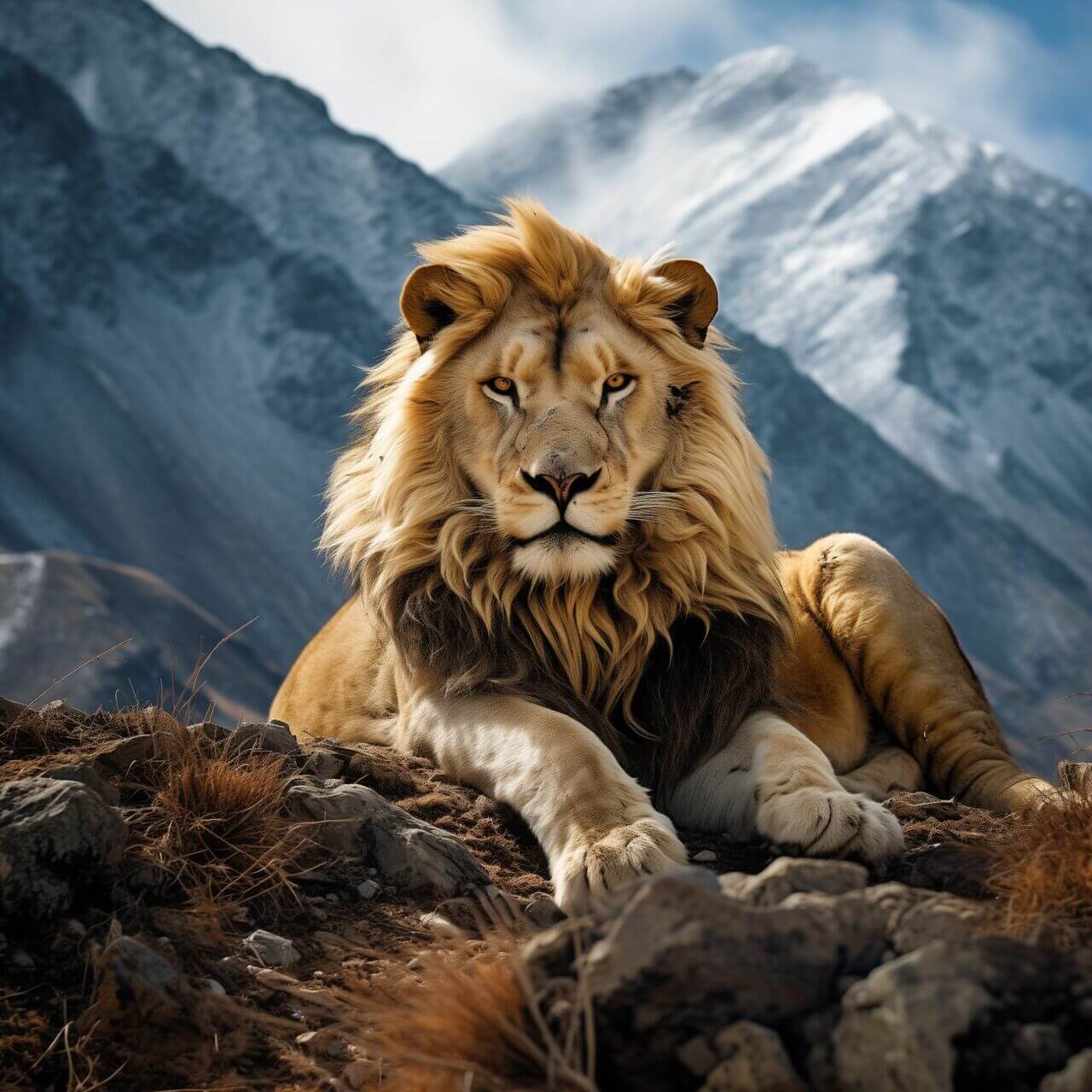
The Lion's Throne
Today's episode is about how the little boy was further tested and enthroned. Soon after the monks found the little boy on a 16,000-foot plateau in the cold Kham Mountains, the incarnation of Trungpa Tulpur, he and his mother were taken from their home in the highlands and led to the monastery.
There, he was put through a series of tests, to be sure he was the incarnation of the deceased 10th Lama.
Besides the historical background of the high lama's teachings, I will give you information from his lectures. Today, we will learn why appreciation is the foundation of meditation practice.
Lição 3
Dark Ages
In today's episode, you will hear how Tzögjam was brought up and educated in the Surmang Monastery until he left it when he was 16 years old. We will also learn how to deal with our thoughts in mediation.
Tzögjam says: "Don’t try to escape your thoughts, but also don’t stick to them, don’t nourish them.
Thoughts are like little waves on a pond. They come and go. One follows the other and you say to yourself that there’s not much to them."
Lição 4
The High Lama
When Tzögjam Trungpa Rinposhe left the high valley of his home monastery behind him in a violent storm, he felt that he would not see his mother and loved ones again. The storm protected him from being discovered by the communist occupiers who were determined to destroy all monastic, spiritual, and religious life in Tibet. From that day on, he went into hiding in the last remaining monasteries, farmhouses, nomadic camps, and caves.
Today, we will learn how to bring a reliable regularity to your daily practice.
Lição 5
Valley Of Mystery
Tzögjam Trungpa Rinpoche had turned 19 and was on the run. In the early days of 1959, it began to snow heavily while Rinpoche and three fellows took shelter in a cave high above the Valley of Mystery, as it is actually called. His epic flight from his homeland Tibet began.0
Meditation, says Tzögjam, is both training and taming. We don't immediately come to peace or sort out our problems in one swift strike. It is more like taming a wild horse or plowing up hard, rocky ground. We will learn more about this training and taming in this episode.
Lição 6
A Dear Friend: Yonten
Rinpoche and his small group had set up camp high up in a mountain cave near a village, but the hideout was no longer a secret as more and more monks and laypeople came to ask for blessings and personal advice. The weather was now improving and the valley below where they were hiding began to blossom. We will hear about the next stage of his journey.
The Shamatha Meditation that he teaches can best be described as a mindfulness exercise, which is also a method of sharpening the mind. Often the sheer pace and demands of our lives have a numbing effect. We will learn how we can sharpen our minds with meditation.
Lição 7
The Five Mothers
Further along the way, Rinpoche came to a lake surrounded by mountains known as the Five Mothers, considered sacred in the ancient Bon tradition of Tibet. There, Rinpoche was faced with the moment he had known was coming, and which he had possibly feared in silence: he would take off the robes of a lama to conceal his identity.
From early childhood, Rinpoche had worn only one garment, his robes. In their delightful mix of saffron, maroon, and gold brocade, the robes had a powerful but simple splendor, the colors full of meaning and symbolism that reached back 2,500 years to the time of the Buddha.
In meditation, Rinposhe recommends paying attention to the out-breath. The out-breath, he says, is like a whetstone used to sharpen the mind's knife. We will learn and practice this in today’s episode.
Lição 8
Kino Monastery
Trungpa Rinpoche had planned to escape with just four companions. With this small group, even leaving as late as they did in April 1959, he could have made a relatively swift and straightforward escape. But even before they started, the party had doubled in size and then kept on growing as ever more people asked to join.
He never turned anyone down, yet each new person and animal added to the difficulties and complications: slowing them down, forcing them into detours and onto routes they would not have chosen, sapping away their chances of survival and freedom.
In today’s episode, we will learn about the simplicity of meditation. The breath expresses that you are alive. You are alive, so you breathe. And the technique is derived directly from this: You pay attention to the breath. You do not use mindfulness of the breath to distract yourself, but use it to make things simple.
Lição 9
Sharkong La
We will continue to follow Rinpoche’s flight through the rough wilderness of the Himalayan mountains and hear about his teachings on gentleness. Meditation gives us insight into the depth of our hearts. We discover that we are actually gentle, kind, and soft.
We really need this gentleness throughout our lives. When it is given, we can be good to ourselves and open in our dealings with others.
Lição 10
Langsto Kha
Modern brain research is making it increasingly clear that the purpose and therapeutic value of meditation can also be scientifically proven. Maybe the discovery of meditation by science will have the effect of overcoming overly sugarcoated notions of meditation. Tzögjam Trungpa would certainly have welcomed this.
In his account, meditation is a rather sober thing, a down-to-earth and realistic approach based on a very clear observation of things as they actually are and without any sentimentality. That is why his explanations of the practice are so clear and easy to understand. But he also liked to talk about magic and the spell to reference the incredible power and beauty of reality. And he found that there is no better guiding principle for us than the connection of mind and intuition.
Lição 11
Exhausted In Nupkong La
Tzögjam Trungpa led the long procession of refugees from the 18,000-foot plateau over a series of low mountains towards the Nupkong La. After a strenuous climb over the pass, they reached the river valley beyond. The group was exhausted, physically and mentally.
Today’s teaching: Mindfulness is about uncovering the kindness and goodness that exists from within. It may take many penetrations, and it may be a painful process until we can clear our skies and see the sun properly, but it can be done.
Our way to repeat it starts with appreciating ourselves: We are kind and gentle with ourselves, we befriend ourselves. The more we then trust ourselves, the better friends we have become with ourselves, the more we can live this gentleness and kindness outwardly.
This is how we overcome the basic obstacles in our lives. Breakthroughs do not come because of battles.
Lição 12
The Hard Way
Rinposhe and his large group of travelers are exhausted. Coming down from a terribly steep pass, they all need a break. But that's not the main problem. They are stuck. They have gone off the main road and taken a diversion because there were too many refugees on the main road and no grass for the many yaks, mules, and horses.
Surrounded by huge mountains, they don't know the best way forward and the Chinese are eager to hunt Rinpoche down. Rinposhe decides that he needs to withdraw for a while, go into retreat.
Today’s teaching: Compassion possesses wisdom, a kind of primal intelligence. This intelligence is the discovery of primordial trust in ourselves. We do not have to logically derive this trust. It is already there, and in a way, it has no beginning. It is the wisdom eye that we have by nature.
We will learn how to tap onto that energy.
Lição 13
A Steep Descent
The refugee group had come to a standstill and Rinpoche had to make radical decisions. Moving on was only possible if they left all the animals, yaks and mules, behind and went on with only what they could carry.
As the danger grew and the prospects darkened further, hopes and fears were stirred, and yet the most radiant human qualities shone through in Rinpoche's leadership and in the extraordinary courage and resilience of the refugees in the face of daunting challenges, qualities associated with the kindness of heart and compassion.
Rinpoche had been writing and teaching all his life, even when he was on his escape. So let me share some more of his deep knowledge. Compassion, he says, is not logical. It's wide, open, and big-paced. A compassionate person does not necessarily know whether he feels with you or you with him, simply because compassion creates a general atmosphere of generosity. It is full of joy, spontaneous smiles.
Lição 14
Heading Towards Brahmaputtra
The refugee group had come down the dizzying ladder to Rigong Kha, magnificently situated on a triangular fold of land some 1,500 feet above the Yigong River, enclosed on the east and west by mountains that rose to meet in the snow-capped peaks many thousands of feet above. To the south, just across the river, was the Tsophu Valley, which spread southwards before disappearing upwards into the glistening heights.
Meditation is often said to be about taming and training the mind, but what do we actually mean by 'mind'? When we try to define mind or consciousness, philosophical, psychological, and spiritual terms and ideas immediately come to mind, but these can be rather obstructive to the practice of meditation. To find out in a direct way what meditation is and what happens when we meditate, we might better ask: "Who is meditating?"
This quickly brings us to the core elements of our conception of mind. For understanding what happens in meditation, the core or basic question is, "Who am I?" This is an amazing approach to answer this question.
Lição 15
Lost
Early on the morning of 16 September, the group, now consisting of about 180 people, packed up their food and remaining possessions and set off for the Tsophu Pass. The weather was good, with only light snowfall. And the climb was not nearly as steep as they had feared. The snow, which turned to ice towards the ridge, made walking far less difficult than they had thought.
Meditation is a way in which we learn to be here. Such a specific, concrete and personal practice makes us joyful. You could call this joy selfless because it does not glorify anyone, neither your own person nor others. You simply appreciate with a joyful heart that you have found genuine access to yourself.
Lição 16
Wilderness
As they climbed higher and higher, the snow on the mountains reflected the setting sun and looked like it was made of gold. They feared that if they continued they would come to even higher altitudes, so they made camp for the night. The frost was severe, there were no streams and the only water came from melted snow. Added to this, they could only make limited fires, partly for fear of being seen and partly because it was difficult to find wood.
Let’s hear another one of Rinpoches teachings: "For dealing with obstacles on the path of mindfulness, feedback from the outside is not always helpful. Often you are better off with inner feedback on the basis of your struggle with obstacles."
Lição 17
Lower Kongpo
Although Rinpoche had frequently asked the members of this large travel group that they must inform him about any particular difficulties, he had been given no warning of an emergency, until some of them came to tell him that they had run out of food. They were actually beginning to boil the leather of their yak skin bags.
Let’s hear some more of Rinpoches teaching: "Our experience after meditation can be blurred by ups and downs. Sometimes, we are full of enthusiasm and it feels like we are making tremendous progress. Sometimes, we think we are falling behind and everything is going wrong. Finally, there are neutral phases when nothing happens and no ups or downs are noticeable. Such signs of progress or regression are simply temporary states that occur in meditation just as they do in everyday life.
But you can't fail in meditation practice, you would have to turn away from your mind, and you can't do that."
Lição 18
Crossing Brahmaputtra
As darkness fell, they made their way down to the river. They loaded the people into the boats, and although they only crossed a narrow stretch of river, paddling as hard as they could, it seemed to take an eternity to get the small, heavily laden coracles across. But the boats proved strong and waterproof.
To describe how we develop mindfulness and awareness, we can use the expression "touch and go." Touch means that you are in contact, you touch the experience of your sheer, real existence, and then you let go of the experience again. This approach applies to the perception of the breath in meditation as well as to your perception in everyday situations.
Lição 19
Crossing The Himalaya
The diminished group, now 17 people, went on their hardest and most difficult climb across the Himalayan mountain range, fighting fiercely through high snow and storm.
Today, I would like to give a short digression on meditation while walking, which has been handed down by Rinpoche. Up to now, we have dealt exclusively with meditation while sitting. However, we can also practice meditation while walking. When you are sitting, there is not much you can do, but when you get up and walk, you have the opportunity to express your presence and come out of yourself a little.
Lição 20
Epilogue
My own fascination for this story, as an alpinist and nature enthusiast, is the love for being outside. My observation in Tibet was that Tibetans of all types seem to have a nomadic streak in them and are never happier than when moving, on pony back or on foot through an unpeopled countryside in close communion with untamed nature.
Rapid travel would be no travel, as far as this quality of experience is concerned. Here again, one sees how a certain kind of life helps to foster the habit of inward recollection as well as that sense of kinship with animals, birds, and trees which is so deeply rooted in the Tibetan soul.
Today, at the end of this course, I would like to take up once again one of Rinpoche's explanations of tenderness, which I have also experienced myself. Meditation gives us insight into the depth of our hearts. We discover that we are actually gentle, kind, and soft. We actually need this tenderness throughout our lives. When it is given, we can be good to ourselves and open in dealing with others.
Avaliações Recentes
4.9195
J
Jesse
October 29, 2024
The story telling and teachings mixed with meditations at the end of each day is a perfect balance. Thank you 🙏🏼
A
April
September 26, 2024
I am so pleased to have found this expertly crafted course. It was edifying and even healing to me on many levels- mind body soul. I love the combination of mindful storytelling enriched with Buddhist teachings and sharing of your connection as an Alpinist. That added a personal element , which helped me connect my life story to this one as well. I am a mountain hiker who had to stop hiking for a while due to my health restrictions, and I have been coming back to it, slowly. I really appreciated the details of the natural world that you included. It lifted my spirit each day to have the story to listen to and to prime my desire to meditate. It really worked to spark my practice back to life at a time when I was going in circles in my life and having a hard time. Deep gratitude to you Ralf, Namaste 🙏...
C
Catrin
October 4, 2023
A clear five star course, thank you 🙏it is like a good book - you long to read it, and you miss it when it’s over! I learned new things about meditation, especially I have used the outbreath focus, it’s very calming for me, thank you for telling this remarkable story, namaste 🙏
K
KimQ
October 3, 2023
Wonderful and empowering storytelling mixed with meditation and wisdom! I didn’t want the course to end and look forward to repeating it again and again. Heartfelt thank you, Ralf, for sharing your gifts! 💙✨🌄✨💙
SS
Stephen
August 28, 2023
A really great course! Evocative, sound recordings very atmospheric and a touching story bringing to life the struggles of the escaping Tibetans. Really helpful meditation guidance. I've repeated the course to ensure nothing was missed.
C
Christine
May 20, 2023
I enjoyed this course so much and look forward to listening to it every night. I wish it could go longer. I also enjoyed the other meditations. I think the sound of your voice is very calming and healing.
E
Elöd
May 3, 2023
Beautifull journey and story telling. Thank you for sharing this incredible track and spiritual journey through the Himalaya mountains. Must listen more than once. May you be well and may you be happy 🙏🏼
Z
Zoe
April 9, 2023
Another beautiful and fascinating course, thank you so much. ❤️🙏🏼
D
Deenise
April 6, 2023
Deserves more than 5 stars. If you want to evolve, take this course. So much beauty and love ❤️
S
Slowhand
January 31, 2023
Thank you. The format of this course was very helpful and satisfying.
AL
Alys
May 5, 2022
Wonderful story sharing such a different perspective than I am used to coupled with meditative teachings that helped me further hone my ability for introspection.
I am new to meditation and require guided courses to help facilitate my feelings of inner peace. This is a fantastic option for that and I hope to follow more of his courses.
W
Wayne
March 18, 2022
I loved the story, the delivery style, the calmness it invoked, the thoughts it provoked, the insights gained into meditation and to learn something new. I was amazed and the hardships faced by the travelers and the courage they demonstrated. This was humbling and joyous at the same time. Thank you very much for sharing this. 🙏
AR
Allison
January 21, 2022
This was hands-down the best course I have done so far! I love the learning and the wonderful sharing of Rinopoche’s journey. Thank you very much, Ralf! 🙏🏻
W
Wendy
December 30, 2021
Raif’s courses are among my very favorites on IT, utterly unique in mixing fascinating storytelling with practical help in meditation and sleep habits. He awakens my live of nature and the outdoors, and brings other cultures alive. The level of research and time spent on each of these courses seems staggering.
I am a huge fan. I know I will return to each of the courses repeatedly over time and will look forward to more. Thank you, Raif!...
C
Chuck
December 21, 2021
A story well told by you Ralf. The teachings and meditations has helped me in my daily mindfulness meditation practice. Many thanks !
B
Belinda
November 27, 2021
This is such an epic course. The wonderful mix of the telling of a historic event, from the diary of a Tibetan lama, the meditation practices taught by him and wonderful real sound effects taken from Tibet. Beautifully recounted with great compassion and understanding. Thank you so much Ralf for sharing your passion for the Tibetan people and their lifestyle. I look forward to coming back to this course again and again....
NH
Natalia
November 25, 2021
Great
PB
Peggy
November 22, 2021
This course was excellent combining story telling and meditation teaching/practice. I loved how the story unfolded over 20 days but toward the end, I listened to 5 episodes in one day to find out how it turned out. This is a part of world history that comes alive in the telling by a master teacher.
M
Marianne
November 6, 2021
I listened to this course ad bedtime, I love bedtime stories, which means I often fell asleep during the meditation part and sometimes before that. Because of that I listened often more than once to every episode and got very intrigued with the entire story and Trungpa Rinpoche and his teachings. I mentioned this course to a Buddhist friend and he gave me a copy of “cynicism and magic”, a recent book after Chogyam Trungpa’s teachings. Thanks to your beautiful course I am diving deeper!
This course works magic indeed! Thank you so much! ✨🙏🏼✨...
Ralf Eisend's Collection
Trusted by 36 million people. It's free.

Get the app
v2.466.2 © Copyright 2026 Insight Network Inc. All rights reserved.


Crisis support
If you are in a crisis or any other person may be in danger - don’t use this site. Use these resources