Hello and welcome.
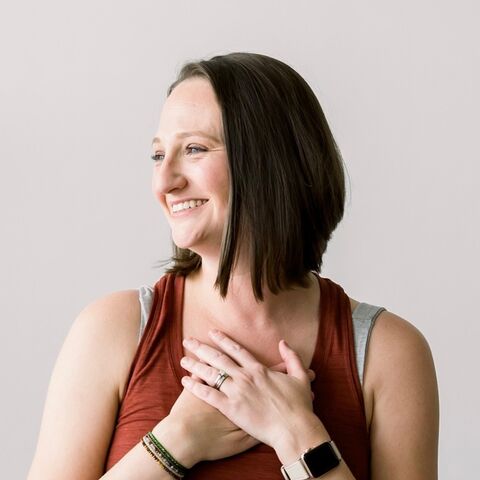
This is Lindsay Johnson,
Your somatic nurse.
And today I have for you an alignment meditation.
Alignment is a concept brought to me and my awareness by one of my teachers and mentors,
Kathy Kane.
In the somatic experiencing world.
And I have found that this particular meditation or somatic skill,
If you will,
Has been really helpful to start the day with.
Or if I feel like I really need to access my power,
Or if I need to,
Like,
Really be in my adult self.
This particular practice can be very helpful.
And so I will invite you to take the normal stance as you come into your body.
Feet on the floor if you can.
Back against the chair.
Just kind of noticing your body in space.
Taking some time to look around the room.
And you're welcome to close your eyes,
But this one really doesn't require it.
Just starting by noticing your breath.
And this is not a practice based on posture.
But it is sort of a postural.
Thing.
And I think you'll understand what I mean later.
And so if you can,
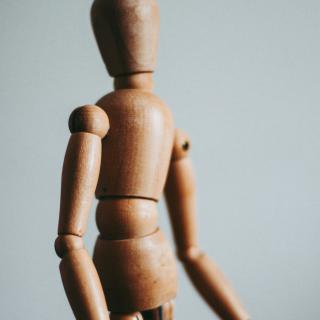
Maybe noticing your spine.
Your spine is made up of many bones,
Many vertebrae.
Connecting,
Connected through connective tissue and muscle.
It is stacked one bone on top of the other.
And through.
Each of the vertebrae.
There is the spinal column.
And so this spinal column and your spine are not rigid.
They move.
They are,
There are many bones for a reason.
So that it can be.
Fluid to a degree.
But there is also structure to it.
And so maybe you can contact.
What it feels like to feel the structure of your spine.
But also that it's not rigid.
If you'd like to move it around.
Feel free to do so.
If there's a different posture that you need to take.
In order to access this.
Noticing that there can be some softness here as well.
There's sort of this back and down quality.
That you can kind of access here.
And so when you're ready,
Maybe placing your attention on your hip bones.
And your hip bones are some really chonking bones.
They are thick.
If you've ever had.
Babies.
You know that they do move.
But they are very structurally important to your entire life.
Or so.
They kind of hold everything in.
It's this bowl.
This pelvic bowl.
And I really like using these two bones as A.
A resource point.
As they feel grounded.
Very stable.
And so maybe noticing the stability.
This pelvic bowl.
And how it might.
Relate to the spine.
You have this bowl.
And then you have a spine coming up from your pelvis.
And can you find that alignment between.
.
.
Those.
Two.
Things inside your body for lack of a better word.
And then when you feel ready.
Maybe giving a little bit of time to find your skull.
And your skull is of course stacked right on top.
Of your spine.
Noticing maybe the back and down.
Of that.
Maybe there's a tendency to kind of.
.
.
Chat here.
Head forward.
Maybe it doesn't have to do that right now.
Maybe it just gets to lay down on top.
Of your spine.
And now just taking a minute to notice all three at once.
Can you feel the alignment between your skull,
Your spine,
And your pelvic bowl?
What does it feel like to be?
Kind of facing the world from this position.
What does it do to your sense of agency?
Your thoughts.
What does it do to the sensations in your body?
Does it feel authentic?
Is it not?
And just being curious.
About what this brings in.
Maybe this is not the ideal.
Way that you like being and interacting with the world.
And just taking note of that.
My hope is that this is something that improves.
Bit of the self-agency.
That we.
.
.
Can kind of lose.
When we experience trauma.
And so if there's a lot of positive.
Energy here,
Only just taking some time to soak that in.
And the thing about these.
.
.
This resource,
These skills.
As they belong to you.
This is yours.
If you like this,
You can take this with you anytime you want.
You can take this out in the car.
You can take this while you are standing in front of someone and having a difficult conversation.
You can take this.
Anywhere.
Because it's already inside of you.
Thank you so much for being here.
I'll see you next time.