So in terms of.
Change.
I think I'd start off with a.
.
.
Dictionary definition of change,
The act or instance of making or becoming different.
Interesting.
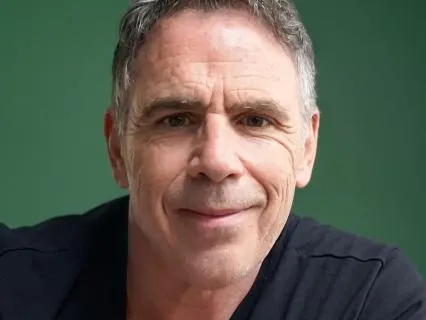
Perhaps the most common question I get when people find out I'm a psychotherapist is,
Can people change?
And I have a funny way of responding,
I usually say,
Well,
Absolutely.
I'm in the change business.
But I think it's also important to understand that there are certain.
Aspects of us,
Such as our personality,
Which are typically what we would call consistent over lifespan.
They don't change.
I myself was an introvert.
I will always be an introvert.
That's not going to change.
Certainly we can change behaviors with focus and intention.
And I'm going to talk a bit more about how we do that.
So one of the things that's really important to understand is there are many parts of the brain that have different functions and different priorities,
And those are often competing with each other.
So one of the things,
Probably the main job the brain has.
Is to keep us alive or keep us safe.
So in doing that,
The brain will seek what's familiar.
And we'll avoid the unknown,
Which can be dangerous.
Of course,
Scary.
Have all sorts of potential problems or dangers.
The problem with that is it often conflicts with their desire for something better.
So it's important that we understand why we stay with the familiar,
Even though it is causing issues in our life.
Now the survival instincts will seek safety.
But our higher self typically wants variety,
Success,
And various rewards,
Which will involve risk.
Or may involve risk.
If we allow ourselves to just seek safety and familiarity.
We'll have a very boring,
Uneventful,
And likely unsatisfying life.
So it's important to understand.
That you have to be intentional.
When you're going to change.
If you just allow yourself to kind of exist.
Your brain will just seek the familiar,
The comfortable.
That she's sort of maintained through,
You know,
The last few months or years.
You have to really focus on change.
Focus on what you want.
Be intentional,
I believe,
Each day.
To be successful.
Now,
Along with the.
Change.
As I mentioned,
Habits.
Habits are really key.
Element of understanding how to change These ingrained habits are often very difficult to change and sometimes we don't even realize to the degree.
How ingrained they are.
One of the.
.
.
To kind of.
Switch gears a bit,
I wanted to share a quote from William James,
He was a sort of a grandfather of modern psychology.
He did a lot of work in the late 19th century.
And here's a quote here,
It's kind of a whimsical quote.
It's not meant to be taken completely seriously,
But I do think there's a lot of truth to it.
And the quote is,
99 hundredths or possibly 999 thousandths of our activity is purely automatic and habitual,
From arising in the morning to our lying down each night.
And I think,
You know,
A lot of that,
I mean,
Most of that is quite true.
And if we really look deeply at ourselves,
We realize that we are,
As the saying goes,
Creatures of habit.
So one of the things that's important to understand about habits.
And this is something that we,
In the last 15,
20 years or so,
We've found out.
And there's more and more research being done all the time.
Is that ingrained habits have specific cues and rewards.
So the cues sort of trigger the habit,
The rewards are there to kind of sustain.
The habits in a sense that if there was no reward,
You would likely continue to have it.
And the thing we found out with a lot of this research as well,
And most people are aware of this now,
But I want to make sure it's clearly stated.
That our brain will rewire.
To a new neural pathway.
New behavior new habit.
If we are practicing this new habit or behavior each day for about 45 to 60 days.
From my understanding,
The research is pretty clear that we have to sort of actively do this new behavior each day.
It's not something you can do like a few times a week.
It has to be done each day for it actually to become an ingrained habit.
So we can.
Take bad or good advice.
Not bad,
But unhealthy.
Or unwanted habits and change them into more adaptive behaviors.
Healthy.
Habits with this focus and intention.
So,
For example,
You know,
We sit in front of the television and then we.
We sort of turn on Netflix and we create some snacks.
This is.
.
.
There's a Q associated with this.
We've also made associations between sitting down,
Watching it,
And eating.
Which is all sort of something that triggers us next thing you know,
We're getting up and we're eating those snacks and wondering.
Why this is happening continually.
I had a client one time,
And I'll tell this little quick little story.
I had a client one time that to come to see us about an alcohol problem.
And I think he stayed for a few weeks and then he was released.
And he was starting to go to work again.
He worked a week,
Did well,
He's still sober.
At the end of the week,
He went to the bank he typically goes to.
And in the past,
His pattern has been to go and cash his check.
And then go to the liquor store right next door.
So as you can probably guess.
He went to the liquor store.
I'm sorry,
He went to the bank.
Cassius check and then.
Walked right next door to the liquor store.
Basically on autopilot.
And then.
.
.
Contacted us a few days later.
Upset that he relapsed and confused how it happened.
And at that point,
He really wasn't even sure what happened.
Because he didn't.
He had no intention to drink.
He had no intention.
He didn't feel he made a conscious choice to drink.
And that's where this started.
This as some people would describe it on autopilot,
Would happen with these.
These automatic habits.
So what we suggested to this client,
Which was quite successful,
Was for him to simply find another bank.
That didn't have a liquor store next door.
He did that and was,
To my knowledge,
Was successful.
But going through that process like that,
He wasn't aware,
And we weren't aware.
Initially,
That that would happen.
So it's really important to understand the cues.
The rituals and the rewards.
That are part of these habit processes.
And.
And the other thing I should talk a bit more in detail,
I guess,
Is what we call neuroplasticity.
What that is is the term we use to describe the Basically,
How the brain changes so around twenty years ago,
We typically thought the brain was fairly fixed.
Once you became an adult.
You wouldn't,
Your brain wouldn't change much.
And once it was fully developed,
We were quite wrong.
We didn't understand.
As I just explained a few minutes ago,
With sustained focus.
You can change.
You can rewire your brain.
Find new neural pathways.
Ideally ones that are more adaptive ones that are more Positive.
And we sort of see this all the time.
But it's just important to understand that it's not something that's just going to happen if you Casually engaging in a new habit now and again,
There has to be a focus and attention,
In my view,
Daily.
And I think the research also supports that,
Too.
There has to be a focus on this each day.
So something else I wanted to talk about too,
This is something that we look at in terms of the change process.
I thought it might be helpful to just give an overview of this because So many people have loved ones.
Friends,
People they know who they can't understand why they won't change.
They clearly see behaviors that are not serving them well and don't understand why they don't change it somehow.
So I won't go into sort of where this comes from.
It's kind of complicated.
I don't think it's important.
But basically,
There's these stages in change.
And the first one is pre-contemplation.
The person in pre-contemplation is not considered change,
Is not in a place of change.
Of change.
The next stage would be contemplation.
And then action,
And then maintenance.
The reason this is important is if you're sort of trying to get someone in the pre-contemplation stage to change,
You're likely just going to encounter resistance.
They haven't considered it.
They're not ready.
You push them and you'll just get resistance.
Now,
One of the things that we typically find is people will coerce people.
Or give them ultimatums to change.
And so then you may see some change,
But typically what research shows is that the person is motivated to the change if they're doing it for someone else.
Typically the motivation for that change fades to almost nothing within the first 30 days.
And we've seen that sort of through research done on interventions with people.
Where they would agree through being coerced to make a change.
And then after 30 days,
They had almost no motivation for this change.
So it's important that people come to change and they're ready to change.
For their own reasons for it to be.
Sustainable,
And most people kind of know this.
You hear this all the time and people saying,
You know,
You,
The person has to want to change,
Which is,
Which is true.
So contemplation is the next stage,
And that's the stage where somebody has considered change.
But they haven't actually started it.
So if you encounter them at that point with some suggestions and encouragement,
That sort of thing,
Support maybe,
You might be able to get them to change because they are contemplating it.
They are wondering.
Maybe I should change this behavior.
Now the action stage is pretty explanatory.
People are actually changing and the maintenance just sustaining that change.
I find that model of change quite helpful as a person working with people.
To really make sure that you're meeting the person where they're at,
Which is sort of a social work term we use.
If you're not meeting them at a point farther ahead.
Which in most cases,
You just get resistance.
It's important to understand,
Too,
That when the brain rewires,
One of the things that research has shown that really cements that wiring of the new habit,
Behavior,
Of the new neural pathway is We need to focus on.
On the change as it's happening.
Be aware of it.
Acknowledge it.
And feel gratitude about that change.
And so what that would basically mean is that I have a good week where I've done the things that I've set out to do.
I focus on the success I've had.
I feel some gratitude over being successful.
Getting up one day.
Didn't feel like it,
Etc.
By doing that,
You really do sort of cement the change and reinforce that it's positive.
For your brain in a sense.
So that's something that gratitude is a wonderful tool.
For so many things.
Adding gratitude and just ramping up the gratitude.
Will make a huge difference in obtaining that positive mindset and change.
Now one of the other,
There are some other challenges that come up and I thought it was important to mention.
Some people just feel really stuck and they don't know what to do and they're just having so much difficulty.
Now,
Some people have really ingrained beliefs that are difficult.
That interfere with change,
One feeling worthy of change is one of them.
And certainly if you're finding yourself just spinning your wheels.
Not having success,
There's a lot of professionals out there that can help you.
Therapists,
Coaches,
Psychologists,
Etc.
If you're able to.
You know,
Seek them out.
So the other things that come up,
I thought it would be important to mention as well that we will often see is.
And one of them that the term most people are familiar with,
But they don't necessarily know what it's about.
And that's denial.
So denial is kind of a It's kind of a safety mechanism that your brain has to protect it from being overwhelmed.
What that means is if I've got a certain kind of behavior My brain is kind of like.
.
.
In denial about because to actually acknowledge that behavior,
Say I have a terrible addiction.
Something like that.
Would be overwhelming.
Would maybe break me in some way by just kind of admitting and accepting this this situation.
So denial at times is sort of a common thing the brain does.
There are certainly ways to help people in denial.
But it's important to understand why it's there.
People would have to come slowly to the idea of change.
Um.
Rather than being confronted with it.
Rationalization or rationalizing is something that we do all the time to keep us where we're at.
Say,
You know,
We can't afford to change.
Don't have time,
Too busy.
I tried in the past,
It doesn't work.
All of these things.
In some cases,
They may be true.
But typically they're just ways to keep us where we're at.
The one thing I've noticed with people through working with people for so long is that If you're living and just,
You know,
Offering these rationalizations all the time and not changing,
You're typically not going to be happy.
You're going to be except when you're self-presentable.
So being honest with yourself.
Having people in your life that be honest with you.
Very helpful to kind of.
And as I said,
If you go into approach change,
As I said earlier,
From the perspective of just doing a very small incremental change,
You don't have to go to the gym five days a week,
Even if you have to start with one day a week.
I think you'd understand what I mean.
That start very small.
Be consistent.
You will get there.
I guarantee that.
Just be consistent.
And there was another quote here that I wanted to share that I think sort of sums up a lot of this.
Life is what you make it.
The choice is in your hands.
And there's another quote I'm very fond of.
Next you know why not live a life you're proud to live.
And typically when I.
What I hear from people is But they're usually very happy if they attempt things.
They're usually very happy if they try.
And they usually don't have regrets,
But they at least try.
A lot of people don't try and are often have a lot of regrets for that.
I typically find people who try and aren't successful are much happier.
So give it a try.
Try to make small changes,
Try to be consistent,
Try to be compassionate with yourself,
Kind to yourself,
Encourage yourself,
Understand change is difficult,
It takes time.
But you know you will get there if you are focused and intentional.
Now,
Typically people,
If you have a person,
Support person or accountability partner or somebody that you can share with that can encourage you,
It'll make a huge difference.
I've witnessed change by so many people and one of the things I find so Um.
Enjoyable about my work and I'm truly honored to be here.
Sharing the journey with these people.
And I think it's probably the greatest reward I get as a therapist is seeing people change,
Seeing people who thought change wasn't possible.
Actually,
You know,
Make big changes and enjoy the benefits of that.
I mean,
It's.
.
.
I really,
Truly feel honored to be able to.
To share the journey with so many people.