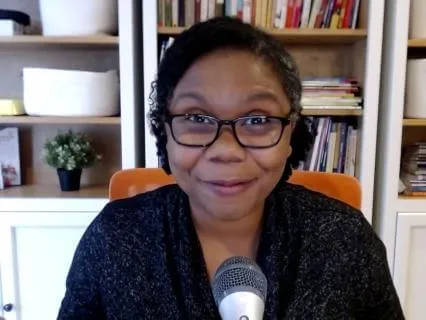
I'm Janine Halloran,
Your host,
And I am excited to be here in our next of our series all about coping skills for adults.
So today I really want to focus on the coping style of distraction,
Which is really focused on play and fun activities that we can do to help ourselves manage big thoughts,
Big feelings,
Big emotions as kids and adults.
But this one today,
We're really focusing on the adult piece of play,
Which I think is really fun and interesting.
To be talking about.
You know,
When I do speaking engagements for different organizations,
A lot of times when they ask me to speak about coping skills,
I also end up speaking about play.
And people are always sort of like,
Well,
Why do we end up talking about play so much?
And the reason why I talk about play is because play is a natural stress reliever for kids.
When I do speak about play at conferences,
One of my big resources that I use is this wonderful book called Play,
And it is written by Stuart Brown and Christopher Vaughn.
And so I tend to quote a lot from it because they talk about the power of play,
Not only in terms of how it impacts children,
How it impacts learning,
But how it can also impact the adults,
How it can impact their work life,
How it can impact their relationships and just,
You know,
Their enjoyment of life.
So I actually got a chance to meet Stuart Brown a few years ago,
Actually,
Several years ago now,
At one of the most playful conferences I have ever been to.
So I remember walking into this conference,
And at every table,
There was,
You know,
All sorts of activities for us to do as the adults.
So they had coloring books,
And they had markers,
And they had Play-Doh,
And they had fidgets.
I was all about this.
It was really fun to be able to actually sit and talk about play while we were playing.
So it was really one of those experiential conferences.
And during our extended lunch,
We actually got an opportunity to go outside and play Giant Jenga,
Giant Connect Four.
I mean,
It was just so wonderful and so much fun and so relaxing and so enjoyable.
Such a fun way to learn.
And it was incredible to hear Stuart Brown talk about the studies that he had looked into,
The research he's done around play.
And it was interesting because it was just all about the adults at this conference.
There were no kids there.
It was just all us,
You know,
Professionals trying to get more information about the importance of play.
And what I took away from that is when I wanted to start writing conferences and writing presentations myself,
I wanted to include play because I thought it was so powerful and so incredible.
I like hands-on.
I like that experiential piece of doing coping skills and doing some playful activities so that we can all try these things and learn together.
And that's,
You know,
One of the best ways to teach kids coping skills is by helping them doing it together with them.
And one of the benefits of being able to take that playful break,
Which we found at the conference,
Was it helped our brains just relax,
Get a little bit of a break,
And come back and be refreshed and able to learn and take in more and new information later.
So what is challenging sometimes is that play is frowned upon for adults,
I feel like.
It's sort of seen as childish.
Even for kids,
Sometimes people might say,
It's not useful for them to play.
They need to learn how to do different things.
They need to be exposed.
They need to do math They need to do reading all of these things But actually play is a way that children learn and a play is a way that they learn social skills They learn all sorts of things through play.
There's so much research about the benefits of play in childhood and beyond That I think we need to include it not only for our children as we are raising them,
But also for us I think we should play as adults What does play look like?
I thought about the different ways that we can integrate play as adults.
Actually,
In his book,
Stuart Brown talks about the importance of play at work and play in relationships and just play in general,
Play in life and how it impacts the quality of your life.
One of the things that he talks about is that he argues that play at work is essential because he talks about play being the mother of invention and how it sparks creativity.
And there's something to be said for being able to be playful when it comes to thinking about problems and trying to solve them in different ways.
There's a playful attitude that I think can be really helpful.
Depending on your job.
So my job,
In all honesty,
When I work with kids,
I get to play.
I bring all sorts of games.
I feel amazing when I put in fun markers and gel pens and different board games and different card games.
So that part for me,
It's very easy for me to be playful in my job.
And I chose it on purpose because I really like to play.
But you can also have a playful attitude when you are at work.
So I remember sitting in Logan Airport in Boston,
And I was waiting for a flight.
I wasn't going to Atlanta this time.
I think somebody else is going to Atlanta.
I just happened to be in the same area where a flight was going to Atlanta,
And there was this flight attendant,
The gate person,
Who was just having a blast,
Singing,
Talking about going to the A,
To the T,
To the L.
It's really fun,
And it was a playful attitude.
Airport when you've seen people and they just do not have a playful attitude.
They are cranky.
They are mad.
They are all business,
Right?
But there is something fun when you can have some lightheartedness,
Some playfulness to your day.
It can make your day go differently.
I find it very memorable.
I found that very memorable.
I also think about the Uber Eats delivery person who came to my house in a full apron and hat,
Like a chef's hat,
With Uber Eats on it.
And I said,
Did they give that to you?
And they said no.
They really love doing deliveries for Uber Eats.
Fills them with joy.
And so they wanted to really step it up a notch.
So they created this,
They stitched it,
And they made it.
They custom designed this Uber Eats outfit.
There's a playful attitude there that I really appreciate.
So you can bring a playful attitude to work as an adult.
I think that's fun.
I think that's fine.
I think it actually brings some joy and it can be a little bit hard to find that playfulness in your day.
But I think if you can,
Would be wonderful.
I also think about play in terms of significant relationships that you have.
Stuart Brown says in his book,
Play refreshes and fuels long-term adult relationships.
In a healthy relationship,
It's like oxygen,
Pervasive and mostly unnoticed,
But essential to intimacy.
So it's really one of those things that helps cement a relationship,
That helps repair a relationship.
When I was reading this quote,
It made me think of the work of John and Julie Gottman,
Who are huge relationship experts in the field.
Of marriage and family therapy and so they talk about this The thing you do when you're trying,
You've had a challenge in your relationship.
There's been an argument,
There's been a fight,
There's been a disagreement,
But then you have this bid to repair it.
So you're trying to reach out to your spouse or significant other to try and repair this break that happened.
Well,
What's interesting is if you read through some of the examples that they give of bids,
A lot of times it's very playful.
So it might be one spouse breaks up into a smile or one person says something that one of their kids says that always makes them both laugh.
So ways of being playful to really actually repair when things have gone off the rails in a relationship.
I think that's kind of an interesting focus to think about,
You know.
It's really hard to be in a long term relationship with somebody.
Relaxed in your way of approaching to try and figure out what to do next and get to the next step,
Get to that next point of,
Okay,
Let's actually have the conversation about what's going on after we've sort of diffused the negativity in the air with a little bit of playfulness and fun.
And then there's just play in life that Stuart Brown talks about in his book.
His quote is,
If we stop playing,
Our behavior becomes fixed.
We are not interested in new and different things.
We find fewer opportunities to take pleasure in the world around us.
That sounds devastating.
I don't want that to happen for me.
So I always try and find different ways to play.
And I want to encourage you to find out how you want to play.
So Stuart Brown suggests that if you can remember or visualize even something that you used to do,
It doesn't matter if it was like when you were a kid,
A teenager,
Or like a young adult,
And more.
Six months ago,
Three years ago,
Something that gave you that feel of like you could do it forever,
You could do it over and over and over again,
You're totally immersed in it,
You're totally feeling good joy and fun and excitement from it.
And it feels like you've lost time,
Like you could,
You all of a sudden you're like,
Oh my goodness,
All this time has gone by,
I didn't realize I was having so much fun with this,
Right?
So that is one of those things things,
That is a playful activity for you that might be something that you want to get back to.
And just as always,
Just like coping skills,
Play is different.
I always use the example of being at Disney World with my family and every,
Well,
Not everybody,
But a lot of people were having a blast on Splash Mountain and I was kind of miserable and it still makes my stomach hurt to think about it.
But my family loved it and they were super excited.
And so that was that was playful for them.
It was anxiety provoking for me,
To be honest.
So I want you,
When you're thinking about these things,
To think about you,
Think about what you actually enjoy.
Don't think about what looks cool on Instagram.
Don't think about what other people are going to think about you.
I actually think about a guest I had on a few months ago,
Sophie Garner.
She talked with us about with me and I shared it with you all about the therapy benefits of music and creating your own music writing your own music and She shared with me at the end of the interview all about the fact that she plays with Cindy dolls Which are not a thing in the US,
But I'm pretty sure they're a thing in the UK But it's really about playing with dolls for her That is how she plays and good for her for recognizing that and actually doing it I think that's really cool that she actually does that and she goes through and she plays and it's really it's It's actually therapeutic for her.
I think that's really cool.
I want you to think through what are those things that I used to love,
I used to enjoy a few years ago,
A decade ago,
Back when I was in high school,
Back when I was in elementary school.
What are those things?
Maybe you were really into D&D.
That's making a huge comeback right now.
Maybe you loved tennis.
Maybe you were all about show tunes.
Maybe you did a choir.
Maybe you were really into board games.
I want you think about and start to generate some ideas for yourself about what are those things that I can do that are playful that brought me joy in the past.
And that I could potentially do again as I was doing research for the podcast I came across a couple of really interesting articles all about play in the adult realm so Focusing on playtime for adults.
So what was really interesting?
There was this whole article about how Lego has sort of shifted a little bit to accommodate Adults playing with Legos as a de-stressor.
I think that's really awesome I still play with Legos because you know,
I'm a child therapist and I have Legos on over my house.
So I love Legos.
I love playing with those.
But how the Lego company is really focusing on recognizing that this is a way that adults do cope.
Adults do de-stress.
Adults do relax with their Legos.
And I think that's really neat.
So my encouragement to you today is to,
At some point in the next 24 hours,
Think about something that you loved doing in the past.
And when you find that thing,
I want you to figure out if there is a way that you can integrate that back into your life.
And it doesn't necessarily mean that next week you sign up to go and take tennis lessons with a tennis pro again.
You know what I mean?
Sometimes it might just be you making a plan to make a plan.
That is okay.
Make a plan to make a plan.
But I want you to try and figure out what are those things that I can do,
One thing I can do,
And to bring that back to me,
To find yourself again,
To do those fun things for yourself again.
There's actually all sorts of groups that meet at local places and online.
So I want you to start looking around and seeing if you can bring a little play back into your life.