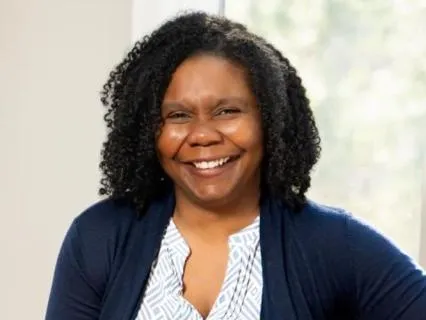
I'm your host,
Janine Halloran,
And today I want to talk to you about teens.
So I have a little bit of a secret.
I absolutely love working with teenagers.
I love their snarkiness.
I love the conversations that I can have with teenagers.
I love their insight and I love their honesty.
And one thing that I really want to share with you is that Teenagers use a lot of the same coping skills that kids use.
And adults do too.
But here's the thing.
Teenagers and adults just approach these coping skills in a different way.
So for younger kids,
I make it cutesy and I make it playful.
But for the teenagers,
I talk to them like I would talk to an adult client.
And I take into consideration that they are growing up and there's a lot of stuff happening for them and that they still need coping skills,
Even as teenagers,
Especially as teenagers,
They need coping skills.
So much is happening in their lives,
So much is happening in their brains that they need a lot of support and they need to figure out how to manage their emotions.
So of all times in our lives,
I think the teenage years are a time where it's really,
Really important to try and figure out how to manage your emotions.
So I just wanted to give you a few things that you can keep in mind when you're working with teenagers and working on coping skills with them.
The first is their brains are developing a lot.
This is the time of their life where their brains are developing.
Basically just as much as they were when they were infants.
And think about that.
When you are an infant,
Your brain development is insane.
It is really,
Really intense.
The same can be said for adolescence.
Adolescence brain development is intense.
There's a lot of stuff going on.
There's a lot of new connections being made,
All sorts of new pathways being created.
And so it takes a lot and there's a lot of sort of stop-and-start growth.
There's these like big bunches of growth and then it stops and then big bunches of growth and then it stops.
And so keep that in mind when you're working with teens.
Their brains are just growing so much.
So much is changing.
So much is developing day by day,
Month by month,
Year by year with teenagers.
Another thing to keep in mind is that they are bigger.
Their stuff is bigger.
Their emotions are bigger.
Their responsibilities are bigger.
They're thinking about the future in ways that younger kids don't necessarily think about all the time.
So they're thinking about jobs.
And relationships and careers and college or not college.
There's lots and lots of stuff going on.
They're also thinking about part-time jobs.
A lot of teenagers,
They're not only concerned about school and concerned about college and doing well in school,
They're also concerned about their part-time jobs and fitting in their relationships and fitting in all the things that they need to do.
Something else that I really appreciate about teenagers is their honesty.
They are brutally honest and I appreciate that.
I appreciate when they are honest with me about how they think,
What they think about my outfit or what's going on in the world or what's going on in their school or what's going on in a friend group.
And they appreciate the honesty that I give to them as well.
I try to be pretty honest and transparent when it comes to working with teens.
I try to be vulnerable because I want them to be vulnerable with me too.
It's hard.
It's hard to be vulnerable.
It's hard to trust.
And that's something that is really challenging for teenagers to trust,
To be vulnerable,
To open up.
And so it's helpful to create a space where they feel like they can share and they can be open.
And it's safe.
They need that in order to really start to even explore.
That relationship,
That connection is huge for teenagers.
I try to be really respectful of the fact that they're being vulnerable with me and I really try to protect their privacy.
And when I introduce coping skills to them,
I try and do it in a place where nobody else can see and nobody else knows.
So for example,
If I try a strategy like progressive muscle relaxation,
I explain to them,
You know,
This is what the strategy means.
You squeeze and release different parts of your muscle groups as in the whole goal is to get your body more relaxed.
Done something like this and I will share like I really like this strategy because it makes my body feel a little bit calmer after I do it and I will actually do it with them.
So there's something about being vulnerable in the room with a teenager,
Doing the strategy with them so they don't feel weird like you're looking at them like oh I have to do this but you don't have to.
So I do it with them.
We'll listen to a progressive muscle relaxation together and we'll do it together and then afterwards we'll say oh how was that for you?
Did it help you feel better?
Did it not help you feel better?
What are your thoughts on it?
Same for a strategy like mindfulness.
I actually just did this a few days ago with my client.
We did mindfulness while eating Hershey Kisses.
And we both had some interesting reactions to having a Hershey kiss sort of stay in your mouth for a little bit longer than typical.
And it was interesting to have that shared experience.
So I wasn't just giving her the strategy and having her do it on her own.
We did it together.
So there was that shared connection,
That vulnerability that we had together and that honesty and transparency.
Like,
Let's try this together and see how you feel.
And she kind of liked it.
So that was something really interesting to have that experience of trying something new.
The biggest thing I've learned over time when it comes to teenagers is they just want to be heard.
They want you to hear their story.
They don't want you to interrupt them and tell them what they're doing is wrong or that they shouldn't be doing that or,
Oh my goodness,
I can't believe that's happening.
They really just want you to hear them and listen to what they have to say.
There is a time and a place for going back over conversations and having teachable moments around challenging conversations.
But they really just want to be heard.
They want you to listen to them.
They want to tell you their stories.
You give teenagers a space where they feel free to talk and they feel free like nobody is going to judge them or tell them that they're doing something wrong or that they shouldn't be doing that or that's not okay.
They'll tell you a lot of stuff.
And then you can interact with him around that.
Like,
Oh gosh,
Let's think critically about this.
Let's figure out what to do next.
But teenagers just want to be heard.
They want to be listened to.
They want their stories to be heard.
So give them a few minutes and listen to them.