Hello,
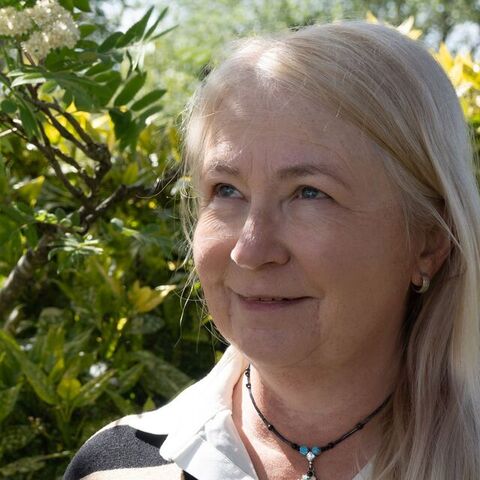
I'm Lucy and this is a space for slowing down,
Reflecting and growing.
So let's take a look at backseat driving and its relationship to control,
Hypervigilance and trust.
We'll do some meditation and have some science at the end.
You might recognise the sort of backseat driving that I mean,
Where you are watching every car,
Pedestrian,
Animal,
Kerbside,
Pothole and traffic light,
But you are not the one in the driving seat.
You might verbalise every worry and flinch at every corner or turn of the wheel.
This unsettles the driver and eventually erodes their confidence.
At least that is my experience when I have been doing backseat driving myself.
Many of us move through life as though we're holding an invisible steering wheel.
We grip tightly.
We try to stay ahead of what's coming.
We anticipate problems before they arrive.
We rehearse conversations.
We manage possibilities.
We monitor outcomes,
Often without even realising we're doing it.
This habit can feel responsible.
It can feel productive.
And yet it can also be exhausting.
So for the next few minutes we'll explore what it feels like to put down the steering wheel.
Not giving up.
Not becoming passive.
But simply allowing a brief rest from the effort of trying to control everything.
Because sometimes the more we try to be in control,
The less relaxed and alive we feel.
So now it's time to begin.
Take a moment to settle into a comfortable position.
Notice the contact points to your body.
Whether it be the chair or the floor.
Review every contact point.
And notice any clothing against your skin.
Is it heavy or tight?
Maybe adjust it so you can relax.
And not be distracted by any discomfort.
Comfort is key.
Allow your eyes to close if that feels right for you or keep them softly gazing at a non-moving spot in the room.
And take a few easy breaths.
Now focus on your breath.
Let it be your anchor for the next few minutes.
Follow the breath in and out.
And if you want,
Label your breath in your mind's eye.
In on the inhale and out on the exhale.
Notice the breath at the tip of your nose,
Cooler.
The oxygen in the air brings energy to your body.
And as you breathe out.
Breathe out any stress.
Extending the exhalation,
If you want to,
Will help you calm.
Notice that the breath is arriving on its own.
You don't need to force it.
You don't need to improve it.
You don't need to manage it.
Just let yourself be breathed.
Notice the support beneath you.
The Chair.
The cushion.
The floor.
Feel the simple fact.
That in this moment,
You are being held.
Nothing extra.
Is required.
Now imagine or pretend or get a sense of the fact that you've been carrying a steering wheel.
Perhaps for years.
A steering wheel representing all the things you've been trying to control.
Other people's opinions maybe.
Maybe future outcomes.
How quickly things happen.
Whether life unfolds according to your plans or something else.
Notice how tightly or loosely you're holding it.
No need to change anything.
Just notice.
Notice what happens in your body.
As you imagine holding on.
Perhaps there is tension.
Effort.
Responsibility.
A feeling of needing to stay alert.
Now imagine or pretend to place that steering wheel gently beside you.
Just for a few minutes.
Not forever.
You can pick it up again later.
If you wish.
For now.
Simply set it down.
And notice.
What changes.
What softens.
What becomes possible.
As thoughts arise,
There's no need to push them away.
No need to follow them.
Simply notice them.
Like scenery passing outside a window.
Appearing,
Changing,
Disappearing.
If the mind begins to try to organise,
To solve or manage,
Gently smile.
The mind is doing what minds do.
And then return to this moment.
This breath.
This body.
This simple experience of being alive.
Nothing to control.
Nothing to fix.
Nothing to figure out right now.
Justice.
Perhaps peace isn't found in finally getting everything under control.
Perhaps peace begins when we realise that much of life was never ours to control in the first place.
The weather.
The future.
Other people.
The timing of events.
The unfolding of circumstances.
And perhaps there is freedom.
In recognising the difference between what we can influence and what we can simply allow.
As we come to the end of this meditation.
Take a deeper breath.
Notice how you feel.
Notice whether there's even a small amount of more space,
A little less effort.
A little more ease.
As you move through the rest of your day.
See if you can remember the image.
The steering wheel resting beside you.
A reminder that you don't have to direct every moment of the journey.
Sometimes life asks us not to take control.
Sometimes it asks us to trust.
And sometimes it asks us simply to enjoy the ride.
As we begin to end this practice.
Start to refocus your attention to your breathing once more.
Notice your contact points with the floor or the chair.
Notice the weight of your body on the floor and chair.
And when you're ready.
Gently open your eyes.
The reality.
Is that improving some of the seemingly insignificant things that we often ignore,
Such as backseat driving.
Can have as much of a profound effect on our well-being and those around us as improving the big things.
It's the small wins and gains that can make all the difference.
And these small changes can show just how far you have come in your journey.
The key is not to force things or get despondent if you still have some reactions as a passenger.
Is important to note from a scientific research point of view.
That research finds that experienced drivers often show automatic co-driving reactions when riding as passengers.
And these might include Pressing an imaginary break with the foot.
Tensing leg muscles as if preparing to break.
Grabbing armrests or leaning into turns,
And increased physiological responses,
Heart rate,
Skin conductance,
When the driver behaves differently from how the passenger would.
And why do we do that,
I ask?
Well,
Our brain simulates actions.
When you watch someone else perform a familiar task,
Your brain partially activates some of the same neural systems involved in performing that action yourself.
So there are some things you can't control perfectly until Perhaps we need to look at acceptance.
In practical terms,
How do you use this meditation?
Well,
You can take a few moments before a car journey to meditate using this meditation.
Or if there isn't time.
Then during the journey,
When you find yourself backseat driving.
Become aware of this and realise that you can try something different and perhaps do some soft breathing with a focus on the out-breath to relax the body and mind.
Preparation is helpful and so practising this meditation beforehand,
Before a journey,
Is a very helpful thing to do.
I've found that practising beforehand helps and there is always progress to be made and you give the driver a break as well.
Of course,
The car journey is a metaphor for those times when you have to accept that not everything is under your control.
And you have to let go just a little.
And build your own banks of trust.
Use this meditation.
When you have anxiety about outcomes,
Have difficulty with trusting other people,
You feel that you must constantly be in control and find it challenging when things don't always go to plan.
Send me your feedback and let me know how you get on.
And thank you so much for spending this time with me.
I'll see you next time with more practical meditation in life.
Until then,
Be well.
And remember,
Meditation is the greatest gift you can give to yourself.