Have you noticed that sometimes you can meet a difficult moment and still think clearly?
While another day a much smaller thing feels like too much?
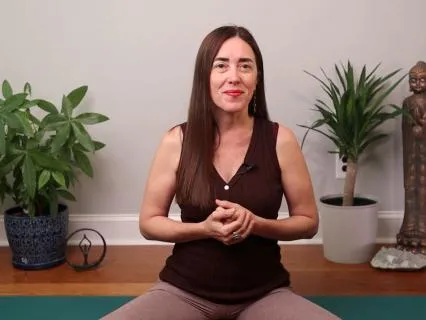
I am Diana Pereira,
Fellingress practitioner and somatic teacher.
Today we will explore a useful framework called the window of tolerance and try a short practice to notice what kind of support may fit you right now.
The window describes a range in which we can experience emotion and still stay connected enough to respond.
You might be upset and unable to listen.
You might feel nervous and still decide what to do next.
When activation feels too high,
You may notice urgency,
Agitation,
Or thoughts moving very quickly.
When it feels slow,
You may feel distant or find it difficult to engage.
Some people experience a mixture of both.
This is a way of describing experience.
It cannot tell you the cause of your symptoms and it's not a diagnosis.
Feeling tired,
For example,
Doesn't automatically mean you are in a shutdown response.
You also don't need to feel calm all the time to be doing well.
The useful question is whether you have enough room to notice what is happening and choose a response.
Let's explore gently.
Sit with whatever support is comfortable.
Keep your eyes open.
If that helps you stay connected to the room.
You can skip any invitation or stop and look around if you feel more distressed.
Notice something outside yourself.
Perhaps the edge of a table.
Or a familiar color.
If looking isn't available to you,
Notice a sound or an object within reach.
Now ask yourself,
How manageable does this moment feel?
You don't need to find the perfect label.
Maybe there's some rushing.
Maybe there is distance,
Maybe you feel fairly present.
An uncertain answer is useful as well.
Now choose one contact point you can notice comfortably.
It might be your hand resting on the chair.
Or your back against the cushion.
If body attention is uncomfortable.
Continue with the object or a sound instead.
If you feel wound up,
Try making one small thing less demanding.
Let the chair carry a little more of your weight if that feels comfortable.
Allow your hands to rest.
Your breathing can continue in its own rhythm If you feel distant,
You might prefer a small action.
Slowly open and close one hand,
Once or twice.
Or name an object in the room out loud.
You can also stay still.
And listen.
Notice how that choice lands.
Does it feel helpful?
Unhelpful,
Or about the same.
You are allowed to change your mind.
If a cue makes things harder,
Leave it and return to something familiar around you.
Choose one more small support.
Perhaps adjust your seat.
Perhaps look toward a window.
Maybe decide that what you need next is a break or a conversation with someone you trust.
Before we finish,
Think of one early sign that you could notice during one ordinary day.
For example,
You might realize you are rushing through a conversation.
Or finding it harder to take in what someone says.
What could you do at that point?
While there is still some room to choose.
Think about it.
You might say,
I need a moment,
Or ask for something to be explained again.
You might meet a basic need or seek support.
Today's practice is a chance to learn about your own experience.
Your response can vary from day to day.
If overwhelm or disconnection is persistent.
Professional support can help you understand it and find approaches that fit.
I thank you so much for taking this time with me.
I look forward to seeing you in my next video and in the meantime,
I send you so much love.