Worksheet
Window of Tolerance: Nervous System Zones
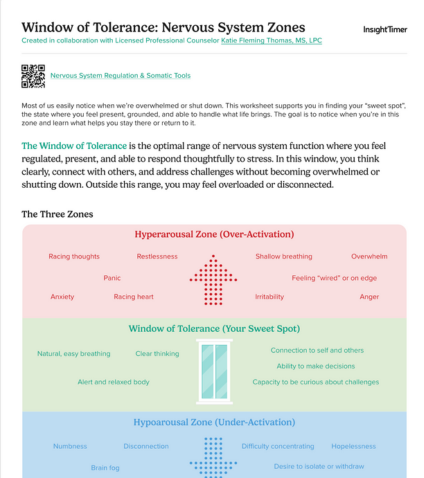
The window of tolerance is the nervous system’s optimal zone, where one feels calm, present, and able to respond flexibly to everyday stressors. This worksheet helps users recognize when they’re regulated versus when they move into hyperarousal or shut down, supporting self-awareness and emotional regulation in daily life.

How to Use This Worksheet
Review the three nervous system zones—hyperarousal, window of tolerance, and hypoarousal—and use the reflection prompts to notice how your body feels in each state and what supports help you stay regulated. Track early warning signs and practice gentle somatic tools to return to your optimal zone when stress or overwhelm arise.
Who This Worksheet Is For
This worksheet is designed for anyone seeking greater emotional regulation, stress resilience, and nervous system self-awareness—including trauma survivors, therapy clients, and individuals navigating everyday life challenges.
Expected Outcomes
- Clear understanding of personal window of tolerance and early warning signals
- Increased self-awareness for recognizing stress and emotional dysregulation
- Practical tools for expanding your window and supporting nervous system regulation
- Greater confidence in applying grounding exercises, mindfulness, and self-compassion
Related Topics
References
Siegel, D. J. (1999). The Developing Mind: How Relationships and the Brain Interact to Shape Who We Are. Guilford Press.

Frequently Asked Questions About Window of Tolerance: Nervous System Zones Resources
© Copyright 2026 Insight Network Inc. All rights reserved.
If you are in a crisis or any other person may be in danger - don’t use this site. Use these resources