Worksheet
What Safety Feels Like in Your Body: An Embodied Practice for Navigating Racial Stress in Shared Spaces
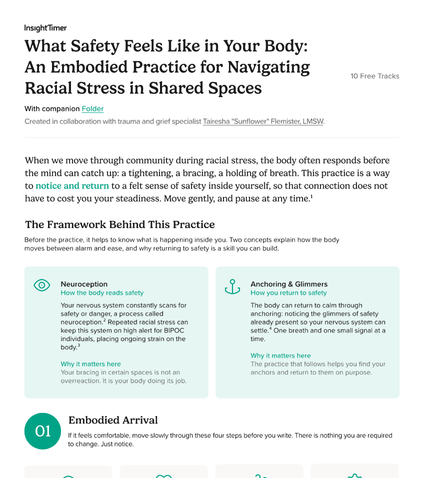
This clinically grounded somatic resource provides a structured, trauma-informed framework for tracking the physiological impacts of racial stress. Developed in collaboration with trauma and grief specialist Tairesha "Sunflower" Flemister, LMSW, this tool helps BIPOC individuals process involuntary bracing, tightness, or breath-holding in collective settings. By translating polyvagal theory and neuroception principles into real-time somatic awareness, this guide helps users access internal anchors of safety without sacrificing their boundaries or energetic steadiness.

by Insight Timer in collaboration with Sunflower Flemister
How to Use This Worksheet
This worksheet serves as an active, body-centered grounding protocol before entering or after leaving shared spaces. Individuals follow a structured, four-step embodied arrival process - soften, rest your hands, breathe, and feel support - to assess their baseline nervous system state. Clinicians can integrate these somatic prompts during sessions to help clients categorize internal sensations, intentionally isolate subtle "glimmers" of physiological safety, and develop functional boundaries to prevent relational overextension.
Who This Worksheet Is For
This worksheet is uniquely designed for BIPOC individuals, adult survivors of systemic trauma, and anyone navigating chronic autonomic activation caused by racial stress in community environments. It offers a practical psychoeducational toolkit for culturally responsive clinicians, trauma-informed therapists, somatic coaches, and group facilitators seeking to build physical self-regulation skills in vulnerable populations.
Expected Outcomes
- Enhanced insight into personal involuntary physical responses to racial stress and environments.
- Improved ability to use structural body-based anchors and micro-cues to return to physiological calm.
- Greater self-compassion by framing automatic defensive bracing as a valid neuroceptive survival response.
- Reduction in the baseline allostatic load and overall systemic tension carried within the physical body.
Related Topics
References
Menakem, R. (2017). My Grandmother's Hands: Racialized Trauma and the Pathway to Mending Our Hearts and Bodies. Central Recovery Press.
Porges, S. W. (2011). The Polyvagal Theory: Neurophysiological Foundations of Emotions, Attachment, Communication, and Self-Regulation. W. W. Norton.
Geronimus, A. T., Hicken, M., Keene, D., & Bound, J. (2006). "Weathering" and age patterns of allostatic load among Black and White adults in the United States. American Journal of Public Health, 96(5), 826–833.
Dana, D. (2018). The Polyvagal Theory in Therapy: Engaging the Rhythm of Regulation. W. W. Norton.
Frequently Asked Questions About What Safety Feels Like in Your Body: An Embodied Practice for Navigating Racial Stress in Shared Spaces Resources
© Copyright 2026 Insight Network Inc. All rights reserved.
If you are in a crisis or any other person may be in danger - don’t use this site. Use these resources