Worksheet
Thoughts Are Not Facts – The FIDO Exercise Mindfulness-Based Addiction Recovery (MBAR)
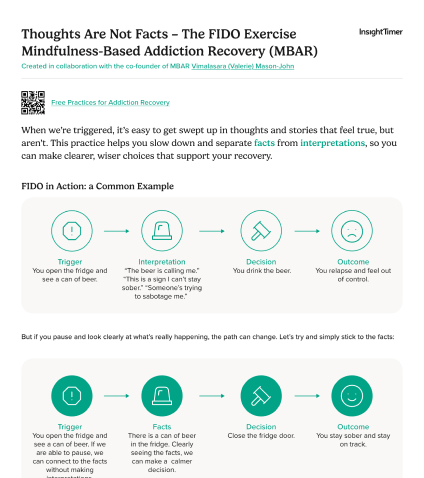
The FIDO Exercise Worksheet helps clients pause and separate facts from interpretations when triggered, making space for mindful decisions. Therapists can use this MBAR tool to support recovery, help clients notice triggers, and build new, healthier habits.

by Insight Timer in collaboration with Valerie (vimalasara) Mason-John
How to Use This Worksheet
Therapists can use this worksheet, in addition to treatment, to help clients notice triggers, the stories they tell themselves, and consider their decisions. Practice journaling with real-life examples to separate facts from thoughts in daily life and recovery.
Who It’s For
This worksheet is designed for anyone in recovery, especially those prone to impulsive decisions or ruminative thinking when triggered. It’s helpful for individuals, therapy clients, and groups wanting to develop mindful awareness and break free from unhelpful thought cycles.
Expected Outcomes
- Greater skill at pausing before acting on thoughts
- Increased ability to distinguish facts from interpretations
- Improved impulse control and decision-making
- Enhanced self-awareness and resilience in recovery
Related Topics
References
Bowen, S., Witkiewitz, K., Clifasefi, S. L., Grow, J., Chawla, N., Hsu, S. H., Carroll, H. A., Harrop, E., Collins, S. E., Lustyk, M. K., & Larimer, M. E. (2014). Relative efficacy of mindfulness-based relapse prevention, standard relapse prevention, and treatment as usual for substance use disorders: a randomized clinical trial. JAMA Psychiatry, 71(5), 547–556. https://doi.org/10.1001/jamapsychiatry.2013.4546
Valerie Mason-John. (n.d.). Mindfulness Based Addiction Recovery. Retrieved September 16, 2025, from https://www.valeriemason-john.com/mindfulness-based-addiction-recovery/

Frequently Asked Questions About Thoughts Are Not Facts – The FIDO Exercise Mindfulness-Based Addiction Recovery (MBAR) Resources
© Copyright 2026 Insight Network Inc. All rights reserved.
If you are in a crisis or any other person may be in danger - don’t use this site. Use these resources