HomeWorksheetsAudioTopics
Free Workshops
Self Care
Directory
  1. Worksheets
  2. >
  3. CBT
  4. >
  5. Thinking Errors: Cognitive Distortions for Children

Worksheet

Thinking Errors: Cognitive Distortions for Children

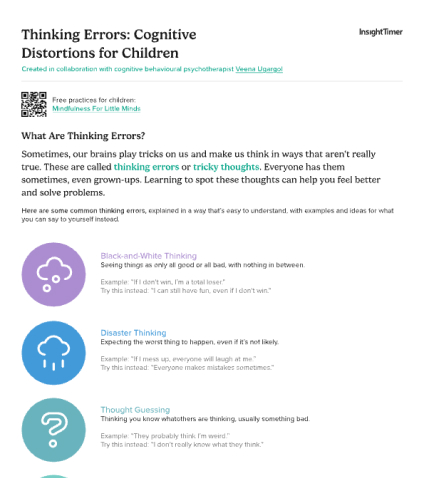
This child-friendly cognitive distortions worksheet introduces common thinking errors like all-or-nothing thinking, emotional reasoning, and fortune telling in an engaging, age-appropriate format. By helping kids recognize irrational thoughts and unpleasant feelings, therapists can support emotional regulation, reduce anxiety, and build long-term mental health skills through guided practice and discussion.

IT

by Insight Timer in collaboration with Veena Ugargol
PDF Preview
  1. Worksheets
  2. >
  3. CBT
  4. >
  5. Thinking Errors: Cognitive Distortions for Children

How to Use This Worksheet

This worksheet is designed to help children identify common thinking errors in a developmentally appropriate and engaging way. Through guided examples, kids can begin to recognize patterns like emotional reasoning, mind reading, and black-and-white thinking that contribute to negative feelings and behaviors. Therapists can walk through each example during sessions or assign it as a practice tool for children to complete with a parent or guardian.

Who It’s For

This worksheet is ideal for children who frequently experience anxiety, low self-esteem, or intense emotional responses that are difficult to explain. It’s especially helpful for young clients who may struggle to understand the connection between their thoughts, feelings, and behavior.

Expected Outcomes

  • Increased awareness of irrational thoughts and how they influence feelings
  • Ability to label and challenge cognitive distortions using real-life examples
  • Improved emotional regulation and communication around difficult emotions
  • Greater mental health literacy for children and caregivers alike

Related Topics

CBTChildren

References

Galí, D., Forcadell, E., Primé-Tous, M., Puig, O., & Lera-Miguel, S. (2023). Cool Kids: Cognitive Behavioral Therapy in a Spanish Sample of Children and Adolescents with Anxiety Disorders. Child Psychiatry & Human Development. https://doi.org/10.1007/s10578-023-01579-w 

Extend your care without extending your time

Add worksheets, meditations, and in-session tools to personalised folders, and share them with your patients. For free.

Create a Profile
Create a Profile

Frequently Asked Questions About Thinking Errors: Cognitive Distortions for Children Resources

Yes. All of our worksheets are free to download and use, whether you're a licensed mental health professional, educator, or caregiver. Children and families can access the material directly without needing an Insight Timer account.
This worksheet can be introduced during therapy sessions or shared for at-home practice. Therapists may walk children through examples of common thinking errors, such as all-or-nothing thinking, emotional reasoning, or mind reading, and then help them identify similar patterns in their own thoughts.
Yes. This worksheet is grounded in principles from cognitive behavioral therapy (CBT), specifically adapted for children. It helps kids recognize irrational thoughts, build emotional awareness, and develop healthier cognitive patterns—a critical component of early mental health support.
This worksheet is designed for elementary and middle school children, though it can be adapted for younger or older kids depending on their cognitive and emotional development. The examples and language are age-appropriate for introducing concepts like negative thoughts, irrational beliefs, and helpful thinking.
Absolutely. You can send this worksheet to parents, teachers, or caregivers using a private share link. There’s no account required to access it, which makes collaboration across home and school environments seamless.
Yes. With a therapist profile on Insight Timer, you can curate worksheets, meditations, and child-friendly tools in personalized resource folders tailored to specific client needs—including topics like anxiety, emotional regulation, and cognitive distortions.

© Copyright 2026 Insight Network Inc. All rights reserved.

Crisis support

If you are in a crisis or any other person may be in danger - don’t use this site. Use these resources

CompanyAbout usMediaCareersTherapist Toolkit
Help and supportSupportContact us
LegalTerms of ServicePrivacy PolicyCA Notice at CollectionAccessibility Statement