Worksheet
The Science Behind Breathwork
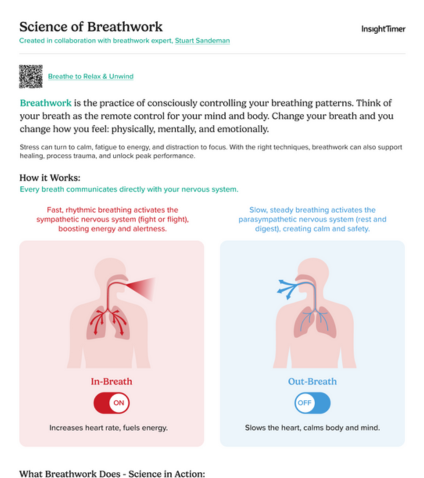
The Science of Breathwork Worksheet explains how breathwork can positively shift physical and mental states and guides clients through practical breathing exercises chosen for specific benefits. Use these science-backed strategies to experience benefits like improved sleep, greater clarity, and stress reduction.

by Insight Timer in collaboration with Stuart Sandeman
How to Use This Worksheet
This science-based breathwork worksheet offers clear explanations about how breathing affects your body and mind, plus examples of exercises anyone can try. Clients will learn practical techniques—such as slow, rhythmic, or energizing breathwork—chosen for their ability to promote relaxation, restore energy, or help with emotional release. Each exercise includes suggested uses, like calming anxiety, improving sleep, or boosting focus, so users can match the method with their specific wellness goals.
Who It’s For
This worksheet is designed for clients interested in practical ways to improve relaxation, energy, or emotional balance through science-based breathwork. Therapists and health professionals can use it to teach clients effective breathing exercises, support stress management, and promote mental well-being in individual or group settings.
Expected Outcomes
- Greater ability to use breathwork for relaxation, energy, or emotional release
- Improved understanding of breathing exercises and what they’re useful for
- Increased skillfulness with practical breathwork routines for everyday wellness
- More confidence in using science-backed breathing techniques to manage physical and mental stress
Related Topics
References
Balban, M. Y., Neri, E., Kogon, M. M., Weed, L., Nouriani, B., Jo, B., Holl, G., Zeitzer, J. M., Spiegel, D., & Huberman, A. D. (2023). Brief structured respiration practices enhance mood and reduce physiological arousal. Cell Reports Medicine, 4(1), 100895. https://doi.org/10.1016/j.xcrm.2022.100895

Frequently Asked Questions About The Science Behind Breathwork Resources
© Copyright 2026 Insight Network Inc. All rights reserved.
If you are in a crisis or any other person may be in danger - don’t use this site. Use these resources