Worksheet
The Mindfulness Triangle: Beginner Mindfulness
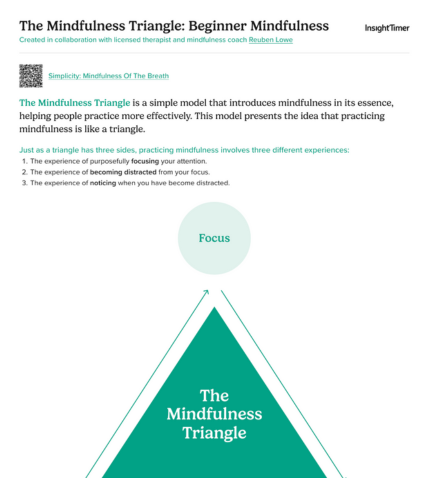
The Mindfulness Triangle is a simple model that teaches the three phases of mindfulness practice - focusing, getting distracted, and noticing - in a clear, accessible way. This worksheet helps clients understand the natural attentional cycle that underpins mindfulness-based therapies, strengthening present-moment awareness, emotional regulation, and self-compassion. It offers an excellent entry point for beginners and supports deeper skill-building for those navigating stress, anxiety, or attentional overwhelm.

How to Use This Worksheet
Therapists and educators can introduce The Mindfulness Triangle. It’s particularly helpful for people who prefer a visual component to learning. By coming to know the three stages of the triangle - Focus, Get Distracted, and Notice - it can be particularly helpful for those being taught to normalise distraction, with the emphasis placed on bouncing around at the bottom of the triangle.
Who This Worksheet Is For
This worksheet is designed for individuals learning or deepening mindfulness practice, including:
- Beginners seeking a grounded introduction to mindfulness
- People experiencing stress, anxiety, or emotional intensity
- Clients managing rumination or concentration challenges
- Individuals engaged in ACT, MBCT, MBSR, or other mindfulness modalities
- Students or organizations exploring applied mindfulness skills
It is especially useful for clients who benefit from visual models and structured instruction.
Expected Outcomes
Clients who work with the Mindfulness Triangle may experience:
- Stronger ability to focus attention on a chosen anchor
- Greater awareness of distraction
- Improved emotional regulation during stressful moments
- Increased self-compassion and reduction in self-criticism
- More consistent daily mindfulness practice
Related Topics
References
Kabat-Zinn, J. (1990). Full Catastrophe Living.
Kabat-Zinn, J. (1994). Wherever You Go, There You Are.
Segal, Z. V., Williams, J. M. G., & Teasdale, J. D. (2002). Mindfulness-Based Cognitive Therapy for Depression.
Bishop, S. et al. (2004). “Mindfulness: A Proposed Operational Definition.” Clinical Psychology: Science and Practice.
Baer, R. (2003). “Mindfulness Training as a Clinical Intervention.” Clinical Psychology: Science and Practice.
Frequently Asked Questions About The Mindfulness Triangle: Beginner Mindfulness Resources
© Copyright 2026 Insight Network Inc. All rights reserved.
If you are in a crisis or any other person may be in danger - don’t use this site. Use these resources