Worksheet
The 5 Stages of Grief
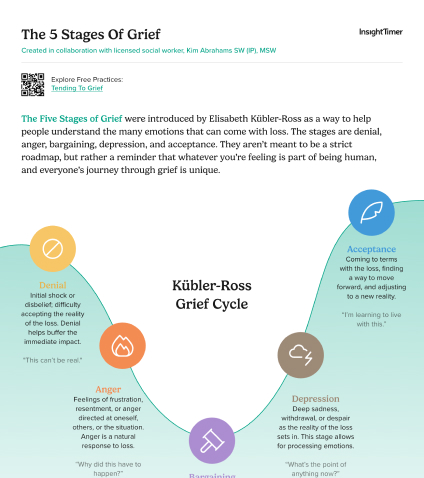
This 5 Stages of Grief Worksheet helps clients explore denial, anger, bargaining, depression, and acceptance—key phases of the Kübler-Ross grief model. Ideal for navigating grief after loss or terminal illness, it supports emotional expression, self-compassion, and a deeper understanding of the grieving process.

How to Use This Worksheet
Therapists can introduce this worksheet in individual or group therapy settings to help clients explore their emotional responses to loss. Use it as a reflective tool during sessions or assign it between sessions to support continued processing. Clients can engage with each of the five stages to better understand the non-linear nature of grief and identify where they currently are in their healing journey.
Who It’s For
This worksheet is designed for individuals processing the loss of a loved one, navigating anticipatory grief, or experiencing complex emotions related to terminal illness or major life changes. It’s especially useful for clients in grief counseling, support groups, or those struggling with acceptance and emotional regulation after a significant loss.
Expected Outcomes
- Increased awareness of the five stages of grief
- Improved ability to identify and name difficult emotions
- Greater self-compassion and emotional clarity
- A more structured path through the grief and healing process
Related Topics
References
Kübler-Ross, E., & Kessler, D. (2005). On grief and grieving: Finding the meaning of grief through the five stages of loss. Scribner.

Frequently Asked Questions About The 5 Stages of Grief Resources
© Copyright 2026 Insight Network Inc. All rights reserved.
If you are in a crisis or any other person may be in danger - don’t use this site. Use these resources