Worksheet
Supporting Strategies for Trauma and PTSD
This trauma and PTSD worksheet provides strategies for coping with post-traumatic stress disorder, traumatic stress, and intrusive memories. It supports treatments like trauma-focused CBT, prolonged exposure therapy, and eye movement desensitization, with self-care tools and reflection prompts.

by Insight Timer in collaboration with Tara Brach
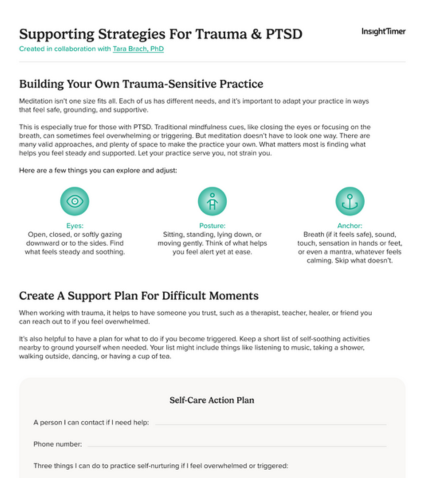
How to Use This Worksheet
Therapists can use this worksheet during or outside of sessions, in groups, or for personal self-care routines. Guide clients to explore simple strategies—like grounding exercises, breathing techniques, and emotion tracking—to assist with PTSD symptoms, avoidance, and distressing memories. The worksheet is best used in conjunction with trauma-focused therapies, encouraging reflection on traumatic experiences and identifying emotional and physical responses.
Who It’s For
This worksheet is designed for anyone recovering from traumatic stress or adults diagnosed with PTSD, as well as new clients beginning therapy. It’s especially helpful for those seeking practical, gentle ways to process trauma memories, manage symptoms like anxiety, fear, or avoidance, and build resilience through self-care and professional support.
Expected Outcomes
- Improved identification and understanding of PTSD symptoms and emotional responses
- Development of coping skills for distressing memories, avoidance, and intrusive thoughts
- Increased use of self-care, grounding, and reflection techniques to aid recovery
- Support for emotional processing and resilience-building after traumatic experiences
Related Topics
References
Watkins, L. E., Sprang, K. R., & Rothbaum, B. O. (2018). Treating PTSD: A review of evidence-based psychotherapy interventions. Frontiers in Behavioral Neuroscience, 12, 258. https://doi.org/10.3389/fnbeh.2018.00258

Frequently Asked Questions About Supporting Strategies for Trauma and PTSD Resources
© Copyright 2026 Insight Network Inc. All rights reserved.
If you are in a crisis or any other person may be in danger - don’t use this site. Use these resources