Worksheet
PTSD Myths and Facts
The PTSD Myths & Facts Worksheet helps clients replace common misconceptions about post-traumatic stress disorder with accurate, compassionate understanding. Many people silently struggle with shame, fear, or the belief that their symptoms reflect weakness. This worksheet supports clients in exploring these beliefs, reframing them with evidence-based perspectives, and developing a more supportive relationship with their trauma responses. Through guided reflection, it encourages self-validation, reduces stigma, and builds the foundation for safer trauma exploration in therapy.

by Insight Timer in collaboration with Reuben Lowe
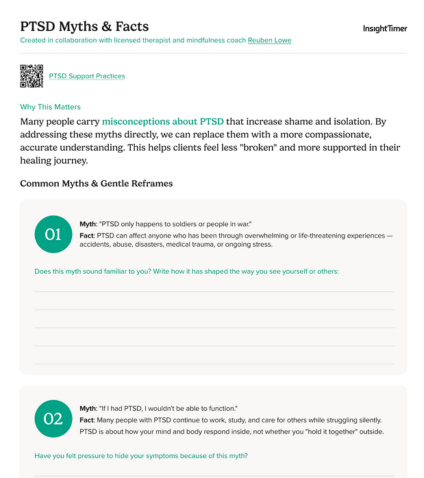
How to Use This Worksheet
Therapists can introduce this worksheet at the start of trauma-focused treatment or as a gentle entry point for clients who feel hesitant about PTSD discussions. Invite clients to read each myth, explore the factual reframe, and reflect on how the misconception may have shaped their self-perception. Use the journaling prompts to deepen awareness and help clients connect their lived experiences to the compassionate truths offered. This worksheet also pairs well with psychoeducation, grounding practices, and trauma-informed mindfulness strategies.
Who This Worksheet Is For
This worksheet is designed for:
• Clients beginning trauma work who may feel fear, shame, or uncertainty
• Individuals diagnosed with PTSD or experiencing trauma-related symptoms
• Survivors of accidents, abuse, medical trauma, disasters, or chronic stress
• Clients who believe common myths about PTSD that impact their self-worth
• Therapists seeking a gentle, psychoeducational tool to support trauma-informed care.
It is also appropriate for adolescents and adults in both individual and group therapy settings.
Expected Outcomes
Clients who work with the PTSD Myths & Facts Worksheet may experience:
• Reduced internalized stigma and increased self-compassion
• Better understanding of how PTSD symptoms arise from adaptive survival responses
• Greater ability to identify avoidance patterns that maintain distress
• More confidence in seeking support or continuing trauma-informed therapy
• A stronger foundation for processing traumatic experiences safely and gradually
Support Your Clients Beyond the Session With Insight Timer
Enhance trauma-informed care by using Insight Timer’s therapist tools. You can organize grounding practices, psychoeducational resources, and mindfulness exercises into personalized folders to help clients regulate between sessions. Providing ongoing access to supportive tools helps reinforce healing and fosters a sense of safety throughout the therapeutic journey.
References
American Psychiatric Association. (2022). Diagnostic and statistical manual of mental disorders (5th ed., text revision). American Psychiatric Publishing.
Herman, J. L. (1992). Trauma and Recovery.
National Center for PTSD. (n.d.). PTSD basics. U.S. Department of Veterans Affairs. https://www.ptsd.va.gov/
National Institute for Health and Care Excellence (NICE). (2018). Post-traumatic stress disorder: Evidence-based guidelines.

Frequently Asked Questions About PTSD Myths and Facts Resources
© Copyright 2026 Insight Network Inc. All rights reserved.
If you are in a crisis or any other person may be in danger - don’t use this site. Use these resources