Worksheet
Preparing Client for EMDR
The Preparing Client for EMDR Worksheet offers an overview of what clients can expect throughout EMDR therapy, including the role of bilateral stimulation, the Adaptive Information Processing (AIP) model, and the emotional experience of processing traumatic memories. This guide helps clients understand the structure of EMDR, anticipate the flow of sessions, and build confidence before beginning trauma-treatment work.

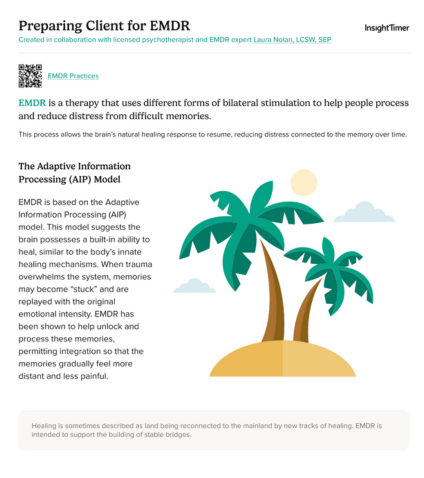
How to Use This Worksheet
Clients and therapists can review this worksheet together to introduce EMDR’s core concepts, including the AIP model, session expectations, common metaphors, and between-session experiences. The guide also highlights aftercare tools and grounding practices that support integration, stability, and emotional balance as EMDR progresses.
Who It’s For
This worksheet is designed for new EMDR clients, individuals beginning trauma therapy, and anyone wanting a clearer understanding of the EMDR process. It is useful for therapists who want to orient clients, reduce uncertainty, and support informed, collaborative treatment.
Expected Outcomes
• Better understanding of EMDR’s structure, phases, and therapeutic mechanisms
• Increased clarity and confidence before beginning trauma processing
• Realistic expectations about the emotional experience of sessions
• Awareness of grounding tools and aftercare practices
• Improved ability to track insights and changes between sessions
Related Topics
References
Shapiro, F. (2018). Eye Movement Desensitization and Reprocessing (EMDR) Therapy: Basic Principles, Protocols, and Procedures (3rd ed.). New York, NY: Guilford Press.

Frequently Asked Questions About Preparing Client for EMDR Resources
© Copyright 2026 Insight Network Inc. All rights reserved.
If you are in a crisis or any other person may be in danger - don’t use this site. Use these resources