Worksheet
Postpartum Rage: Understanding What’s Beneath the Anger
Developed in collaboration with licensed clinical psychologist and sex therapist Dr. Piper Grant, PsyD, this worksheet reframes rage as a nervous system signal rather than a personal failure. It guides clients to move from reactive outbursts toward self-compassion by recognizing how accumulated stress and unmet needs drive their distress.

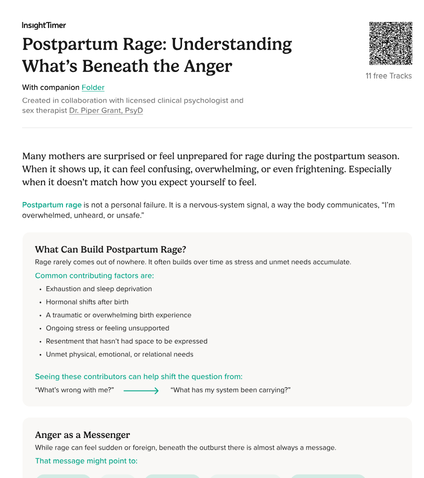
How to Use This Worksheet
Introduce this four-step somatic and cognitive practice during perinatal therapy sessions. Have the client focus on a recent moment of anger or rage and describe the experience. Guide them through the "Anger Ladder" to identify hidden emotions under the outburst, such as grief, fear, or frustration. Finally, assist the client in naming their unmet physical or relational needs and co-creating care-centered responses for future triggers.
Who This Worksheet Is For
This guide is written for postpartum individuals, mothers, and birthing parents experiencing sudden, confusing, or frightening waves of anger after birth. It also serves as an actionable clinical tool for perinatal therapists, psychologists, maternal social workers, and postpartum doulas utilizing nervous system stabilization techniques.
Expected Outcomes
- Greater self-compassion regarding natural maternal stress responses and overstimulated nervous systems.
- Improved ability to slow down reactive outbursts and evaluate internal warning signals.
- Reduction in shame through reframing rage as information about unmet boundaries.
Related Topics
References
Beck, A. T. (1976). Cognitive Therapy and the Emotional Disorders. International Universities Press. (Applied to the structural cognitive tracking of anger outbursts and identifying underlying core beliefs).
Porges, S. W. (2011). The Polyvagal Theory: Neurophysiological Foundations of Emotions, Attachment, Communication, and Self-regulation. W. W. Norton & Company. (Applied to the biological framing of postpartum rage as a protective sympathetic nervous system fight response to feeling unsafe or unheard).
Beck, C. T., & Gable, R. K. (2000). Postpartum Depression Screening Scale. Western Psychological Services. (Clinical context supporting the tracking of postpartum emotional lability, sleep deprivation, and unexpected irritability symptoms).

Frequently Asked Questions About Postpartum Rage: Understanding What’s Beneath the Anger Resources
© Copyright 2026 Insight Network Inc. All rights reserved.
If you are in a crisis or any other person may be in danger - don’t use this site. Use these resources