Worksheet
Postpartum Nervous System Regulation: Mapping Regulation in the Body
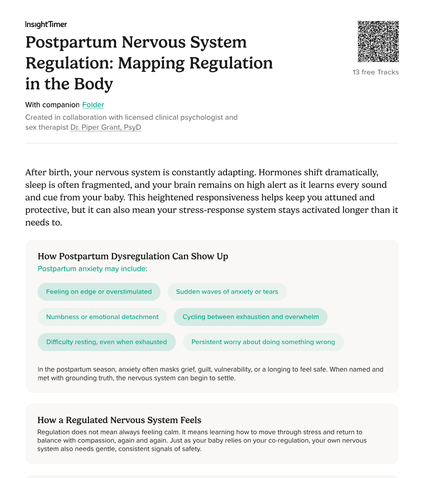
This clinical resource helps new parents navigate postpartum hypervigilance, overstimulation, and autonomic dysregulation. Created in collaboration with licensed clinical psychologist and sex therapist Dr. Piper Grant, PsyD, this worksheet reframes stress as an overworked protective system rather than a character flaw.

How to Use This Worksheet
Introduce this three-step somatic practice during perinatal sessions to map stress responses onto a biological layout. First, have the client mark areas of tension, racing energy, or numbness alongside zones of grounded warmth. Second, prompt them to analyze the spatial relationships between these distinct regions. Third, guide the client to build an interoceptive bridge by placing their hands on a calm area to gently soothe and down-regulate dysregulated survival zones.
Who This Worksheet Is For
This guide is designed for postpartum individuals, new mothers, and birthing parents navigating sleep fragmentation, hormonal shifts, and intense hypervigilance. It also serves as an actionable somatic tool for perinatal therapists, psychologists, social workers, and doulas utilizing bottom-up stabilization techniques.
Expected Outcomes
- Greater self-compassion regarding natural postpartum stress activation and biological alert systems.
- Increased insight into how hidden grief, vulnerability, and guilt register physically across bodily systems.
- Reduction in emotional detachment and physiological numbness through careful interoceptive mapping.
References
Porges, S. W. (2011). The Polyvagal Theory: Neurophysiological Foundations of Emotions, Attachment, Communication, and Self-regulation. W. W. Norton & Company. (Applied to the biological tracking of postpartum hypervigilance, defensive state mobilization, and the role of co-regulation).
Levine, P. A. (2010). In an Unspoken Voice: How the Body Releases Trauma and Restores Goodness. North Atlantic Books. (Anchoring the clinical use of hand placement, somatic mapping, and utilizing "calm zones" to titrate internal physical stress).
Ogden, P., Minton, K., & Pain, C. (2006). Trauma and the Body: A Sensorimotor Approach to Psychotherapy. W. W. Norton & Company. (Clinical foundation supporting interoceptive tracking of physical containment, boundaries, and addressing emotional numbness or detachment).

Frequently Asked Questions About Postpartum Nervous System Regulation: Mapping Regulation in the Body Resources
© Copyright 2026 Insight Network Inc. All rights reserved.
If you are in a crisis or any other person may be in danger - don’t use this site. Use these resources