Worksheet
Polarization Mapping in IFS: Understanding Conflict Between Your Parts
This clinical resource provides a visual framework to untangle severe internal dilemmas and psychological gridlock. Developed in collaboration with Dr. Richard Schwartz, the founder of Internal Family Systems (IFS), this guide addresses polarizations - the painful internal tug-of-war that occurs when two protective parts use clashing strategies to shield the system from an exile's pain. By externalizing these polarized dynamics onto paper, individuals gain vital psychological distance to mediate inner tension with compassion

by Insight Timer in collaboration with Dr Richard Schwartz
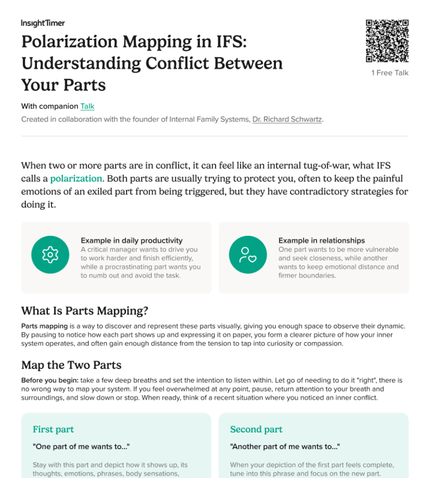
How to Use This Worksheet
This worksheet acts as an active clinical intervention tool to process severe ambivalence or behavioral paralysis. Clients begin by identifying a recently conflicted situation, isolating the first protective part's somatic, emotional, and cognitive expressions, and then repeating the process for the opposing protective part. Therapists can then guide the individual to step back, observe the system's interactive fears from a neutral vantage point, and channel specific Self-energy qualities - such as calm, curiosity, and clarity - to soften the polarization
Who This Worksheet Is For
This worksheet is uniquely designed for individuals experiencing intense inner gridlock, severe procrastination, relationship boundaries confusion, or chronic self-sabotage . It offers an essential, evidence-supported therapeutic map for trauma-informed therapists, clinical psychologists, relationship counselors, and IFS coaches looking to help clients conceptualize, draw, and unblend from conflicting internal sub-personalities
Expected Outcomes
- Greater understanding of each part's protective role
- Reduction in the intensity of internal tug-of-war
- Increased access to Self energy during polarization
- Growing capacity to hold both parts with compassion
- Deeper insight into shared fears beneath conflicting strategies
Related Topics
References
Schwartz, R. C., & Sweezy, M. (2020). Internal Family Systems Therapy (2nd ed.). Guilford Press.
Schwartz, R. C. (2021). No Bad Parts: Healing Trauma and Restoring Wholeness with the Internal Family Systems Model. Sounds True.
Schwartz, R. C. (2001). Introduction to the Internal Family Systems Model. Trailheads Publications.

Frequently Asked Questions About Polarization Mapping in IFS: Understanding Conflict Between Your Parts Resources
© Copyright 2026 Insight Network Inc. All rights reserved.
If you are in a crisis or any other person may be in danger - don’t use this site. Use these resources