Worksheet
Noticing the Survival Stories You Learned: A Reflection on Racial Conditioning, for BIPOC Self-Awareness
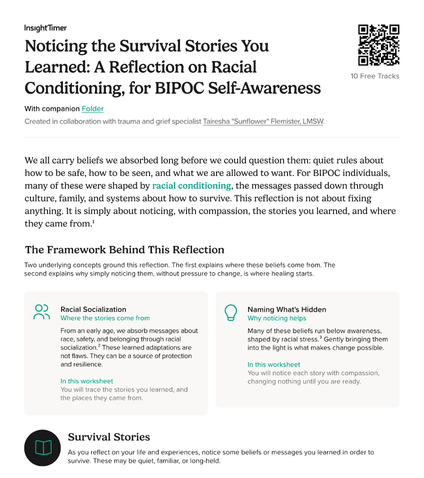
This clinical resource offers a compassionate framework for exploring the internalized beliefs and "quiet rules" shaped by racial conditioning. Developed in collaboration with trauma and grief specialist Tairesha "Sunflower" Flemister, LMSW, this tool helps BIPOC individuals trace the origins of these survival stories - whether from culture, family, or systemic experience. By gently bringing these hidden adaptation patterns into the light, this worksheet creates space for healing without the pressure to immediately fix or change anything.

by Insight Timer in collaboration with Sunflower Flemister
How to Use This Worksheet
This reflection guide serves as an intentional space for processing racial socialization and its impact on personal narratives. Individuals are encouraged to identify specific survival-based beliefs, map their sources, and observe their current emotional response to these stories with non-judgmental curiosity. Clinicians can utilize this tool in sessions to help clients safely acknowledge past protective adaptations while honoring their personal resilience and autonomy.
Who This Worksheet Is For
This worksheet is designed for BIPOC individuals seeking to explore the impacts of racial conditioning on their mental health and belief systems. It is also a valuable resource for culturally responsive therapists, trauma-informed counselors, and community advocates who support clients in navigating racial stress, exploring the hidden wounds of racial trauma, and fostering self-awareness within a safe, guided structure.
Expected Outcomes
- Increased insight into the origins of protective beliefs
- Improved ability to distinguish outdated beliefs from present-day needs
- Enhanced language for describing racial stress experiences
- Greater clarity on which beliefs still serve the client today
- Stronger foundation for future work on racial trauma healing
Related Topics
References
Comas-Díaz, L., Hall, G. N., & Neville, H. A. (2019). Racial trauma: Theory, research, and healing. American Psychologist, 74(1), 1–5.
Neblett, E. W., Rivas-Drake, D., & Umaña-Taylor, A. J. (2012). The promise of racial and ethnic protective factors in promoting ethnic minority youth development. Child Development Perspectives, 6(3), 295–303.
Hardy, K. V. (2013). Healing the hidden wounds of racial trauma. Reclaiming Children and Youth, 22(1), 24–28.

Frequently Asked Questions About Noticing the Survival Stories You Learned: A Reflection on Racial Conditioning, for BIPOC Self-Awareness Resources
© Copyright 2026 Insight Network Inc. All rights reserved.
If you are in a crisis or any other person may be in danger - don’t use this site. Use these resources