Worksheet
Mindfulness for Neurodivergent Families: 5 Practices to Ease Stress & Anxiety
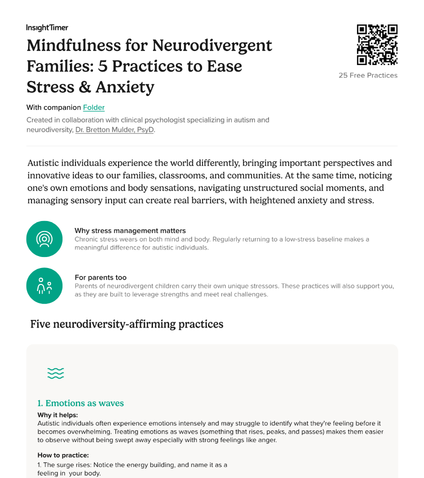
This neurodiversity-affirming tool helps neurodivergent adults, autistic individuals, and families manage stress, sensory input, and unstructured moments. Developed with autism expert Dr. Bretton Mulder, PsyD, it provides five accessible mindfulness exercises. These strengths-based tools reject behavioral compliance to support systemic regulation, alleviate chronic stress, and safely restore a calm baseline.

by Insight Timer in collaboration with Dr. Bretton Mulder
How to Use This Worksheet
This worksheet helps clients manage heightened stress, sensory input, and unstructured moments through five accessible exercises. Therapists and families can guide individuals through flexible reflection prompts to disrupt anxious looping, build interoceptive awareness, and ground the nervous system in a safe, non-judgmental environment.
Who This Worksheet Is For
This guide is for neurodivergent individuals and parents looking for household stress-relief tools. It also serves as a practical somatic resource for therapists, social workers, and school counselors.
Expected Outcomes
- Clearer awareness of personal body sensations and emotional states to counteract the impacts of alexithymia.
- Improved ability to ride out intense emotional surges, such as anger, rather than being swept away by them.
- Enhanced resilience for both parents and children through shared somatic grounding tools like mindful breathing and mindful walking.
Related Topics
References
Kabat-Zinn, J. (1990). Full Catastrophe Living: Using the Wisdom of Your Body and Mind to Face Stress, Pain, and Illness. Delta. (Mindfulness-Based Stress Reduction framework applied to the formal body scan and non-judgmental awareness).
Mulder, B. (2024). Strengths-Maximized vs. Challenges-Maximized Frameworks in Autism Spectrum Disorders. Mass General Hospital Psychiatry Academy / Harvard Medical School.
Porges, S. W. (2011). The Polyvagal Theory: Neurophysiological Foundations of Emotions,
Attachment, Communication, and Self-regulation. W. W. Norton & Company. (Applied to tracking fight, flight, or freeze autonomic nervous system states through breath and physical indicators).
Sifneos, P. E. (1973). The prevalence of 'alexithymic' characteristics in psychosomatic patients. Psychotherapy and Psychosomatics, 22(2–6), 255–262. (Applied to the high prevalence of alexithymia in autistic individuals and the use of body scan to develop interoceptive and emotional awareness.)
Frequently Asked Questions About Mindfulness for Neurodivergent Families: 5 Practices to Ease Stress & Anxiety Resources
© Copyright 2026 Insight Network Inc. All rights reserved.
If you are in a crisis or any other person may be in danger - don’t use this site. Use these resources