Worksheet
IFS Trailheads: How to Find and Explore Your Inner Parts
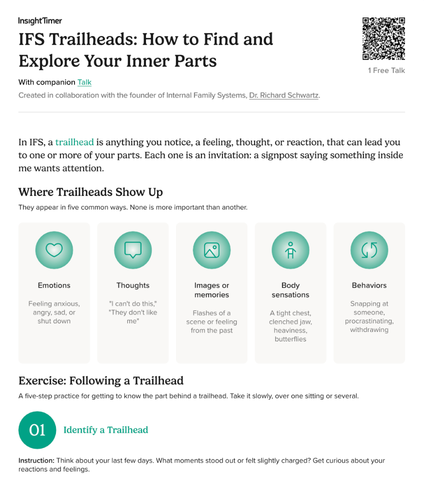
This clinical resource provides a structured entry point for recognizing the internal signals that point to underlying sub-personalities. Developed in collaboration with Dr. Richard Schwartz, the founder of Internal Family Systems (IFS), this tool defines a trailhead as any emotional, mental, behavioral, or physical reaction signaling that a part requires attention. By tracking these reactive signposts, individuals can safely move past defensive coping habits and engage in meaningful, self-led healing

by Insight Timer in collaboration with Dr Richard Schwartz
How to Use This Worksheet
This guide is a step-by-step framework to transition from emotional reactivity to compassionate curiosity. Individuals begin by identifying a recent trigger across five domains: emotions, thoughts, images, body sensations, or behaviors. Therapists can guide clients through exploration prompts to choose a target signal, ask non-judgmental questions, and anchor the interaction in calm, authentic Self energy.
Who This Worksheet Is For
This worksheet is designed for individuals struggling with emotional triggers, intrusive thoughts, somatic tension, or impulsive reactions. It serves as a practical, evidence-supported guide for trauma-informed therapists, social workers, IFS coaches, and counselors teaching clients how to explore personal ego states between sessions.
Expected Outcomes
- Increased ability to notice trailheads in daily life
- Reduction in reactive, unexamined responses
- Increased curiosity toward difficult emotions and sensations
- Stronger practice of turning toward, not away from, inner experience
- Deeper insight into a part's protective role
Related Topics
References
Schwartz, R. C., & Sweezy, M. (2020). Internal Family Systems Therapy (2nd ed.). Guilford Press.
Schwartz, R. C. (2021). No Bad Parts: Healing Trauma and Restoring Wholeness with the Internal Family Systems Model. Sounds True.
Schwartz, R. C. (1995). Internal Family Systems Therapy. Guilford Press.
Frequently Asked Questions About IFS Trailheads: How to Find and Explore Your Inner Parts Resources
© Copyright 2026 Insight Network Inc. All rights reserved.
If you are in a crisis or any other person may be in danger - don’t use this site. Use these resources