HomeWorksheetsAudioTopics
Free Workshops
Self Care
Directory
  1. Worksheets
  2. >
  3. Self-Esteem
  4. >
  5. How Do You Speak To Yourself?

Worksheet

How Do You Speak To Yourself?

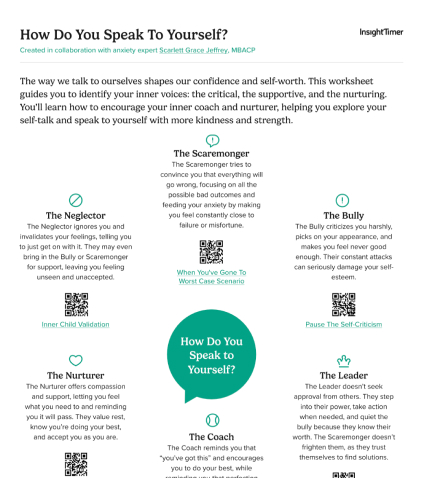
The How Do You Speak to Yourself? Worksheet helps clients explore their inner dialogue by identifying different self-talk voices—from the bully to the nurturer. Therapists can use this tool to support emotional awareness, reduce self-criticism, and encourage kinder, more empowering self-talk between sessions.

IT

by Insight Timer in collaboration with Scarlett Grace
PDF Preview
  1. Worksheets
  2. >
  3. Self-Esteem
  4. >
  5. How Do You Speak To Yourself?

How to Use How Do You Speak To Yourself? Worksheet

Invite clients to reflect on the different voices shaping their inner world, like the bully, the coach, or the nurturer. Use this worksheet as a springboard for exploring how self-talk influences mood, motivation, and self-worth during sessions or as an at-home journaling exercise. This tool prompts reflection around self-esteem, emotional regulation, and self-compassion.

Who It's For

This worksheet is ideal for clients struggling with low self-worth, harsh self-criticism, or internalized shame. It’s especially effective for clients who benefit from parts work, inner child exploration, or self-reflection around their emotional patterns and coping styles.

Expected Outcomes

  • Increased awareness of self-critical vs. supportive inner voices
  • Strengthened connection to internal resources like the inner nurturer or coach
  • Greater emotional resilience and reduced negative self-talk
  • Richer therapy conversations around identity, self-worth, and a growth mindset

Related Topics

Self-EsteemMindfulness

References

.

Extend your care without extending your time

Add worksheets, meditations, and in-session tools to personalised folders, and share them with your patients. For free.

Create a Profile
Create a Profile

Frequently Asked Questions About How Do You Speak To Yourself? Resources

Yes. All of our worksheets are free for both therapists and clients. Clients do not need to sign up for Insight Timer to download or use the worksheet, though having an account provides access to meditations, meditation playlists, courses, and groups on the app.
This worksheet can be used to explore self-talk during a session or as reflective homework. Therapists might introduce the different inner voices and help clients identify which ones dominate their internal dialogue, then revisit the worksheet in future sessions to track changes in self-perception.
Yes. The concepts in this worksheet are informed by cognitive behavioral therapy (CBT), inner parts work, and self-compassion research. It was created by licensed mental health professionals to support emotional awareness and healing from self-criticism.
Recognizing distinct inner voices—like the bully, the scaremonger, and the neglector—helps clients externalize negative self-talk and build compassion toward themselves. This framework can reduce shame, increase self-awareness, and support long-term improvements in self-esteem and emotional regulation.
Yes. Therapists can share a direct link to the worksheet with clients. No account is required to access it, though creating one allows clients to save and return to their resources.
Yes. With a therapist profile, you can curate customized resource folders for clients, including worksheets and guided audios.

© Copyright 2026 Insight Network Inc. All rights reserved.

Crisis support

If you are in a crisis or any other person may be in danger - don’t use this site. Use these resources

CompanyAbout usMediaCareersTherapist Toolkit
Help and supportSupportContact us
LegalTerms of ServicePrivacy PolicyCA Notice at CollectionAccessibility Statement