Worksheet
Holding Multiple Identities as a BIPOC Person: An Embodied Practice for Integration and Wholeness
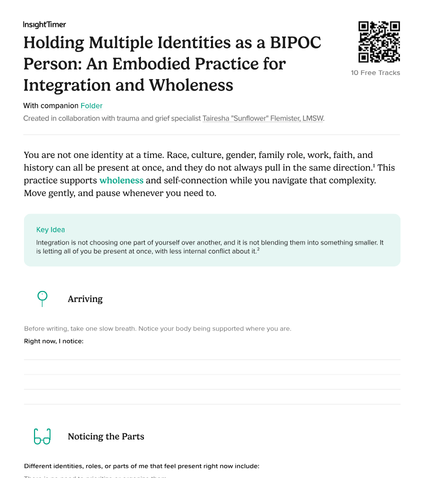
This clinical resource supports BIPOC individuals in navigating the complexity of holding multiple, overlapping identities simultaneously. Created in collaboration with trauma and grief specialist Tairesha "Sunflower" Flemister, LMSW, this guide integrates Kimberlé Crenshaw's intersectionality framework with Internal Family Systems and somatic regulation. By helping clients locate both tension and ease in the body, the tool fosters internal coherence and self-connection without forcing individuals to shrink or minimize parts of themselves.

by Insight Timer in collaboration with Sunflower Flemister
How to Use This Worksheet
Clients move through five short steps: arriving, noticing the parts present, sensing the body, supporting integration, and affirming wholeness. Each step uses a body-first prompt rather than analysis. Clinicians can use this worksheet to open sessions exploring intersectional identity, racial trauma, or internal conflict between roles. It also works as a standalone reflection for clients between sessions, with a built-in pause if the exercise feels like too much at once.
Who This Worksheet Is For
This guide is written for Black, Indigenous, and People of Color (BIPOC) navigating systemic pressures, competing cultural expectations, and multi-faceted personal roles. It serves as an empowering personal workbook to help readers cultivate internal harmony across race, gender, faith, family, and professional identities. Additionally, it provides a culturally responsive clinical tool for trauma specialists, clinical social workers, somatic practitioners, and counselors specializing in intersectional identity and racial trauma recovery.
Expected Outcomes
- Greater capacity to hold multiple identities without internal conflict
- Reduction in the pressure to prioritize one identity over another
- Improved sense of internal coherence
- Greater self-compassion across different roles and parts
- Increased insight into what supports personal wholeness
- A repeatable grounding practice for identity-related stress
Related Topics
References
Crenshaw, K. (1991). Mapping the margins: Intersectionality, identity politics, and violence against women of color. Stanford Law Review, 43(6), 1241–1299.
Schwartz, R. C. (2021). No Bad Parts: Healing Trauma and Restoring Wholeness with the Internal Family Systems Model. Sounds True.
Hardy, K. V. (2013). Healing the hidden wounds of racial trauma. Reclaiming Children and Youth, 22(1), 24–28.
Frequently Asked Questions About Holding Multiple Identities as a BIPOC Person: An Embodied Practice for Integration and Wholeness Resources
© Copyright 2026 Insight Network Inc. All rights reserved.
If you are in a crisis or any other person may be in danger - don’t use this site. Use these resources