Worksheet
Establishing Daily Routines for Children With ADHD: Building Consistency and Reducing Stress
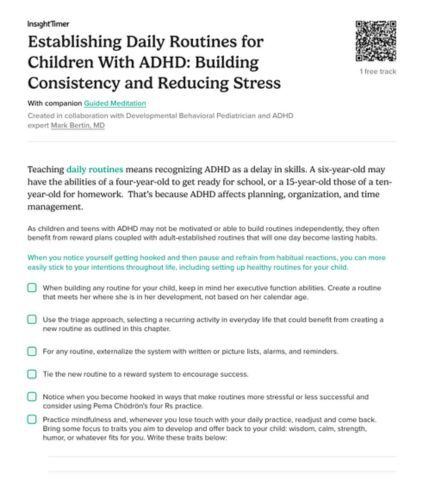
The Establishing Daily Routines for Children With ADHD Worksheet helps parents and caregivers create consistent, developmentally appropriate routines that reduce stress and support daily functioning. Because ADHD affects planning, organization, and time management, children often struggle to build routines independently. This worksheet reframes routine-building as a skill-development process, guiding caregivers to design external supports, reward systems, and mindfulness-informed strategies that support emotional regulation and compassionate responses while meeting children where they are developmentally rather than by age alone.

by Insight Timer in collaboration with Mark Bertin
How to Use This Worksheet
Caregivers can use this worksheet to identify one recurring daily activity that feels stressful or inconsistent, such as mornings, homework time, or bedtime. The prompts guide users to design routines using visual supports, reminders, and rewards while reflecting on how their own reactions may impact success. This worksheet can be revisited as routines evolve or when new challenges emerge, with an emphasis on responding calmly and compassionately when routines break down.
Who This Worksheet Is For
- Parents and caregivers of children or teens with ADHD
- Families struggling with daily routines or transitions
- Caregivers seeking practical structure without rigidity
- Therapists supporting executive function skill-building
- Families wanting to reduce daily stress and conflict
Expected Outcomes
- Increased consistency in daily routines
- Reduced stress around transitions and expectations
- Better alignment between routines and executive function abilities
- Improved caregiver confidence and follow-through
- Greater emotional steadiness and compassion during daily challenges
Related Topics
References
Bertin, M. (2014). Mindful parenting for ADHD: A guide to cultivating calm, reducing stress, and helping children thrive. New Harbinger Publications.

Frequently Asked Questions About Establishing Daily Routines for Children With ADHD: Building Consistency and Reducing Stress Resources
© Copyright 2026 Insight Network Inc. All rights reserved.
If you are in a crisis or any other person may be in danger - don’t use this site. Use these resources