Worksheet
EMDR Tool: The Butterfly Hug
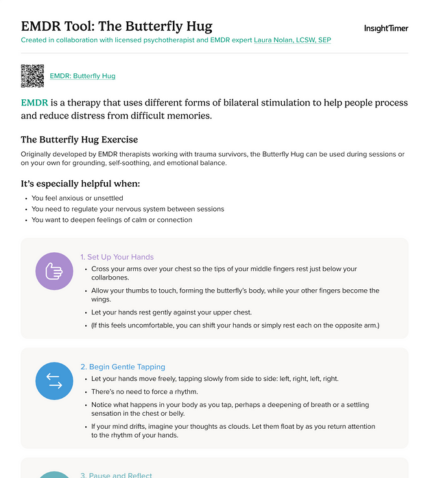
The Butterfly Hug Worksheet introduces a self-applied bilateral stimulation technique used in EMDR to promote grounding, emotional balance, and nervous system regulation. This simple practice helps clients soothe distress, reconnect with their body, and stabilize between sessions or during moments of overwhelm. It is an accessible tool for deepening calm and fostering a sense of safety.

How to Use This Worksheet
Follow the step-by-step instructions to set up your hands across your chest and apply slow, alternating taps. This gentle bilateral rhythm supports grounding, emotional regulation, and connection to the present moment. After tapping, clients reflect on physical or emotional shifts to build awareness and strengthen the calming effect of the exercise.
Who It’s For
This worksheet is designed for EMDR clients, individuals seeking self-regulation tools, and anyone experiencing anxiety, stress, or emotional activation. The Butterfly Hug is appropriate during EMDR sessions, between sessions, or anytime grounding and self-soothing are needed.
Expected Outcomes
• Increased grounding and emotional balance
• Strengthened ability to self-soothe during distress
• Improved awareness of bodily sensations and emotional shifts
• Reliable support for managing anxiety and overwhelm
• Greater regulation before, during, or after EMDR sessions
Related Topics
References
Artigas, L. (2000). The Butterfly Hug method: Origin and development. Developed during work with survivors of Hurricane Pauline in Acapulco, Mexico, 1997-1998.

Frequently Asked Questions About EMDR Tool: The Butterfly Hug Resources
© Copyright 2026 Insight Network Inc. All rights reserved.
If you are in a crisis or any other person may be in danger - don’t use this site. Use these resources