Worksheet
Daily Wellness Habits for Neurodivergent Minds: Worksheet & Routine Guide
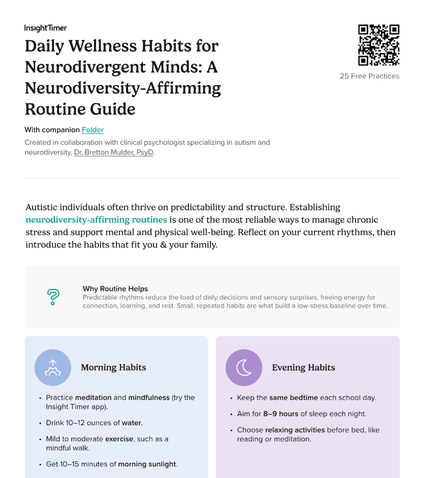
Developed with autism expert and clinical psychologist Dr. Bretton Mulder, PsyD, this neurodiversity-affirming guide helps autistic and neurodivergent adults build predictable, low-stress routines. Instead of pushing rigid compliance, this worksheet focuses on strengths-based habits across morning, afternoon, and evening schedules.

by Insight Timer in collaboration with Dr. Bretton Mulder
How to Use This Worksheet
Have clients reflect on their current rhythms first. Then, gently introduce a few lifestyle-fitting habits. Encourage them to select small, daily practices from the recommendations. This builds a sustainable, low-stress routine over time.
Who This Worksheet Is For
This guide is for autistic adults, neurodivergent individuals, and families seeking flexible daily scaffolding. It also serves as a practical executive functioning tool for psychologists, therapists, ADHD coaches, and mental health professionals.
Expected Outcomes
- Clearer awareness of personal daily rhythms and sensory stress triggers.
- Improved ability to reduce cognitive load and navigate daily decisions with ease.
- Enhanced resilience and nervous system safety through predictable daily scaffolding.
Related Topics
References
Mulder, B. (2024). Strengths-Maximized vs. Challenges-Maximized Frameworks in Autism Spectrum Disorders. Mass General Hospital Psychiatry Academy / Harvard Medical School.
Porges, S. W. (2011). The Polyvagal Theory: Neurophysiological Foundations of Emotions, Attachment, Communication, and Self-regulation. W. W. Norton & Company. (Applied to the application of environmental predictability and structural sensory scaffolding for nervous system regulation).
American Psychological Association (APA). Guidelines for Neurodiversity-Affirming Psychological Practice with Autistic and Neurodivergent Adults. (Focusing on autonomy-driven, flexible habit structures rather than behavioral compliance).
Jacobson, E. (1938). Progressive Relaxation. University of Chicago Press. (Applied to progressive muscle relaxation as a structured technique for reducing chronic stress and sensory overload in neurodivergent individuals.)
Frequently Asked Questions About Daily Wellness Habits for Neurodivergent Minds: Worksheet & Routine Guide Resources
© Copyright 2026 Insight Network Inc. All rights reserved.
If you are in a crisis or any other person may be in danger - don’t use this site. Use these resources