Worksheet
Cognitive Distortions Cheat Sheet
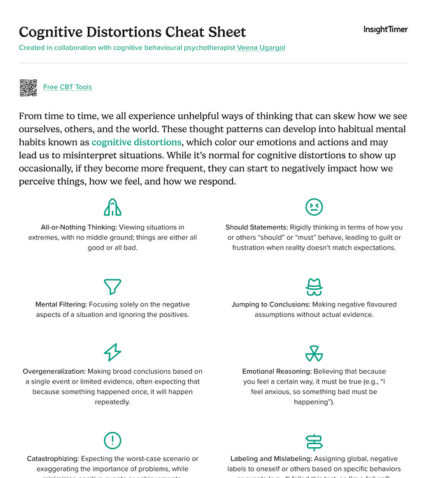
The Cognitive Distortions Worksheet is a practical tool that helps clients recognize and reframe common cognitive distortions like all-or-nothing thinking, emotional reasoning, and mind reading. Therapists can use this CBT-based resource to introduce clients to the process of identifying cognitive distortions, reduce negative self-talk, and build more adaptive thought patterns.

by Insight Timer in collaboration with Veena Ugargol
How to Use the Cognitive Distortions Worksheet
The Cognitive Distortions Worksheet can help clients become more aware of their automatic thoughts and negative thought patterns. Therapists can introduce this worksheet in session to help clients identify cognitive distortions—such as mental filtering, black-and-white thinking, or fortune-telling—and explore how these biased patterns influence their emotions, behaviors, and overall mental health.
Who It's For
This worksheet is ideal for clients struggling with anxiety, depression, low self-esteem, or negative self-talk. It's especially effective for individuals who frequently experience distorted thoughts, unhelpful beliefs, or unpleasant feelings in response to certain situations or triggering events.
Expected Outcomes
- Greater ability to recognize and label common cognitive distortions
- Improved capacity to challenge negative thought patterns and replace them with adaptive responses
- More effective therapy sessions grounded in client examples and concrete patterns
- Strengthened use of coping strategies for managing negative emotions and building long-term resilience
Related Topics
References
Mercan, N., Bulut, M., & Yüksel, Ç. (2021). Investigation of the relatedness of cognitive distortions with emotional expression, anxiety, and depression. Current Psychology, 42(3), 2176–2185. https://doi.org/10.1007/s12144-021-02251-z

Frequently Asked Questions About Cognitive Distortions Cheat Sheet Resources
© Copyright 2026 Insight Network Inc. All rights reserved.
If you are in a crisis or any other person may be in danger - don’t use this site. Use these resources