Worksheet
Anger Warning Signs: How to Spot the Early Cues in Your Body, Mind, and Behavior Before Anger Escalates
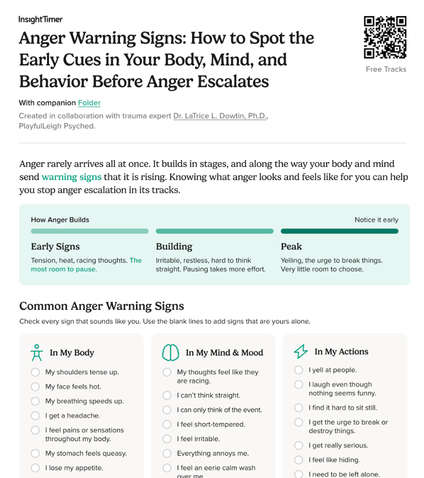
Anger rarely arrives all at once. It builds in stages, sending cues through the body, mind, and behavior along the way. This checklist, developed with trauma expert Dr. LaTrice L. Dowtin, Ph.D., of PlayfulLeigh Psyched, helps clients identify their own earliest warning signs, including quiet ones like a false calm or an unexplained urge to hide. Naming these cues early creates the most room to pause before anger peaks.

by Insight Timer in collaboration with Dr. LaTrice L. Dowtin, PhD.
How to Use This Worksheet
Introduce this checklist to clients working on anger awareness or de-escalation. Have clients check every sign that resonates across body, mind, and action, adding their own on the blank lines. Use the "Build Your Personal Warning System" questions in session to connect specific signs to triggers and identify one early intervention the client can use at the first cue.
Who This Worksheet Is For
This worksheet is designed for therapists, counselors, and anger management facilitators helping clients build early self-awareness around anger escalation. It also suits individuals who want to recognize their personal warning signs before anger peaks, including those whose anger shows up as quiet shutdown rather than visible outburst.
Expected Outcomes
- Increased awareness of personal early warning signs for anger
- Improved ability to distinguish body, mind, and behavioral cues
- Reduction in anger escalating to peak intensity before intervention
- Increased insight into personal anger triggers and patterns
- Improved readiness to use a pause or calming strategy at the earliest sign
Related Topics
References
Reilly, P. M., & Shopshire, M. S. (2019). Anger Management for Substance Use Disorder and Mental Health Clients: A Cognitive Behavioral Therapy Manual. Substance Abuse and Mental Health Services Administration.
Novaco, R. W. (1975). Anger Control: The Development and Evaluation of an Experimental Treatment. Lexington Books.
Nummenmaa, L., Glerean, E., Hari, R., & Hietanen, J. K. (2014). Bodily maps of emotions. Proceedings of the National Academy of Sciences, 111(2), 646–651.
Porges, S. W. (2011). The Polyvagal Theory: Neurophysiological Foundations of Emotions, Attachment, Communication, and Self-Regulation. W. W. Norton.

Frequently Asked Questions About Anger Warning Signs: How to Spot the Early Cues in Your Body, Mind, and Behavior Before Anger Escalates Resources
© Copyright 2026 Insight Network Inc. All rights reserved.
If you are in a crisis or any other person may be in danger - don’t use this site. Use these resources