Worksheet
Anger Management Techniques: How to Use Movement, Breath, and the Vagus Nerve to Move Through Anger
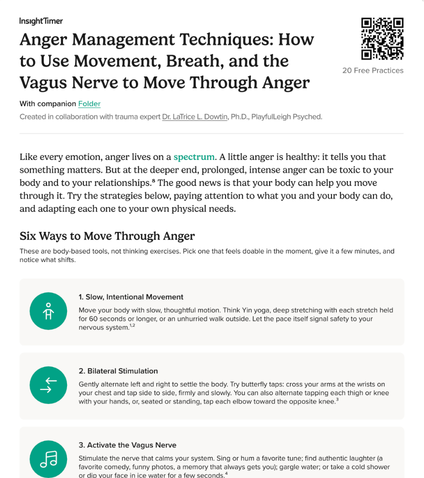
This clinical resource offers body-based strategies to help individuals safely process and move through intense anger. Created in collaboration with trauma expert Dr. LaTrice L. Dowtin, Ph.D., PlayfulLeigh Psyched, this worksheet shifts the therapeutic focus from cognitive analysis to physiological regulation. By utilizing intentional movement, controlled breathing, and vagus nerve stimulation, it helps clients redirect volatile anger energy before it harms their relationships or physical health.

by Insight Timer in collaboration with Dr. LaTrice L. Dowtin, PhD.
How to Use This Worksheet
Introduce these six physical interventions during therapy sessions or as an in-the-moment coping guide. Have clients try slow somatic movement, bilateral butterfly taps, or vagal exercises like humming and cold water exposure. Guide them through a deep diaphragmatic breath cycle. Encourage them to check for unmet physical needs and utilize the opposite action technique.
Who This Worksheet Is For
This guide is designed for individuals, adults, and clients who experience explosive anger, physiological flooding, or chronic irritability that impacts their daily life and physical well-being. It also serves as an effective clinical resource for trauma therapists, dialectical behavior therapy (DBT) practitioners, somatic psychologists, and counselors seeking non-verbal, bottom-up anger interventions.
Expected Outcomes
- Greater awareness of anger as physical energy
- Improved ability to interrupt reactive impulses
- Reduction in anger-driven conflict
- Expanded toolkit of body-based coping strategies
- Increased confidence managing acute anger
Related Topics
References
Streeter, C. C., Gerbarg, P. L., Saper, R. B., Ciraulo, D. A., & Brown, R. P. (2012). Effects of yoga on the autonomic nervous system, gamma-aminobutyric-acid, and allostasis in epilepsy, depression, and post-traumatic stress disorder. Medical Hypotheses, 78(5), 571-579.
van der Kolk, B. A. (2014). The Body Keeps the Score: Brain, Mind, and Body in the Healing of Trauma. Viking.
Jarero, I., Artigas, L., & Hartung, J. (2006). EMDR integrative group treatment protocol. Traumatology, 12(2), 121-129.
Porges, S. W. (2011). The Polyvagal Theory: Neurophysiological Foundations of Emotions, Attachment, Communication, and Self-Regulation. W. W. Norton. Zaccaro, A., Piarulli, A., Laurino, M., et al. (2018). How breath-control can change your life: A systematic review on psycho-physiological correlates of slow breathing. Frontiers in Human Neuroscience, 12, 353.
Bushman, B. J., DeWall, C. N., Pond, R. S., & Hanus, M. D. (2014). Low glucose relates to greater aggression in married couples. PNAS, 111(17), 6254-6257.
Linehan, M. M. (2015). DBT Skills Training Manual (2nd ed.). Guilford Press
Chida, Y., & Steptoe, A. (2009). The association of anger and hostility with future coronary heart disease. Journal of the American College of Cardiology, 53(11), 936-946.
Frequently Asked Questions About Anger Management Techniques: How to Use Movement, Breath, and the Vagus Nerve to Move Through Anger Resources
© Copyright 2026 Insight Network Inc. All rights reserved.
If you are in a crisis or any other person may be in danger - don’t use this site. Use these resources