Worksheet
Anger Iceberg: Explore the Feelings Beneath Your Anger
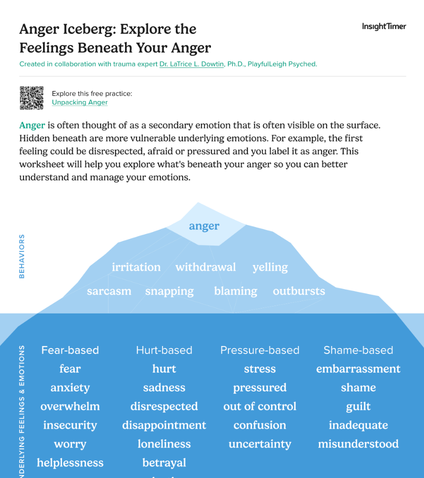
Anger is often a secondary emotion. It shows on the surface while more vulnerable feelings sit beneath it. This worksheet, created in collaboration with trauma expert Dr. LaTrice L. Dowtin, Ph.D. of PlayfulLeigh Psyched, maps behaviors, underlying emotions, and unmet needs on an iceberg. A five-part journaling exercise helps clients name what is really driving their anger.

by Insight Timer in collaboration with Dr. LaTrice L. Dowtin, PhD.
How to Use This Worksheet
Introduce the iceberg and walk through its three layers: behaviors, underlying feelings, and needs. Have the client recall a recent moment of anger and circle the feelings that fit from the fear, hurt, pressure, and shame groups. Then guide the journaling prompts on triggers, patterns, and healthier ways to respond. Clients can complete the exercise in session or between sessions.
Who This Worksheet Is For
This worksheet is designed for therapists, counselors, and anger management facilitators helping clients look beneath their anger. It also suits individuals, teens, and adults who feel anger quickly and want to understand what sits underneath it, such as hurt, fear, shame, or pressure.
Expected Outcomes
- Greater awareness of triggers and recurring patterns
- Better recognition of unmet needs behind angry reactions
- Reduction in reactive behaviors such as yelling or snapping
- Improved ability to express root emotions in healthier ways
- Greater emotional clarity and self-understanding
Related Topics
References
Greenberg, L. S. (2015). Emotion-Focused Therapy: Coaching Clients to Work Through Their Feelings (2nd ed.). American Psychological Association.
Deffenbacher, J. L. (2011). Cognitive behavioral conceptualization and treatment of anger. Cognitive and Behavioral Practice, 18(2), 212–221.
Lieberman, M. D., Eisenberger, N. I., Crockett, M. J., Tom, S. M., Pfeifer, J. H., & Way, B. M. (2007). Putting feelings into words: Affect labeling disrupts amygdala activity in response to affective stimuli. Psychological Science, 18(5), 421–428.
Pennebaker, J. W. (1997). Writing about emotional experiences as a therapeutic process. Psychological Science, 8(3), 162–166.
Tangney, J. P., Wagner, P., Hill-Barlow, D., Marschall, D. E., & Gramzow, R. (1996). Relation of shame and guilt to constructive versus destructive responses to anger across the lifespan. Journal of Personality and Social Psychology, 70(4), 797–809.

Frequently Asked Questions About Anger Iceberg: Explore the Feelings Beneath Your Anger Resources
© Copyright 2026 Insight Network Inc. All rights reserved.
If you are in a crisis or any other person may be in danger - don’t use this site. Use these resources