Welcome to Learn Buddhism.
I'm Alan P.
Do.
How do you practice Buddhism during challenging and difficult times?
These are things like pandemics,
War,
Conflicts,
Natural disasters,
Severe illness,
Poverty,
Loss of life.
How do you practice the Buddhist religion,
Your daily Buddhist practice,
When such severe and impactful things are happening in your life?
I'd like to talk about how we can still continue to practice Buddhism during times of stress and uncertainty where it may feel like Buddhism takes a backseat.
Where,
You know what,
There's other things going on that are of greater importance.
So Buddhism is something that we can just put in the drawer,
Put away,
And come back to it when things are better.
Now what this is not going to be talking about is how to respond to those particular situations.
For example,
There will be professionals,
Nonprofit organizations,
Government officials.
There will be experts and people you should be listening to on how to effectively respond to it.
For example,
If there's a earthquake,
Well,
You need to respond in the way that you're being told to respond in the correct way.
Buddhism is a religion that's going fundamentally to the heart of the matter as far as our suffering or unsatisfactoriness,
The stress,
The stressful situations,
And how we perceive and respond to it so that we become enlightened and realize nirvana and escape this cycle of rebirth.
Because as the Buddha said,
All things are impermanent and impermanence is dukkha,
Is that suffering,
That distress,
That satisfaction,
Unsatisfactoriness.
And we see that heightened and more prevalent during these challenging and difficult times.
So during our everyday life,
Yes,
We definitely experience it,
But it's almost like on overdrive during these particular situations and periods.
So how do we practice Buddhism?
And I thought about this especially with worldwide events and different things going on that,
You know what,
It can be scary.
It could be uncertain times.
It could be stressful,
Scary.
So how do you practice Buddhism?
Well,
There's three different ways and they all build upon each other on how I would recommend we practice Buddhism during these times.
The visualization I like to give you are the example.
Just imagine there's a storm out of sea,
Typhoon,
Hurricane,
Whatever,
And you're on this boat.
It's a little small,
Maybe a sailboat,
Right?
And you're heading towards that storm.
So the storm is gonna engulf you pretty soon and that storm is gonna be these difficult and stressful and uncertain situations.
And the storm itself is impermanent,
Just like the Buddha said,
All things are impermanent.
Now does that mean that the impermanence will show up in our lifetime?
For example,
That storm will pass?
Well,
We don't know.
I mean,
So there's it is impermanent but of course things can extend past our particular lifespan.
But they are all impermanent.
Whether they are short on impermanence or long on impermanence,
They are all impermanent and the impermanence of it is going to be that stress,
That dissatisfaction,
Everything else.
So for example,
The perfect life that maybe you're living right now or the ease,
Well that's impermanent as well too.
We have these highs and lows,
If you will,
And it goes throughout our life.
We just experience them at different levels.
So as you're there this little sailboat and be quickly engulfed by this storm,
How do we respond?
Now for some people it could be,
Well I'm just going to let what happened happens and that could just toss you all around.
It could destroy your sailboat.
It could put you perfectly off course into more dangerous waters,
Right?
So when we're on this sailboat we're trying to get to a particular destination,
To a safe harbor.
And we do have the safe harbor in Buddhism.
It is going to be the triple gem,
Is the Buddha as our teacher,
The Dharma as his teachings and the path,
And the Sangha as the monastic community.
This is our safe harbor.
Now we're having this safe harbor,
The triple gem,
To get us through the storm.
And the end,
This port that we're trying to get to,
Is Nirvana.
It is where we're enlightened.
Nirvana,
Almost like the the Sun breaks through the storm.
We're there.
We're now enlightened.
And then we are in a safe port,
A safe harbor of Nirvana.
And inside Nirvana these storms,
These uncertain,
Stressful conditions,
Situations,
They no longer affect us like they did before because now we've been enlightened.
We understand things fundamentally.
So our perceptions and assumptions about things go out the window.
We're no longer manipulated and affected by those perceptions and assumptions because we fundamentally understand things such as impermanence and dependent origination and non-self and all these other different concepts and teachings in Buddhism.
But we're not there yet.
We're in this storm and a storm can come and go,
Right?
So the first part of what we should do as Buddhists in the religious sense when we're going through these stressful and uncertain situations is going to be faith.
And faith in Buddhism is not like a blind faith.
It's sort of this experimental faith where we are looking at the Buddhist teachings,
We're practicing them in different ways,
And we may understand certain teachings.
We may practice in a certain way where we get some benefit from it and we go from there and going,
Okay,
I don't know purely,
Fundamentally about all these teachings but I saw some benefit from it or I understand some component of this and I have trust in the Buddha and his teachings in a monastic community to go forward,
To go down this path.
Now when we call ourselves Buddhists that means we have taken refuge into the triple gem,
The Buddha,
The Dharma,
And the Sangha.
That means we already have faith so we already would have had observation of Buddhism.
We would have been learning about it,
Practicing it,
And then there's at some point we go,
You know what,
This is the path I want to be on,
The direction I want to be on,
And you have faith in the triple gem.
So this faith that we have inside Buddhism is going to help us when it comes to the storm because we have to essentially right our ship.
It's being tossed around in these rough seas and if we don't really protect our ship we are going to take on water.
We are going to possibly sink and so we want to right our ship and point it in the right direction,
Almost like that,
Your compass,
And you're going to steer the ship into the right direction that leads us towards enlightenment that realizes nirvana.
So this can get very bumpy.
Obviously we're in a storm but it can be a very bumpy and unpleasant journey.
But it's the faith that we have that we understand that things are impermanent,
Things are created and ceased due to dependent origination and all these different fundamental Buddhist teachings.
We know the Buddha fundamentally understood this because he became the Buddha,
His alignment followers did,
Other Buddhas did,
Bodhisattvas did,
And so because of that we have trust and faith in the in the triple gem to continue to point ourselves in a direction towards enlightenment,
Towards that final port safe harbor,
That other shore as we call it in Buddhism of nirvana.
And this is where we are pointing ourselves during this very challenging and difficult time.
Now you're going to possibly experience during these times if you encounter them.
Parts of your faith are going to kind of waver and that's a human trait.
You know we will have faith but it could be at different levels.
Your reservoir,
Your well may be filled high with faith and it's going to be easier for you so to speak to continue on that path for other of us.
We're going to be kind of tossed around by these rough waters and because of that you just need to right your ship again and point yourself in that compass direction.
Steer correctly down the Buddha's no weight for the past,
Six perfections,
Whichever way you're looking at it,
Towards enlightenment.
The next part is going to be effort.
So as you are pointed correctly towards enlightenment,
So you realize nirvana that that other shore,
That safe harbor,
That port,
You need effort.
And this is part of the Buddhist Noble Eightfold Path.
This is where we are going in the direction of the truth,
The Dharma,
With right diligence and courage.
Because if we don't we're going to be tossed around in these rough seas of everyday mundane existence in this cycle of rebirth and everything that entails.
But when we have right effort we know based upon also our faith that this is the right direction and we need to make steady progress on this path.
And you can look at it whether I'm giving this example of us on a sea if you know you're not going to continue in this direction you're never going to get out of that storm you're never going to get to that safe harbor that port of nirvana or let's say you're just going on a trip from one city to another one well if you never put your foot on the gas for your car to move forward you're not going to get there so you have to continue and show and practice your effort in practicing Buddhism.
And this is why this is so important because if we don't continue to continue on this path we're never going to get there.
So when you're in this storm and it's going to be tossing you all around right you can very easily be blown off direction by the winds and the currents and the sea where it may feel like why am I even trying?
You just have to recenter point yourself in the right compass direction back along that path and this is no different than actually what happens out of sea you're going through a big hurricane or typhoon you're going to be tossed around it doesn't really matter how big your ship is it could be very minor or it could be major the smaller your ship is but you're still going to be kind of tossed around no matter what.
As we've seen in our lives mother nature can be very strong but it is our effort to continue on that path because that storm is impermanent.
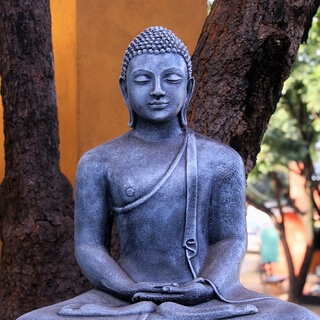
The conditions of the storm are impermanent they may be stronger at some points maybe not as strong as other ones but it is our effort to be continuing on that path which is so important because if we start losing control we are now losing faith and we are no longer continuing on the path and it sounds very repetitious of me because I mentioned this a few times but it's really important if we don't continue our effort we are going to be shaped by the conditions that we're experiencing and we will realize that all right well maybe this is not the right path for me I'll just do whatever this storm tells me to do and that's not far as a Buddhist is concerned the right path we have to ride our ship turn ourselves in the right direction even though it may not always be comfortable and continue along that path as best we can we are all human beings and in Buddhism we are called sentient beings and because of that we're gonna be a different levels on this so do the best you can insofar as your faith and your effort as it relates to this you don't want to beat yourself up so to speak when it comes to well I didn't do so great here with my effort it's okay write your ship point yourself in the right direction again hundreds of millions of Buddhists do this every day we are not perfect and we have to use a different rituals ceremonies teachings practices that we have inside the Buddhist religion to help us write that ship and point us in the right direction so we can continue with this right effort towards that safe port I find one thing that you can do that can help you if your face is ever shaken and your effort seems to be off is look to the triple gem the Buddha the Dharma and a Sangha to reinforce your face and why we practice so you look at the Buddha showing you yes what he taught can be accomplished by anyone he had his arhats we've seen Bodhisattvas we've seen other Buddhas that have achieved this as well that means yes you can also will you become enlightened in his lifetime you may or may not but is that effort that the continuous practice that we're doing on there is going to generate those wholesome karmic conditions to a seeds which are so important Buddhism and then you look at the Dharma as a teachings and the path that we're on that can give you faith and effort to continue forward and we have to Sangha the monastic community and during this situation they may not be around you the temple may be closed or may not even be close to you at all and so we can still look at them as we have monastics who are fully engaged on this path and that can give us faith and effort to continue on but they also especially in our modern world have a lot of virtual things that we can do such as videos virtual teachings and books and everything else where we can be reinvigorated in our faith to continue with that effort towards the Buddhist goal of reaching enlightenment and Nirvana and that takes us to practice so we've built our foundation with faith and we are now continuing in the right direction with effort was that diligence was that courage towards enlightenment Nirvana but how do we practice during these difficult and challenging times so what I'm going to give you is just one practice and you can of course do whatever works best for you but we have to be adaptable to the situation Buddhism is very adaptable we have our core foundational teachings and what Buddhism actually is that's immovable that is that is the core but Buddhist religion upon that core is very adaptable on how we practice Buddhism that's still consistent with that foundation that core of Buddhism that's why you see so many different schools traditions of Buddhism out there because the core of them that's all the same we are all basing the practice off of the teachings of Shakyamuni Buddha the Buddha of our era but how we practice is going to be different to meet the many different needs and situations of people and where they live and conditions and everything else that leads us on that path towards enlightenment so being adaptable is really important during this time now two things you can do are Buddha recitation and Buddha visualization and this may be unusual to some Westerners but it's very common with the hundreds of millions of Buddhists around the world and because this is what a lot of laypersons actually do not just in Mahayana but inside Theravada as well so we have a variety of different practices and I'm not saying this is one that you necessarily have to do but is one that you can use in any situation at any time anywhere for example let's go right into Buddha recitation this is a very popular practice of course inside Mahayana especially with the Pure Land traditions but you're gonna find this kind of everywhere you're gonna have recitation of a Buddha's name as a fundamental practice and it also gets to a very meditative concentration level as well so sitting meditation may be something you're practicing now and something that you're familiar comfortable with but during a challenge or difficult situation like a war or conflict that's probably good and not be either feasible or possible for you to do whereas Buddha recitation is now inside the Pure Land tradition which I mentioned we have Amitama Buddha and the very common recitation of Amitama Buddha's name is that practice but you could also be Shakyamuni Buddha,
Gotama Buddha and you can recite his name and the practice of this is this mindful focused recitation of the name one right after another constantly constantly doing it becomes a form of meditative concentration and what I like about this is beyond the other aspects so for example in Pure Land Buddhism we are also doing this out of our our valid faith and belief to be reborn in Amitama Buddha's Pure Land but as the meditative concentration portion of it you are doing something very profound here you are filling your mind your thoughts and your speech with something that's wholesome a Buddha's name and everything that's pure and wholesome about that and rooted in the Dharma and that doesn't allow the three fires of greed anger and ignorance to arise in your mind your thoughts your words your actions because you're doing something as wholesome that is really impressive and something that you can do at any particular time so it's almost really calming yourself and settling your mind of the bad seeds the unwholesome seeds so to speak that can be given fuel during these uncertain and difficult times and you're filling it with something wholesome and is rooted in the Dharma you can use if you have it with you your mala beads your Buddha beads it's a very tactile experience that can help you as you're doing a recitation not required at all but it's a very popular practice so if you have those you can give an extra element or dimension to what you're trying to do here with your Buddha recitation you could also do but a visualization for example you can couple this with your Buddha recitation as a separate practice or combined together but here we are visualizing the wholesome qualities of a Buddha because as we are looking and visualizing a Buddha that's a wholesome pure sentient being that we are trying to emulate whether try to be about our hot in the Theravada path or a Bodhisattva and eventually Buddha enemy Mahayana path visualizing a Buddha can also help you with those three fires as well because you're looking at some someone a being that has realized this state that we want to get to as well and it's wholesome and as I mentioned before and pure and good this is what we want to reinforce in our situation to read right now so we can align ourselves on that path because remember we had that faith and effort the first foundational ones right when we are doing the visualization when we are doing the recitation we are reinforcing that faith and that effort as we are practicing this alone can be something that you do during these very challenging and difficult times is it going to be easy no it's not going to be easy at all should you as I mentioned before beat yourself up over if you kind of waiver off the path no just write your ship put yourself in the right direction and move forward with that diligence and courage you know that effort on the path and the recitation of a Buddha's name whether it adds Shakyamuni Gautama Buddha or if it's going to be Amitabha Buddha that's fine there's also Bodhisattvas that people like to recite as well so there's different ways you can do this during these challenging difficult times it will be as I mentioned challenging difficult so you're going to have different situations where that's maybe not gonna be possible at different times you want to make sure that you are safe and healthy and that of your loved ones and people you're with so you need to follow the professional advice that you're being given during these situations but insofar as your religious faith as a Buddhist yes we can still continue to practice and there could be some tangible benefits from this as well as you are practicing Buddhism with your face effort in this practice I'm talking about right now or modifications of it however it works for you and your tradition you are going to build resilience and it being more adaptable to that situation which can help you possibly get through that storm as well so while we're focused on the religious aspect here the fundamental nature of impermanence and the suffering and the satisfaction all that that doesn't take us away from the current situation that we're in and by practicing Buddhism continuing to practice Buddhism we can help align ourselves with the eightfold paths of six perfections and we're talking about that threefold training that includes wisdom includes morality conduct and the concentration of meditative concentration portion of it that's all going to be encompassed by what you're doing here now if you want to also chant recite a sutra fantastic you may not have that with you and this is why I'm giving you these two examples for practice right now but if you have that absolutely you can do that as well for example as a Mahayana Buddhist maybe you're gonna do the heart sutra you can chant these sutras as well which could also be very much a meditative concentration practice do you have any questions or feedback or comments about practicing Buddhism during challenging and difficult times I'd like to hear back from you if you're on Spotify you can respond to this podcast or you can send me a message from my website at onepedo.
Com or from social media I'd like to hear back from you and what your thoughts are about this and I will talk with you in our next episode thank you