The world’s largest free audio library for everyday wellbeing
Devotional & Prayer
Hitbodedut is a Jewish contemplative practice of spontaneous, unstructured personal prayer, spoken aloud to God in one's own words, typically in solitude and often in nature (Schneider & Kastenbaum, 1993).
Last Updated
3 Jul 2026
We are still reviewing this page. Our research team checks every technique page for accuracy and evidence quality before final release. Details may change as that review completes. The evidence badge shows our current reading of the published research.
RECOMMENDED DOSE
No direct dose-response literature exists for Hitbodedut; the available references measure or describe prayer frequency and duration in general or caregiving contexts rather than testing a specific dose. This gentle introductory dose is an editorial synthesis based on general practice conventions for spontaneous personal prayer and reflective practice, chosen to build a sustainable habit.
No direct dose evidence; editorial synthesis. Once the practice feels comfortable, a longer and more frequent session supports deeper unstructured reflection. This range reflects general contemplative-practice conventions, not a trial-tested dose for this technique.
No direct dose evidence; editorial synthesis. Longer daily sessions align with the traditional maintenance practice of extended secluded personal prayer, but this duration and frequency are not supported by any cited dose-response study and should be treated as an aspirational upper range only.
Session length
Session length: 5–10 minutes
5
MIN
How long each individual practice session should last from start to finish.
Frequency
Frequency: 3–4 days
3
DAYS
The number of days per week to fit a session into your routine.
Session length
Session length: 15–20 minutes
15
MIN
How long each individual practice session should last from start to finish.
Frequency
Frequency: 5 days
5
DAYS
The number of days per week to fit a session into your routine.
Session length
Session length: 30–60 minutes
30
MIN
How long each individual practice session should last from start to finish.
Frequency
Frequency: 7 days
7
DAYS
The number of days per week to fit a session into your routine.
About this card. No direct dose-response literature exists for Hitbodedut; these recommendations are editorial starting points based on general contemplative-practice conventions and should be treated as such. These recommendations are not a substitute for personalised guidance from a qualified practitioner.
Quick answers to what people most often ask. Each card links to the deeper section below.
evidence
No trial has tested hitbodedut directly; the supporting evidence comes by analogy from studies of other prayer traditions. In those groups, engaged, personal prayer has been linked with better anxiety control, higher self-reported mental health, and growth after adversity. Findings are mixed and mostly correlational, and some prayer styles track with more anxiety.
Read moregood for
Hitbodedut may suit people who hold a personal, relational sense of the divine and feel weighed down by stress, grief, or the strain of managing everything alone, since speaking aloud gives raw feeling a direction. The closest evidence comes from other prayer populations, not hitbodedut practitioners, and it is not a substitute for care when distress is severe.
Read moresafety
Most healthy adults can practise hitbodedut with little physical risk. Because the practice draws out raw, sustained emotional expression, an hour of unfiltered speech can bring grief, anger, or old hurt to the surface before calmer feeling arrives. Anyone processing trauma or acute distress should pair it with professional support and start with shorter sessions.
Read morehow it works
Hitbodedut appears to work by turning private, unedited speech into emotional release: putting feelings into spoken words rather than holding them in lowers the effort of suppression, so grief, frustration, or longing can move and lighten. Handing concerns to a trusted presence and a gradual settling of the body's activation are proposed alongside, though inferred from wider prayer research.
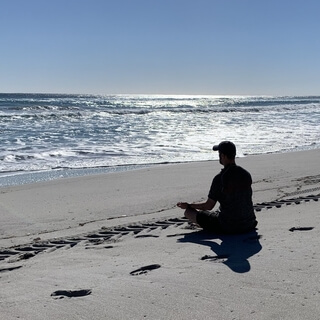
Read moreHitbodedut is a free-form Jewish contemplative practice of speaking to God spontaneously in your own everyday words, usually alone and often outdoors in nature (Schneider & Kastenbaum, 1993).
You withdraw to a secluded place, ideally a field or forest, and speak aloud to God in everyday language for a sustained period, often a full hour each day. There is no prescribed text, no required language, and no formal structure. The practice is simply pouring out whatever arises, from gratitude and longing to complaint and confession, in unscripted personal address.
Hitbodedut is unstructured, spontaneous personal prayer, distinct from fixed liturgical prayer with its set texts and appointed times. It is not silent meditation or a breathing technique; the defining act is spoken, heartfelt conversation with a personal God. It is associated specifically with Rabbi Nachman of Breslov and the Breslov Hasidic tradition, not with contemplative prayer in general.
Not to be confused with
Fixed liturgical prayer (davening from the siddur)
Liturgical prayer recites established Hebrew texts in a prescribed order at set times. Hitbodedut is the opposite: no fixed text, any language, and whatever words arise in the moment. Traditionally the two complement rather than replace each other.
Silent mindfulness meditation
Silent meditation usually means quietly observing breath, sensation, or thought without speaking. Hitbodedut is verbal and relational, a spoken conversation directed to God, so the felt experience is expressive outpouring rather than watchful stillness.
Intercessory prayer (praying for others' outcomes)
Intercessory prayer petitions on behalf of another person's healing or need. Hitbodedut centers on the practitioner's own honest expression, gratitude, complaint, longing, or confession, and is about relationship and release rather than requesting a specific result.
Hitbodedut appears to work by turning private, unedited speech into emotional release. Putting feelings into spoken words, rather than holding them in, lowers the effort of suppression, so grief, frustration, or longing can move and lighten, a shift practitioners describe as relief after pouring out the heart (Schneider & Kastenbaum, 1993). Two related processes are proposed alongside it: devotional surrender, the deliberate loosening of the exhausting grip of managing everything alone as concerns are handed to a trusted presence (Marie, 2013), and a gradual calming of the body's overall activation as a long session moves from intensity toward settledness (Wilks & Elizabeth, 2008). These pathways are inferred from research on prayer in general, not hitbodedut specifically, so they stay plausible rather than demonstrated.
Speaking your unedited worries aloud to a trusted higher presence can lift the felt weight of managing everything by yourself. Scholars describe this devotional surrender, the deliberate release of self-directed control, as one way spontaneous prayer may cultivate a comforting sense of relationship and help people cope (Marie, 2013), (Schneider & Kastenbaum, 1993).
Feelings you have been holding back can surface once you start speaking freely and out loud, with no set script keeping them in check. Practitioners often describe this unstructured pouring-out of the heart as a release, a sense that something stuck has finally been allowed to move and lighten (Schneider & Kastenbaum, 1993).
After a hard day, speaking your heart aloud to a felt presence can let a keyed-up body come down over the course of a session, the early intensity giving way to a calmer, less wired baseline. This is arousal downregulation, the easing of the body's overall physiological activation. Studies of private prayer link it with steadier coping and resilience under stress (Wilks & Elizabeth, 2008), (Schneider & Kastenbaum, 1993), though for hitbodedut this settling is inferred from prayer in general rather than measured directly.
No study has measured what hitbodedut does to the body directly, so the physical picture is inferred from prayer research and from what practitioners report. The commonly described change is arousal downregulation, an easing of the revved-up, wired feeling toward a steadier baseline as an intense session gradually settles, drawn from the same private-prayer research that links prayer with coping and resilience (Wilks & Elizabeth, 2008). In the body this may feel like slower breathing, looser muscles, and a mind that has stopped racing, though these shifts have not been confirmed for this practice with measures such as cortisol or heart rate.
Limited–Indirect evidence supports hitbodedut, and it comes from studies of other prayer traditions rather than the practice itself. In those adjacent groups, engaged and personal prayer styles have been linked with feeling more in control of anxiety among 85 college students (Harris et al., 2005), higher self-reported mental health in 174 Muslim adults who prayed mindfully (Shahid et al., 2017), reduced distress when contemplative prayer accompanied therapy in a small group of 9 psychotherapy patients (Finney & Malony, 1985), and growth after adversity in 327 Christian trauma survivors (Harris et al., 2010). What is not yet supported is any trial of hitbodedut specifically, controlled comparisons, effect-size estimates for most findings, or any claim that it treats a diagnosed condition.
Across studies of prayer traditions other than hitbodedut, engaged and personal prayer has been linked with better anxiety control, higher self-reported mental health, and growth after hard experiences (Harris et al., 2005), (Shahid et al., 2017), (Harris et al., 2010). The findings are mixed rather than uniform, and a nationally representative US survey found some prayer styles track with more anxiety, not less (Laura, 2023). Because hitbodedut itself has not been tested, this evidence informs it only by analogy, through the shared act of unburdening in personal, spoken address.
0
Meta-analyses
0
RCTs
0
Systematic reviews
0
Observational
9
Pilot
Studied populations
Preferred Prayer Styles and Anxiety Control
n = 85
Finding: In a study of 85 college students, those who leaned on active, engaged styles of prayer, rather than using prayer to avoid their problems, felt more in control of their anxiety and reported lower everyday anxiety overall. Because this looked at prayer in general among a non-Jewish sample and only measured associations at a single point in time, it can't tell us that prayer caused the difference or that it applies directly to Hitbodedut. Still, it hints that the kind of honest, active engagement at the heart of spontaneous personal prayer may be the quality worth cultivating if calmer feelings are what you're after.
reported narratively
Mindfulness in Salah Prayer and its Association with Mental Health.
n = 174
Finding: In a survey of 174 Muslim adults (average age about 22), those who prayed regularly and with focused attention reported noticeably better mental health than those who prayed less often or with a wandering mind, and the mix of regular practice, prayer training and mindful attention accounted for roughly 13% of the differences in how well people felt. In practical terms, showing up consistently and staying present during prayer seems to matter more than going through the motions. Keep in mind that this looked at a very different tradition, Islamic Salah rather than Hitbodedut, and it relied on people rating themselves at a single point in time, so it points to a general link between attentive prayer and well-being rather than proof that spontaneous personal prayer will produce the same result.
reported significant; p<0.01
Hitbodedut traces to Rabbi Nachman of Breslov (1772–1810) and remains central to the Breslov Hasidic tradition, which teaches addressing a personal, listening God directly and daily. Rebbe Nachman recommended withdrawing to fields and forests and pouring out the heart for an hour in one's own language. These roots explain the practice's form, its solitude, outdoor setting, and unscripted honesty, rather than proving any clinical effect.
For most healthy adults, hitbodedut is a gentle, low-risk practice. Speaking your heart aloud in a private place carries little physical risk, and many people describe a settling, lighter feeling as a session unwinds. One caution is worth naming clearly. Because the practice calls for raw, sustained emotional expression, it can bring grief, anger, or old hurt to the surface before any calmer feeling arrives. This is a practical caution drawn from how the practice works and from practitioner accounts, not a documented adverse event; if you are working through trauma or loss, it can help to keep a therapist or trusted person alongside the practice. It is also worth knowing that hitbodedut itself has not been studied directly, and the broader prayer research it draws on is mostly correlational, with some prayer styles linked to higher rather than lower anxiety (Laura, 2023), (Francis & Evans, 1995).
People actively processing trauma, complicated grief, or acute emotional distress should approach hitbodedut with extra care, because an hour of unfiltered, unstructured emotional expression can intensify painful feelings before they ease. Pairing the practice with professional support is sensible here; this is a practical caution rather than one based on direct evidence. And because the practice is done alone for a sustained stretch, anyone who finds extended solitude unsettling may do better with shorter sessions in a familiar, safe setting.
Because hitbodedut calls for raw, sustained emotional expression, an hour of unstructured speaking can bring grief, anger, or old hurt to the surface before any calmer feeling arrives. This is a practical caution drawn from how the practice works and from practitioner accounts, not a documented adverse event. If you are processing trauma, loss, or acute distress, approach gently: use shorter sessions, keep a therapist or trusted person available, time sessions so you are not alone immediately afterward, and treat the practice as a companion to clinical care rather than a replacement for it.
| Technique | Best for | Use with care | Evidence strength | Distinction |
|---|---|---|---|---|
| Contemplative or centering prayer | People drawn to quiet, wordless resting in a sense of divine presence rather than speaking their thoughts out loud. | If your aim is to voice and discharge strong feeling, silent resting may not offer the same sense of release as speaking aloud. | emerging EVIDENCE | Contemplative and centering prayer, common in Christian traditions, cultivate a silent, receptive resting in a sense of divine presence rather than the spoken, unfiltered outpouring that defines hitbodedut. Both are personal and devotional, and both are addressed to a felt presence, but hitbodedut leans toward active, verbal expression of whatever arises, while contemplative prayer leans toward wordless stillness. A small study paired contemplative prayer with therapy and saw reduced distress. |
| Structured or liturgical prayer (e.g., mindful Salah, fixed daily prayers) | People who find steadiness and focus in a familiar, repeated form with set words and appointed times. | A fixed script can hold difficult emotion at arm's length; if you want room for unedited expression, its structure may feel constraining. |
No. Hitbodedut comes from the Breslov Hasidic tradition and is most coherent for people who already hold a personal, relational sense of the divine, but anyone can try it (Schneider & Kastenbaum, 1993). Its core of speaking held-back feelings aloud can also be carried by a secular practice for those without a devotional frame.
+
No. You do not have to be observant or Jewish to practise hitbodedut, which is spontaneous, unstructured prayer spoken aloud in your own everyday words (Schneider & Kastenbaum, 1993). The practice grew from the Breslov Hasidic tradition of Rabbi Nachman of Breslov, and its felt meaning is strongest for people who address a personal, listening presence. For anyone without that frame, the same expressive core, putting held feelings into spoken words, can be carried by a secular vehicle such as expressive writing, so the tradition shapes the practice's form without being required to benefit from it.
Your own everyday language. Hitbodedut is traditionally spoken in your mother tongue, with no fixed text or required use of Hebrew; speaking naturally, in whatever words arise, is the point (Schneider & Kastenbaum, 1993).
+
Your own everyday language. Hitbodedut is spontaneous, unstructured personal prayer spoken aloud to God in one's own words, so there is no prescribed liturgy, no set script, and no requirement to use Hebrew (Schneider & Kastenbaum, 1993). In the Breslov Hasidic tradition associated with Rabbi Nachman of Breslov, this everyday, unedited speech is the whole point; the practice is meant to feel like an unguarded conversation rather than reciting a fixed formula. This describes the tradition and form of the practice, not a clinical or efficacy claim.
A Jewish contemplative practice of spontaneous, unstructured personal prayer spoken aloud in your own everyday language, usually alone in a secluded place and often for a sustained stretch such as an hour.
The Hasidic tradition associated with Rabbi Nachman of Breslov (1772–1810), who popularised hitbodedut and recommended pouring out one's heart to God daily, ideally in fields or forests.
Deliberately releasing the burden of controlling everything yourself and offering your concerns to a trusted higher presence. It is an act of active trust, not passive giving up, and often feels like a lightening or relief.
A self-transcendence process involving volitional release of self-referential control and receptive self-offering toward a perceived higher power; distinct from observational distancing and from purely physiological calming.
The sense of relief when feelings you have been holding back finally surface and move once you put them into words. People often describe it as something stuck being allowed to shift and lighten.
Emotional catharsis and affect expression: emotions becoming more accessible and expressed as avoidance and suppression fall away, allowing them to be experienced and discharged.
The body settling from a keyed-up, wired state toward a steadier, calmer baseline, so you feel less anxious and more able to unwind as a long session unfolds.
Autonomic deactivation: a reduction in overall physiological activation, including sympathetic drive and muscle tension, toward a lower-arousal baseline.
Stepping back from being caught inside your thoughts and feelings to see them as passing mental events rather than facts, which can loosen automatic reactivity. In hitbodedut this happens by voicing problems to God rather than turning them over silently.
A cognitive shift, also called cognitive defusion, from immersion in mental content to observing it as transient, creating psychological distance between observer and experience.
J. Irene Harris, Sean W. Schoneman, Stephanie R. Carrera (2005). Preferred Prayer Styles and Anxiety Control. https://doi.org/10.1007/s10943-005-7179-6
Ijaz Shahid, Khalily Muhammad Tahir, Ahmad Irshad (2017). Mindfulness in Salah Prayer and its Association with Mental Health.. https://doi.org/10.1007/s10943-017-0413-1
Cited in:
Explore guided sessions to deepen your Hitbodedut (Spontaneous Personal Prayer) technique.
Outcomes measured
| Outcome | Effect size | 95% CI | N | Comparator | Source |
|---|---|---|---|---|---|
| mental health | reported significant; p<0.01 | — | 174 | — | Shahid et al., 2017 |
| distress on target complaints | reported significant; p<.0001 | — | 9 | — | Finney & Malony, 1985 |
The research is useful for setting expectations, but study methods and participant groups vary. Treat the findings as general guidance rather than a promise about any single session, and not a replacement for clinical care.
Unpacking the Relationship Between Prayer and Anxiety: A Consideration of Prayer Types and Expectations in the United States.
2023
Finding: Drawing on a nationally representative survey of US adults in 2021, this study found that prayer's link to anxiety depends heavily on what kind of prayer you're doing. Praising God and praying with a sense of positive expectation went along with lower anxiety, while believing prayer must "work," praying for support, and asking forgiveness went along with higher anxiety. The practical takeaway is that spontaneous personal prayer is not a one-size-fits-all calming tool; how you approach it seems to matter as much as whether you do it. Keep in mind this is a snapshot survey that shows connections rather than cause, so it can't tell us that one style of prayer directly changes your anxiety over time.
See full citation in referencesThe psychology of christian prayer: A review ofempirical research
1995
Finding: This review of the empirical research on prayer found that people who pray privately often report greater wellbeing and a stronger sense of purpose, but the studies stop short of showing that prayer itself causes those benefits. When researchers looked for measurable, objective effects, the results pointed in conflicting directions rather than a clear pattern. For someone drawn to a practice like Hitbodedut, this means the reported links to feeling grounded and purposeful are real and worth noting, but they are associations rather than proof that the practice produces those outcomes.
See full citation in referencesAn Empirical Study of Contemplative Prayer as an Adjunct to Psychotherapy
n = 9
Finding: In a small study of nine people using Christian contemplative prayer alongside their psychotherapy, participants reported a clear drop in distress around the specific problems they came in with, and those who spent more time in prayer scored higher on a measure of spirituality. For someone drawn to Hitbodedut, this hints that setting aside regular time for personal, prayerful reflection may pair well with other support and deepen a sense of spiritual connection. That said, the study followed only nine people and looked at a different faith tradition, so it points in a promising direction rather than proving anything about Hitbodedut itself.
reported significant; p<.0001
Coping Functions of Prayer and Posttraumatic Growth
n = 327
Finding: Among 327 trauma survivors drawn from Christian churches, those who prayed specifically for calm and focus reported higher levels of growth after adversity, such as a renewed sense of purpose or strength. That link held for people whose trauma was not caused by another person, but it did not hold for those whose main trauma was interpersonal, so the benefit may depend a lot on the kind of hardship someone has faced. For a personal, spoken-prayer practice like Hitbodedut, this hints that turning to prayer to steady yourself may support recovery for some people, though the study looked at Christian prayer rather than Hitbodedut itself and only measured associations, not cause and effect.
reported narratively
Private prayer among Alzheimer's caregivers: mediating burden and resiliency.
n = 304
Finding: Among 304 people caring for a family member with Alzheimer's, those who leaned on private, personal prayer as a way of coping held onto a stronger sense of resilience even as their caregiving load grew heavy. Prayer appeared to sit in the middle of that relationship, acting as a buffer that softened the toll of the burden rather than removing it. Because this was a snapshot survey rather than a controlled trial, it can't prove that prayer itself builds resilience, and the caregivers here were not practising Hitbodedut specifically. Still, it offers a real-world hint that setting aside time for spontaneous, heartfelt prayer may help people stay steady under sustained stress.
reported narratively
Patterns and meanings of prayer in hospice caregivers: an exploratory study.
1993
Finding: In interviews with hospice caregivers, people described turning to private, spontaneous prayer in their own words as a way to steady themselves under stress and hold onto hope, strength, and clarity. They treated it less as a request for a particular outcome and more as a personal, self-directed emotional resource, which lines up with what draws many people to free-form practices like Hitbodedut. This was a small qualitative study built on personal accounts rather than measured outcomes, and it looked at caregivers rather than Hitbodedut practitioners directly, so it points toward how spontaneous prayer may help people cope rather than proving a specific effect.
See full citation in referencesMaking God real and making God good: some mechanisms through which prayer may contribute to healing.
2013
Finding: This theoretical paper argues that prayer may support wellbeing not only through the comfort of community and social support, but by training the imagination to build a vivid, felt sense of relationship with the divine. The author links this cultivated inner relationship to possible benefits in coping with trauma and psychosis, which lends indirect support to Hitbodedut's practice of speaking to God in one's own words. Keep in mind this is a proposed explanation drawn from anthropological accounts, not a measured clinical result, so it describes how prayer might help rather than proving that it does.
See full citation in referencesHitbodedut is practiced alone for a sustained stretch, so anyone who finds long periods of solitude unsettling may find the traditional hour difficult. Start with shorter sessions of ten to fifteen minutes in a familiar, safe setting, and extend the time only as the solitude feels steadying rather than isolating.
Hitbodedut is best approached in a secluded, comfortable place where you can speak your heart aloud without being overheard, so that raw feeling has room to surface and settle. Rather than starting with the traditional hour, most people do better beginning with ten or fifteen minutes and extending the time only as the practice feels steadying rather than overwhelming. If you are working through trauma, loss, or acute distress, it is sensible to keep a therapist or trusted person alongside you and to arrange things so you are not alone straight afterward.
Pick a secluded, comfortable place where you will not be overheard or interrupted, so you can speak freely without self-consciousness. A quiet spot in nature works well, in keeping with the tradition, but any private room is fine.
The traditional practice runs about an hour, but you do not need to begin there. Try ten or fifteen minutes at first and extend the time only as the practice feels steadying rather than overwhelming.
Speak aloud whatever arises, whether gratitude, complaint, longing, or worry. If strong emotion comes up, allow it, and remember that the early intensity often gives way to a calmer, lighter feeling as the session continues.
If you are working through loss, trauma, or acute distress, arrange for a therapist or a trusted person to be available, and consider timing sessions so you are not alone immediately afterward.
When you finish, take a few slow breaths, notice your surroundings, and give yourself a moment before returning to activity, especially after a long or emotionally charged session.
If the practice consistently leaves you more distressed, or if difficult feelings linger and interfere with daily life, scale back and speak with a mental health professional. Hitbodedut is not a substitute for clinical care.
This information is educational and is not medical advice. This practice is not a substitute for professional care and should not replace prescribed medication or treatment for any medical or mental-health condition. If you are managing a health condition or taking medication, talk with a qualified health professional before changing your practice. If you are in distress or crisis, seek professional support.
| emerging EVIDENCE |
| Structured prayer follows prescribed words, postures, and set times, and research on mindful attention within Salah links it to better self-reported mental health. Hitbodedut has no fixed text, no required language, and no set form, so the two differ most in structure: one offers the steadiness of a familiar ritual, the other the openness of speaking spontaneously from the heart. |
| Expressive writing (therapeutic journaling) | People who process feelings better on the page, or who want the benefits of disclosure without a religious framing. | moderate EVIDENCE | Expressive writing shares hitbodedut's core mechanism, putting held feelings into words to lower avoidance and make meaning, but works through the page rather than spoken prayer and carries no devotional frame. For someone without a personal, relational conception of the divine, writing can deliver much of the same emotional disclosure through a secular vehicle, whereas hitbodedut's power for practitioners comes partly from addressing a trusted presence. |
Possibly, but this is encouraging rather than confirmed. Hitbodedut itself has not been tested; the support comes indirectly from broader prayer research, where engaged, personal prayer has been linked with better anxiety control and self-reported mental health (Harris et al., 2005), (Shahid et al., 2017).
+
Possibly, but the support is indirect and not yet established for this practice. No study has tested hitbodedut directly for stress or anxiety, so the calming reports rest on research into other prayer traditions, where engaged, personal styles have been associated with feeling more in control of anxiety and with higher self-reported mental health (Harris et al., 2005), (Shahid et al., 2017). That evidence is largely correlational, meaning it cannot show prayer caused the benefit, and findings are mixed, with some prayer styles tracking with more anxiety rather than less (Laura, 2023), (Francis & Evans, 1995). Treat it as plausible but unproven, not as a reliable treatment for anxiety.
The research comes from other kinds of prayer. Hitbodedut itself has not been directly tested; the supporting findings are drawn from adjacent prayer traditions and apply only by analogy, so treat them as suggestive rather than established (Francis & Evans, 1995).
+
The research comes from other kinds of prayer, not hitbodedut itself. What exists are studies of adjacent prayer styles linked with better anxiety control in college students (Harris et al., 2005), higher self-reported mental health in mindful Muslim adults (Shahid et al., 2017), reduced distress when contemplative prayer accompanied therapy (Finney & Malony, 1985), and growth after adversity in trauma survivors (Harris et al., 2010). This evidence is indirect and largely correlational, so it informs hitbodedut only through the shared act of unburdening in personal, spoken address and does not show that hitbodedut treats any condition (Francis & Evans, 1995).
The proposed reason is affective release: voicing feelings you have been holding back lowers the effort of suppression, so emotion can move and settle, often felt as relief after pouring out the heart (Schneider & Kastenbaum, 1993). This is a plausible pathway drawn from wider prayer research, not something demonstrated for hitbodedut itself.
+
The likely mechanism is affective release, emotional discharge through expression. When you put held-back feelings into spoken words instead of bottling them up, the effort of keeping them in eases, and grief, frustration, or longing can shift and lighten (Schneider & Kastenbaum, 1993). Some scholars also suggest that addressing a trusted, felt presence adds a sense of being heard that supports the relief (Marie, 2013). This pathway is inferred from general prayer and expressive-disclosure research, and hitbodedut itself has not been directly tested, so it stays plausible rather than confirmed.
Possibly, but it hasn't been measured. Practitioners often describe a session settling from keyed-up toward calm, with slower breathing and looser muscles, and wider private-prayer research points to a similar easing (Wilks & Elizabeth, 2008). No study has tracked hitbodedut's effect on the body directly, so this stays plausible rather than proven.
+
Possibly. Many people report that a long hitbodedut session moves from emotional intensity toward a steadier, calmer state. This arousal downregulation, the body easing out of a wired, revved-up feeling, is drawn from research on personal prayer as a coping and resilience resource (Wilks & Elizabeth, 2008), (Schneider & Kastenbaum, 1993). In the body it may feel like slower breathing, released muscle tension, and a quieter mind. But no study has measured what hitbodedut itself does with tools like cortisol or heart rate, so these physical shifts are inferred and practitioner-reported, not confirmed for this practice.
Use care. For most healthy adults hitbodedut is low-risk, but an hour of raw, unstructured speaking can surface grief or old hurt before calm arrives. If you are working through trauma or complicated grief, keep sessions short, pair the practice with professional support, and treat it as no substitute for clinical care.
+
Use care. Spontaneous personal prayer is often described as a coping resource, but this is a practice-informed, mechanism-inferred caution rather than a documented adverse event: sustained emotional expression can intensify painful feelings before any settling arrives (Schneider & Kastenbaum, 1993). Hitbodedut itself has not been directly tested, so this guidance is precautionary. If you are processing trauma, complicated grief, or acute distress, approach gently, use shorter sessions, keep a therapist or trusted person alongside the practice, and do not treat it as a replacement for clinical care.
Start short. Try about ten to fifteen minutes at first, then extend only as the practice feels steadying rather than overwhelming. The traditional form runs about an hour, but there is no tested optimal length for hitbodedut, so let comfort guide you.
+
Start short. The traditional practice runs roughly an hour, but beginners do not need to begin there; ten to fifteen minutes is a manageable entry point, and you can lengthen sessions gradually as speaking aloud feels more natural and settling. This is practical orientation rather than an evidence-based dose, since no study has tested an ideal duration for hitbodedut specifically. If a session leaves you more distressed rather than lighter, shorten it and ease back to your day gently.
That's normal. Speaking aloud often feels awkward at first and grows more natural with repetition, and some sessions bring release while others feel like plain, unremarkable talk. Both are part of the practice.
+
That's normal, and it doesn't mean the practice isn't for you. Speaking your heart aloud with no one editing you can feel self-conscious at the start and tends to ease with repetition. If nothing comes to mind, you can narrate exactly that, or start with plain description, gratitude, or a single worry, and let words follow. Some days bring a strong emotional release and others stay ordinary and quiet; treating both as acceptable takes the pressure off any single session.
Both work through the same core move, putting held-back feelings into words to lower avoidance, but hitbodedut speaks them aloud as prayer to a divine presence, while expressive journaling puts them on the page with no devotional frame (Schneider & Kastenbaum, 1993).
+
The main difference is the vehicle, not the underlying mechanism. Hitbodedut is spontaneous prayer spoken aloud to a personal, listening God within the Breslov tradition, where the sense of addressing a trusted presence is part of what makes the outpouring feel meaningful and worth repeating (Schneider & Kastenbaum, 1993). Expressive journaling delivers much of the same emotional disclosure through writing and carries no religious framing, so it can suit people without a relational view of the divine. This is a mechanism-and-vehicle distinction rather than an efficacy claim: hitbodedut itself has not been directly tested, so the shared-mechanism framing remains unproven for this practice specifically.
A form of prayer centered on quiet, receptive resting in a sense of divine presence rather than spoken petition. It is a neighbouring practice to hitbodedut, which by contrast is spoken and expressive.
Research showing that two things tend to occur together, for example prayer and calmer mood, without proving that one causes the other. Most of the prayer research that informs hitbodedut is of this kind.
Upenieks Laura (2023). Unpacking the Relationship Between Prayer and Anxiety: A Consideration of Prayer Types and Expectations in the United States.. https://doi.org/10.1007/s10943-022-01708-0
Cited in: Research, Use with care
Leslie J. Francis, Thomas E. Evans (1995). The psychology of christian prayer: A review ofempirical research. https://doi.org/10.1016/s0048-721x(05)80021-1
Cited in: Research, Use with care
John R. Finney, H. Newton Malony (1985). An Empirical Study of Contemplative Prayer as an Adjunct to Psychotherapy. https://doi.org/10.1177/009164718501300405
Cited in: Benefits
J. Irene Harris, Christopher R. Erbes, Brian Engdahl, Richard G. Tedeschi, Raymond H. A. Olson, Ann Marie Winskowski (2010). Coping Functions of Prayer and Posttraumatic Growth. https://doi.org/10.1080/10508610903418103
Wilks Scott E, Vonk M Elizabeth (2008). Private prayer among Alzheimer's caregivers: mediating burden and resiliency.. https://doi.org/10.1300/j083v50n3_09
Cited in: How it works, What happens in the body
S. Schneider, R. Kastenbaum (1993). Patterns and meanings of prayer in hospice caregivers: an exploratory study.. https://doi.org/10.1080/07481189308252633
Cited in: How it works, What it is
Luhrmann Tanya Marie (2013). Making God real and making God good: some mechanisms through which prayer may contribute to healing.. https://doi.org/10.1177/1363461513487670
Cited in: How it works
Editorially curated. Tracks are not themselves clinically studied; evidence on the page applies to Hitbodedut (Spontaneous Personal Prayer) as a technique.
Beginner content for Hitbodedut (Spontaneous Personal Prayer)

★ 4.8
·
Music
·
6 min
Gotama
How hard is Hitbodedut (Spontaneous Personal Prayer)?
Hitbodedut stays at 3 because the main challenge is unfiltered relational honesty before God.
3
Mental Effort
2 / 4
▾Emotional Depth
3 / 4
▾Physical Intensity
1 / 4
▾Prior Knowledge
1 / 4
▾