The world’s largest free audio library for everyday wellbeing
Lifestyle-Integrated
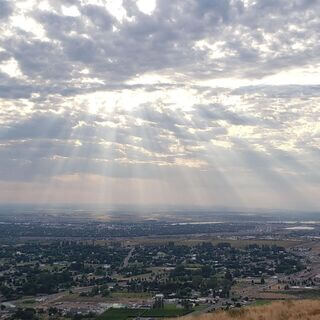
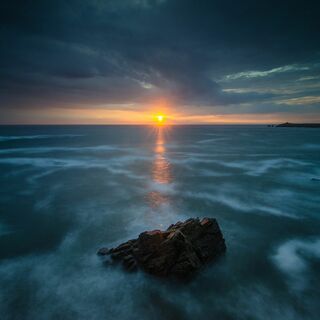
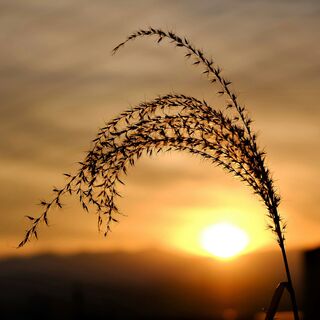
Sunrise/sunset contemplation is the practice of mindfully watching the sun rise or set as a dedicated contemplative exercise, resting attention on the changing light and sky through the solar transition without photographing or conceptualizing the scene.
Last Updated
3 Jul 2026
We are still reviewing this page. Our research team checks every technique page for accuracy and evidence quality before final release. Details may change as that review completes. The evidence badge shows our current reading of the published research.
RECOMMENDED DOSE
No direct dose-response literature exists for sunrise/sunset contemplation as a practice. A short, low-commitment window at either the morning or evening light transition is a gentle way to establish the habit. No direct dose evidence; editorial synthesis.
Once the practice feels comfortable, a moderately longer sitting most days of the week supports a more consistent routine. This step reflects general contemplative-practice conventions rather than technique-specific trials. No direct dose evidence; editorial synthesis.
For established practitioners, a daily contemplation aligned with the sunrise or sunset transition offers a fuller practice. The available references describe environmental light and circadian biology at the population level, not the contemplative practice itself, so this remains an editorial recommendation. No direct dose evidence; editorial synthesis.
Session length
Session length: 5–10 minutes
5
MIN
How long each individual practice session should last from start to finish.
Frequency
Frequency: 2–3 days
2
DAYS
The number of days per week to fit a session into your routine.
Session length
Session length: 10–20 minutes
10
MIN
How long each individual practice session should last from start to finish.
Frequency
Frequency: 4–5 days
4
DAYS
The number of days per week to fit a session into your routine.
Session length
Session length: 20–30 minutes
20
MIN
How long each individual practice session should last from start to finish.
Frequency
Frequency: 6–7 days
6
DAYS
The number of days per week to fit a session into your routine.
About this card. No direct dose-response literature exists for sunrise/sunset contemplation; these recommendations are based on general practice conventions for contemplative/meditation techniques and should be treated as starting points only. These recommendations are not a substitute for personalised guidance from a qualified practitioner.
Quick answers to what people most often ask. Each card links to the deeper section below.
evidence
No randomized trials have tested sunrise or sunset contemplation directly; supporting research comes from circadian light biology. A week under natural light shifted the body's internal clock toward solar time, melatonin timing tracks sunset and sunrise, and greater daylight exposure links to steadier mood. Findings set expectations rather than proving the practice's effects.
Read moregood for
Sunrise/sunset contemplation suits people who want a low-effort way to steady a busy mind and feel more in step with the natural day, to catch morning light, or to build a calming evening wind-down. It is not a substitute for care when mood or sleep problems are severe, and its supporting evidence is indirect.
Read moresafety
Most healthy adults can quietly watch the sunrise or sunset with very low risk. Look directly at the sun only within the soft first or last 15 to 20 minutes, when UV is low, to protect the eyes. Keep evening sessions brief, since prolonged bright dusk light can delay sleep. Those with eye conditions should watch the surrounding sky instead.
Read morehow it works
Sunrise/sunset contemplation works in two overlapping ways. The changing sky is naturally captivating, so attention settles onto the shifting light and color without the effort silent meditation usually takes, quieting the mind. Separately, natural light at dawn and dusk helps set the body's internal clock, or circadian timing, to the solar day.
Read moreSunrise/sunset contemplation is the practice of quietly watching the sun rise or set, letting attention rest on the changing light, color, and sky without photographing or narrating it.
You find a spot with a clear horizon view and sit or stand in stillness during the golden hour, the first or last 15 to 20 minutes of sunlight, attending to the gradual shift of light, color, cloud, and shadow. There is nothing to chant or achieve; the aim is simply to watch without reaching for a camera, a running commentary, or an interpretation. Direct observation of the sun stays within these low-UV golden-hour windows for eye safety.
Unlike general nature observation, this practice is defined by its celestial, time-specific focus on the solar transition itself. It also differs from sun gazing at other times of day, which carries real risk to the eyes; observation stays confined to the golden hour when UV is minimal. It is a contemplative attention practice, not a light-therapy protocol and not a treatment for any diagnosed condition.
Not to be confused with
Unrestricted sun gazing
Sun gazing means staring directly at the sun, often through the middle of the day, and can cause serious, lasting eye damage. Sunrise/sunset contemplation restricts any direct look at the sun to the first or last 15 to 20 minutes when UV is minimal, and centers on the whole changing sky rather than the solar disc.
Bright light therapy protocols
Light therapy is a dosed clinical intervention delivered by a lamp at a set time to treat seasonal mood or circadian disorders. Sunrise/sunset contemplation is a contemplative practice using natural light; it is not a substitute for prescribed light treatment.
Circadian light-timing routines for sleep
Getting morning light or dimming evening light to fix a sleep schedule is a behavioral sleep strategy aimed at timing. Sunrise/sunset contemplation shares that light biology but is practiced for presence, perspective, and calm, not primarily as a sleep prescription.
Sunrise/sunset contemplation appears to work in two overlapping ways. The changing sky is naturally captivating, so attention settles onto the shifting light and color without the effort that silent focused meditation usually takes, which many people experience as a quieter, less scattered mind. Separately, natural light at dawn and dusk helps set the body's internal clock, its circadian timing, to the solar day, and human physiology is organized around internal markers of biological dawn and dusk (Wehr et al., 2001). That second, light-driven part rests on circadian and light-biology research rather than on studies of the contemplation itself, so it is best read as a likely contributor rather than a measured effect of the practice.
Watching the light fade toward sunset lines up with the body starting to release melatonin, the hormone that signals night is coming. Under natural light, melatonin rises close to sunset and eases off again near sunrise (Matthews et al., 1991), (Wehr et al., 2001), a shift many people feel as a quiet drowsiness gathering as the sky darkens and a return of alertness at dawn. In healthy adults, a week spent under natural light also shifted the body's internal clock earlier, so biological night began nearer sunset (Stothard et al., 2017); these are measurements of how natural daylight affects the body, not of sunrise or sunset watching specifically.
As the sky darkens toward sunset, the body starts releasing melatonin, the hormone that signals night is on the way. In natural daylight, melatonin rises close to sunset and eases off again near sunrise (Matthews et al., 1991), (Wehr et al., 2001), a shift many people feel as a quiet drowsiness settling in as the light fades, then a return of alertness as morning arrives.
You may feel naturally more alert after dawn and readier to wind down as the light fades. That daily arc is shaped by cortisol, the hormone that helps you feel awake, which rises toward morning and eases through the day; natural light around sunrise and sunset helps set this internal clock to the solar day (Stothard et al., 2017), (Wehr et al., 2001).
Indirect evidence, drawn from light-biology and circadian science rather than trials of sunrise/sunset watching itself, points to a small number of plausible benefits. Greater exposure to natural daylight is associated with steadier mood in healthy volunteers (Doo-Heum et al., 2007), and morning and evening light helps align the body's internal clock to the solar day, which in turn tracks with sleep timing (Stothard et al., 2017), (Borisenkov, 2011). Not yet supported are any controlled trial of the practice itself, or claims that it treats anxiety, depression, or a diagnosed sleep disorder.
The most relevant finding is that natural daylight at dawn and dusk anchors the body's internal clock: a week spent under natural light shifted circadian timing toward solar time, with a weekend outdoors reaching about two-thirds of that shift (Stothard et al., 2017). Related research shows melatonin timing tracks sunset and sunrise (Wehr et al., 2001), population studies link sunset and sunrise times to sleep and to morning or evening preference (Randler & Rahafar, 2017), (Borisenkov, 2011), and more daylight is associated with steadier mood (Doo-Heum et al., 2007). The main limit is directness, since no randomized trials have tested sunrise or sunset contemplation as a practice, and some findings rest on statistical significance alone rather than measured effect sizes.
0
Meta-analyses
0
RCTs
1
Systematic reviews
0
Observational
6
Pilot
Studied populations
Outcomes measured
| Outcome | Effect size | 95% CI | N | Comparator | Source |
|---|---|---|---|---|---|
| Depressive mood (SIGH-SAD atypical subscore) negatively correlated with light mesor | reported significant; p=0.034 | — | — | — | Doo-Heum et al., 2007 |
The research is useful for setting expectations, but study methods and participant groups vary. Treat the findings as general guidance rather than a promise about any single session, and not a replacement for clinical care.
Latitude affects Morningness-Eveningness: evidence for the environment hypothesis based on a systematic review
n = 35,589
Finding: Drawing on 87 datasets covering 35,589 people across 28 countries, this review found that the local timing of sunset was the single strongest predictor of whether people leaned toward being morning or evening types, with later sunsets linked to a more evening orientation; sunrise timing on its own showed no independent effect once other factors were accounted for. In plain terms, the natural light environment where you live appears to shape your body clock more than any personal habit does. Worth noting: this looks at environmental light patterns at the population level, so it does not test sunrise or sunset contemplation as a practice, and it cannot tell you that watching a sunset will shift your own sleep-wake preference.
reported narratively
The pattern of entrainment of the human sleep-wake rhythm by the natural photoperiod in the north.
n = 2,822
Finding: In a survey of 2,822 people living at high northern latitudes (ages 10 to 97), the time the sun came up predicted how long and when people slept more strongly than either sunset or the overall length of the day, and this link was clearest among older adults. In practical terms, the morning light transition appears to be a key anchor for the body's daily rhythm, which is part of why paying attention to sunrise may matter for sleep. This was an observational study of environmental patterns, though, not a test of any contemplative practice, so it shows a connection between sunrise timing and sleep rather than proving that watching the sunrise changes how you sleep.
reported narratively
More prominent reactivity in mood than activity and sleep induced by differential light exposure due to seasonal and local differences.
2007
Finding: Over a full year, this study tracked 54 healthy adults living at two different latitudes (Rochester, Minnesota and San Diego, California) and found that when people got less natural light, their mood dipped toward the depressive end, with the strongest mood changes showing up in Rochester's darker winters. Notably, mood shifted more in step with how much light people received than with their activity or sleep, hinting that daily exposure to natural daylight may matter for how we feel. This is worth keeping in mind if you're drawn to spending time outdoors at sunrise or sunset, but the study looked only at overall light exposure across seasons, not at the practice itself, so it can't tell us that watching a sunrise lifts mood or eases depression.
reported significant; p=0.034
Sunset time and the economic effects of social jetlag: evidence from US time zone borders.
2019
Finding: Comparing communities on either side of a time-zone border, this study found that each extra hour of natural light in the evening was linked to about 19 fewer minutes of sleep per night. In practical terms, more light late in the day tends to push bedtimes later while wake times stay fixed, quietly shrinking how long people rest. For anyone drawn to sunset contemplation, this is a useful reminder that when you take in evening light matters: winding down as the sun goes down may protect sleep better than lingering in bright light. Note, though, that this looked at broad populations and light exposure timing, not at the contemplative practice itself, so it speaks to the effect of evening light rather than to any single technique.
-19 minutes of sleep
Human plasma melatonin and urinary 6-sulphatoxy melatonin: studies in natural annual photoperiod and in extended darkness.
1991
Finding: Tracking healthy volunteers through the seasons under natural outdoor light, this study found that the body's release of melatonin, the hormone that signals night, begins around sunset and tapers off near sunrise, with morning light most strongly shutting it down in summer. In practical terms, the daily sunrise and sunset transitions are exactly when your internal clock is most responsive to changing light, which is part of why being outdoors at these times can feel naturally aligned with your sleep and wake cycle. It's worth being clear about scope: this research measured how natural light shapes melatonin timing, not the effects of any contemplative practice, so it does not show that watching the sunset raises melatonin or improves sleep on its own.
See full citation in referencesCircadian Entrainment to the Natural Light-Dark Cycle across Seasons and the Weekend.
2017
Finding: When healthy adults spent time under natural light instead of indoor electrical lighting, their internal body clock shifted to line up with the solar day, so their biological night began around sunset and ended around sunrise. A full week outdoors advanced this timing earlier, and even a single weekend of camping produced roughly 69% of that same shift, with the biological night stretching longer in winter than in summer. For anyone drawn to a sunrise or sunset practice, this points to the value of getting real daylight at the edges of the day as a way to keep sleep and waking aligned with the sun. It is worth being clear that this study measured the effect of natural light exposure itself, not the contemplative practice, so it speaks to when you get outside rather than to the act of quiet reflection.
reported narratively
Evidence for a biological dawn and dusk in the human circadian timing system
2001
Finding: Tracking healthy adults under natural daylight across the seasons, this study found that the body's release of melatonin, the hormone that signals night, begins around sunset and switches off around sunrise, with morning light most strongly shutting it down in summer. From this the researchers describe an internal clock that flips between "day" and "night" modes at biological dawn and dusk, timed alongside shifts in body temperature and sleepiness, which helps explain why the sunrise and sunset windows feel biologically significant. Keep in mind that these findings are about how natural light shapes your body clock, not about the contemplative practice itself, so they explain why these times of day matter rather than showing that watching a sunset changes your physiology or sleep.
See full citation in referencesWatching the sun rise and set has been woven into contemplative life across many cultures, from Hindu Sandhya Vandana twilight practice and Buddhist dawn meditation to the Christian hours of Lauds and Vespers timed to the solar transition, and Indigenous sun-honoring ceremonies. These roots help explain the practice's form, its timing to dawn and dusk and its posture of quiet, undivided attention, rather than proving any clinical effect.
Watching the sunrise or sunset is very low-risk for most healthy adults; it asks little more than sitting or standing in stillness while your attention rests on the changing light. Two situations call for care. First, looking straight at the sun outside the soft golden-hour window can strain or damage the eyes, so keep any direct observation to the first or last 15 to 20 minutes of the day, when the light is gentle and the UV index is low. Second, a long stretch of bright light late in the evening can push your body clock later and shorten your sleep, so keep evening sessions to the brief transition rather than lingering in bright dusk close to bedtime (Osea & Fabrizio, 2019). Both are sensible, practice-informed limits drawn from broader light and circadian research, not signs of documented harm from the practice itself.
People who already tend toward late nights, delayed sleep, or insomnia should treat evening sun-watching gently: keep it to the short transition window and avoid sustained bright light near bedtime, since extra evening light is linked with shorter sleep and can leave the settling drowsiness you want at night arriving later than it should (Osea & Fabrizio, 2019). Anyone with an eye condition, recent eye surgery, or a medication that heightens light sensitivity should be especially careful about looking toward the sun, and may prefer to watch the surrounding sky, where the shifting colour and cloud carry the same slow spectacle without the direct glare. These are practical modifications, not a sign the practice is unsafe for most people.
Looking straight at the sun in full daylight can strain or permanently damage the eyes. Keep any direct observation to the first or last 15 to 20 minutes around sunrise or sunset, when the light is soft and the UV index is low. Rest your gaze on the whole spreading display of colour, cloud, and shadow rather than the brightest point, and look toward the horizon if the light feels sharp or your eyes water.
A long stretch of bright light late in the evening can push the body clock later and shorten sleep. Keep evening sun-watching to the brief golden-hour transition and move toward softer, dimmer light afterward rather than lingering in bright dusk near bedtime. This matters most for people who already tend toward late nights, delayed sleep, or insomnia, in whom the settling drowsiness they want at night can otherwise arrive later than it should.
Anyone with an eye condition, recent eye surgery, or a medication that heightens sensitivity to light should be especially careful about looking toward the sun and is best skipping direct solar observation altogether. Rest your attention on the surrounding sky instead, where the shifting colour and cloud carry the same slow spectacle without the direct glare. An eye specialist or pharmacist can speak to your specific condition or medication in a way general guidance cannot.
Sunrise and sunset contemplation is best approached as a brief moment of stillness during the soft golden-hour light, when the day is gentle enough to rest your attention on the changing colour without strain. A sensible starting format is a short session from a spot with an open horizon and steady footing, with your gaze relaxed across the whole sky rather than fixed on any bright point. If you are watching in the evening, keeping it to the brief transition and easing into softer light afterward helps protect the drowsiness you want at bedtime.
Keep any direct look at the sun to the first or last 15 to 20 minutes of the day, when the light is soft and the UV index is at its lowest. This timing is what separates safe sunrise/sunset contemplation from unsafe sun gazing in full daylight.
Rest your attention on the whole spreading display of colour, cloud, and shadow rather than staring into the brightest point. If the light feels sharp or your eyes water, look toward the horizon or the surrounding sky instead. Comfort is the signal to trust.
Choose a spot with an open horizon and firm, level footing so you can stay settled without straining, whether you sit or stand. A steady base lets the body ease toward the calmer, less tense feeling the practice tends to bring.
Let the practice end with the transition rather than lingering in bright dusk, and move toward softer, lower light afterward so the evening drowsiness that helps you fall asleep can arrive on time {{cite:TECH_342_REF_022}}.
If you have been still for a while, especially seated, rise slowly and take a breath or two before walking off, giving the body a moment to reorient.
This information is educational and is not medical advice. This practice is not a substitute for professional care and should not replace prescribed medication or treatment for any medical or mental-health condition. If you are managing a health condition or taking medication, talk with a qualified health professional before changing your practice. If you are in distress or crisis, seek professional support.
| Technique | Best for | Use with care | Evidence strength | Distinction |
|---|---|---|---|---|
| Bright light therapy (light box) | Managing seasonal low mood or a shifted body clock with a controlled, prescribable light dose, often under clinical guidance. | People with bipolar disorder or eye conditions should get clinical advice before using a light box; contemplation carries no such dosing decisions. | moderate EVIDENCE | Bright light therapy uses a calibrated lamp at a set time and dose to shift the body clock and lift seasonal mood dips, a clinical protocol built around measured lux and duration. Sunrise/sunset contemplation is a contemplative practice built around attention and meaning, using the natural light of the solar transition rather than a prescribed dose. The two lean on overlapping circadian biology but differ in vehicle: one is a timed light exposure, the other is a way of paying attention. |
| Awe walks and nature-awe practices | People who prefer to move and roam while cultivating wonder, rather than settle in one spot at a set time of day. | emerging EVIDENCE | Awe walks seek out vast or wondrous scenes while moving through nature, cultivating perspective across a whole outing. Sunrise/sunset contemplation narrows this to one recurring celestial event watched in stillness, where the vastness of the daily solar passage does similar work. Both draw on awe and decentering, the felt shift from being caught inside your worries to watching them from a wider vantage; the difference is the fixed focal point and the twilight timing. | |

| General nature observation and outdoor mindfulness | Everyday grounding and present-moment attention when you want to step outside at any time, without waiting for dawn or dusk. | moderate EVIDENCE | General nature observation attends to whatever the outdoor setting offers, birds, trees, weather, at any hour and without a particular focal event. Sunrise/sunset contemplation is the time-specific, celestial version: it commits to the golden-hour window and to the changing light of the solar transition as its anchor. The broader practice is more flexible; the sunrise/sunset form trades that flexibility for a naturally compelling focal point and a link to the body's light-timed rhythms. |
No. Sunrise/sunset contemplation keeps any direct look at the sun to the soft golden-hour window, the first or last 15 to 20 minutes when UV is lowest, and rests attention on the whole changing sky. Unrestricted sun gazing means staring at the sun, often mid-day, and can cause serious, lasting eye damage.
+
No. The two are easy to confuse but differ in one crucial way. Sunrise/sunset contemplation keeps any direct look at the sun to the golden hour, the first or last 15 to 20 minutes of daylight when the sun is low and UV is minimal, and it rests attention on the shifting colour, cloud, and light of the whole sky rather than the solar disc. Unrestricted sun gazing means staring straight at the sun, often outside that gentle window, and can strain or damage the eyes. That golden-hour limit is what separates the safe form from the risky one.
Only briefly, and only during the golden hour. Direct viewing should stay within the first or last 15 to 20 minutes of sunlight, when the sun is low and UV is minimal; keep your gaze soft and rest it on the whole sky rather than the sun itself. Looking at the sun outside this window can cause lasting eye damage.
+
Only with care, and only in the golden hour. This is a practice-informed safety limit, not a trial finding: brief direct observation is safest in the first or last 15 to 20 minutes around sunrise or sunset, when the light is gentle and the UV index is low. Keep your gaze soft and let it roam over the changing colour, cloud, and shadow rather than staring into the brightest point, and look toward the horizon if the light feels sharp or your eyes water. Direct viewing outside this window can cause serious, lasting eye damage; anyone with an eye condition, recent eye surgery, or a light-sensitising medication should be especially cautious and may prefer to watch the surrounding sky.
Use care, and check with your eye specialist or pharmacist first. If you have an eye condition, recent eye surgery, or a medication that increases light sensitivity, avoid looking directly at the sun and watch the surrounding sky instead. This is a general precaution, not clearance for your specific situation.
+
Use care and get individual advice. Quietly watching the sky is low-effort, but direct solar observation is not something a general precaution can clear for a vulnerable eye. If you have an eye condition, recent eye surgery, or a photosensitising medication that makes your eyes or skin react more strongly to light, the sensible modification is to skip any direct look at the sun and rest your attention on the shifting colour and cloud around it. Your eye specialist or pharmacist can speak to your specific condition, which no general guidance can replace. Keeping evening sessions brief also fits the wider caution that lingering in bright light late in the day can push sleep later.
Likely, though it hasn't been tested directly. No trial has measured whether watching a sunset relaxes you or quiets your mind, but the shifting sky gives attention a naturally absorbing focal point to settle onto, and more natural daylight is linked with steadier mood (Doo-Heum et al., 2007).
+
Likely, though it hasn't been tested directly. No randomized trial has measured whether sunrise or sunset watching reduces stress or quiets the mind, so it can't be called a measured effect of this practice. What supports it is indirect: the slowly changing light holds attention without effort, human physiology is organized around biological markers of dawn and dusk (Wehr et al., 2001), and greater natural daylight tracks with steadier mood in healthy volunteers (Doo-Heum et al., 2007). Read it as a plausible aid to settling, not a remedy for any diagnosed condition.
Indirectly. No randomized or controlled trials have tested sunrise/sunset contemplation as a practice, so the support is honest but partial: it comes from light-biology and circadian research rather than from studies of the watching itself (Stothard et al., 2017).
+
Indirectly. The relevant science studies natural light rather than the contemplation, so the support is honest but partial. A week under natural daylight shifted the body's internal clock, its circadian timing, toward solar time (Stothard et al., 2017); more daylight is associated with steadier mood in healthy volunteers (Doo-Heum et al., 2007); and sunrise and sunset times track people's morning-or-evening preference and sleep (Randler & Rahafar, 2017), (Borisenkov, 2011). Direct research on the practice itself is limited, so read it as a plausible aid to settling and daily rhythm, not proven clinical benefit.
Many people find it easier because the shifting light, colour and cloud of the solar transition is a naturally compelling focal point, so attention tends to settle onto it with little effort, unlike the self-generated focus that silent sitting meditation asks you to hold. This is a plausible explanation of how attention works, not an advantage proven in studies of the practice.
+
Many people find it easier because the changing sky does some of the work for you. In focused-attention meditation you have to keep steering the mind back to a self-chosen object, whereas the evolving light of dawn or dusk is a vivid, moment-to-moment display that draws and holds attention on its own, an effect known as attentional anchoring on an external, sensory focal point. This is a mechanism drawn from how attention and outward sensing work, so read it as a likely reason the practice feels effortless rather than a measured finding, since no trials have tested sunrise or sunset contemplation directly.
Possibly. Under natural light, melatonin, the hormone that signals night, rises near sunset, so evening light may plausibly support gathering drowsiness (Matthews et al., 1991), (Wehr et al., 2001). This rests on light-biology research, not trials of sunset watching itself, and it is not a treatment for insomnia.
+
Possibly, though the support is indirect. Under a natural photoperiod, melatonin rises close to sunset and eases near sunrise, and dawn and dusk light helps set the body's internal clock, its circadian timing, so that biological night begins nearer sunset (Wehr et al., 2001), (Stothard et al., 2017). These findings come from circadian and light-biology studies rather than trials of sunset contemplation itself, so read it as a likely contributor to evening wind-down, not a proven sleep aid. One caution: keep evening sessions brief and dim the lights afterward, since sustained bright light late in the evening can push sleep later.
Possibly, if you already tend toward late nights. Extended bright light in the evening is linked with later, shorter sleep, so keep sunset-watching to the brief golden-hour transition and avoid lingering in bright dusk near bedtime (Borisenkov, 2011). This is a sensible, precautionary limit, not a documented harm of the practice.
+
Possibly, and the caution matters more if you already tend toward delayed sleep or insomnia. The timing of natural light is closely tied to how and when people sleep (Borisenkov, 2011), and a long stretch of bright evening light can shift your body clock later, so the settling drowsiness you want at night arrives later than it should. The practical fix is to keep evening sessions to the short golden-hour transition and then move toward softer, dimmer light rather than lingering in bright dusk. This is drawn from indirect circadian and sunset-timing research rather than any studied harm of sunset contemplation itself, and it is not a treatment for a sleep disorder.
There's no research-based minimum; a few minutes up to the length of the transition is plenty. Keep any direct look at the sun to the soft golden-hour window, the first or last 15 to 20 minutes when UV is low, and at sunset keep it brief so bright evening light doesn't push your sleep later (Osea & Fabrizio, 2019). A clear horizon helps but isn't required.
+
There's no set dose. Because the practice is simply resting your attention on the changing light and sky, a few minutes can be enough, and it's fine to stay for the whole transition if that feels settling. Limit any direct observation of the sun to the golden-hour window, the first or last 15 to 20 minutes, when UV is minimal, and at sunset keep the session brief rather than lingering in bright dusk, since extended evening light can push sleep later (Osea & Fabrizio, 2019). An open horizon makes the display easier to watch, but it isn't essential: you can let your gaze roam over the surrounding colour, cloud, and shadow instead.
A light box is a dosed clinical tool: a calibrated lamp used at a set time and intensity, often under clinician guidance, to treat seasonal mood or circadian problems. Sunrise/sunset contemplation is a contemplative practice using natural light with no prescribed dose, so it is not a substitute for prescribed light therapy.
+
The core difference is dose and purpose. A light box delivers a measured amount of light at a set time to shift the body clock or lift seasonal low mood, whereas contemplation simply rests attention on the natural light of the solar transition. The two draw on overlapping circadian biology: natural daylight helps align the body's internal clock to the solar day (Stothard et al., 2017) and more daylight tracks with steadier mood (Doo-Heum et al., 2007). But this support is indirect, since no trial has tested the contemplation itself, so it is best seen as suggestive rather than established, and not a replacement for prescribed light treatment (Stothard et al., 2017).
The first or last 15 to 20 minutes of sunlight around sunrise and sunset, when the sun is low and UV levels are minimal. This is the window in which brief direct observation of the sun is considered safest.
The body's roughly 24-hour internal clock that governs the daily rise and fall of alertness, hormones, and sleepiness. Many people feel it as being naturally more awake by day and drowsier at night.
The process by which light, especially natural daylight, keeps the body's internal clock aligned to the solar day rather than drifting later. It shows up as mornings and evenings that feel in step with the actual daylight around you.
Synchronization of endogenous circadian rhythms to the external light-dark cycle via the suprachiasmatic nucleus; a week of natural light exposure advances circadian phase toward solar time.
The hormone that rises in the evening to signal that night is coming and falls again toward morning. People often feel its rise as a quiet drowsiness settling in as the light fades.
A hormone that helps you feel awake and follows a daily curve, climbing toward morning and easing across the day. Its morning peak is part of what many people notice as feeling clear-headed after dawn.
A person's natural leaning toward being a morning or an evening type, shaping when they feel most alert and when they prefer to sleep. Population research links it partly to when the sun rises and sets where someone lives.
The shift from being caught up inside your thoughts and feelings to watching them pass as temporary mental events. Against the vastness of the daily solar passage, personal worries can feel smaller and less gripping.
Attention directed outward to what the five senses pick up from the surrounding world, rather than to internal body signals. In this practice it is the vivid noticing of shifting color, cloud, and shadow as the light changes.
Steadying attention on a single clear focal point so the mind wanders less. The slowly evolving light of the solar transition offers a naturally compelling anchor that holds interest without effort.
Increased activity in the body's rest-and-recovery branch, which shifts physiology away from fight-or-flight toward calm. It tends to feel like the body settling, tension easing, and breathing slowing during quiet golden-hour sitting.
Christoph Randler, Arash Rahafar (2017). Latitude affects Morningness-Eveningness: evidence for the environment hypothesis based on a systematic review. https://doi.org/10.1038/srep39976
Cited in: Research
Borisenkov Mikhail F (2011). The pattern of entrainment of the human sleep-wake rhythm by the natural photoperiod in the north.. https://doi.org/10.3109/07420528.2011.623978
Park Doo-Heum, Kripke Daniel F, Cole Roger J (2007). More prominent reactivity in mood than activity and sleep induced by differential light exposure due to seasonal and local differences.. https://doi.org/10.1080/07420520701669677
Giuntella Osea, Mazzonna Fabrizio (2019). Sunset time and the economic effects of social jetlag: evidence from US time zone borders.. https://doi.org/10.1016/j.jhealeco.2019.03.007
Cited in: How to practice safely, Use with care, Who should use care
Matthews C D, Guerin M V, Wang X (1991). Human plasma melatonin and urinary 6-sulphatoxy melatonin: studies in natural annual photoperiod and in extended darkness.. https://doi.org/10.1111/j.1365-2265.1991.tb03491.x
Cited in: What happens in the body
Stothard Ellen R, McHill Andrew W, Depner Christopher M, Birks Brian R, Moehlman Thomas M, Ritchie Hannah K (2017). Circadian Entrainment to the Natural Light-Dark Cycle across Seasons and the Weekend.. https://doi.org/10.1016/j.cub.2016.12.041
Cited in: Benefits, Research, What happens in the body
Thomas A. Wehr, Daniel Aeschbach, Wallace C. Duncan (2001). Evidence for a biological dawn and dusk in the human circadian timing system. https://doi.org/10.1111/j.1469-7793.2001.t01-1-00937.x
Cited in: How it works, Research, What happens in the body
Editorially curated. Tracks are not themselves clinically studied; evidence on the page applies to Sunrise/Sunset Contemplation as a technique.
Explore guided sessions to deepen your Sunrise/Sunset Contemplation technique.
Beginner content for Sunrise/Sunset Contemplation

★ 4.8
·
Music
·
59 min
James Anthony Walker
How hard is Sunrise/Sunset Contemplation?
Sunrise/Sunset Contemplation stays easy overall and mainly depends on a light attentional hold, so the low continuous-active default is sufficient.
2
Mental Effort
2 / 4
▾Emotional Depth
1 / 4
▾Physical Intensity
1 / 4
▾Prior Knowledge
1 / 4
▾