The world’s largest free audio library for everyday wellbeing
Breathwork
Reverse Breathing is a breath practice in which the belly contracts inward on the inhale and expands outward on the exhale, reversing the natural diaphragmatic pattern.
Last Updated
3 Jul 2026
We are still reviewing this page. Our research team checks every technique page for accuracy and evidence quality before final release. Details may change as that review completes. The evidence badge shows our current reading of the published research.
RECOMMENDED DOSE
A large randomised controlled trial of slow-paced breathwork (a closely related modality) used sessions of about 10 minutes, so a 5–10 minute session is a comfortable entry point for Reverse Breathing. The lower starting frequency is a conservative editorial recommendation to help new practitioners build the habit without strain.
This mirrors the protocol from a large slow-breathing randomised controlled trial, which had participants practise for roughly 10 minutes daily over four weeks. Because that trial studied a related breathwork technique rather than Reverse Breathing specifically, the dose is extrapolated from that overlap.
No direct dose evidence; editorial synthesis. This longer maintenance range extends beyond the durations tested in the available literature and reflects general breathwork practice conventions for experienced practitioners.
Session length
Session length: 5–10 minutes
5
MIN
How long each individual practice session should last from start to finish.
Frequency
Frequency: 3–5 days
3
DAYS
The number of days per week to fit a session into your routine.
Session length
Session length: About 10 minutes
10
MIN
How long each individual practice session should last from start to finish.
Frequency
Frequency: 7 days
7
DAYS
The number of days per week to fit a session into your routine.
Session length
Session length: 15–20 minutes
15
MIN
How long each individual practice session should last from start to finish.
Frequency
Frequency: 7 days
7
DAYS
The number of days per week to fit a session into your routine.
About this card. Session-length guidance is extrapolated from a related slow-breathing trial; longer and beginner-frequency figures are editorial estimates where direct evidence is limited. These recommendations are not a substitute for personalised guidance from a qualified practitioner.
Quick answers to what people most often ask. Each card links to the deeper section below.
evidence
No trial has tested Reverse Breathing directly. Evidence is borrowed from broader breathwork: a meta-analysis of randomised trials found breathwork produced small reductions in stress, anxiety, and depressive symptoms versus non-breathwork controls. Those studies used calmer, slower breathing, and one controlled trial found paced breathing no better than placebo, so benefits here remain plausible rather than proven.
good for
Reverse Breathing suits adults drawn to an active, effortful breath practice who want to build breath control and body awareness, and who seek focused, energised presence rather than drowsy calm. Indirect breathwork evidence points to modest stress and anxiety relief, but carry-over is uncertain. It is not a substitute for care when anxiety, mood, or breathing problems are significant.
Read moresafety
Most healthy adults can practise Reverse Breathing at low risk, though its effortful reversed pattern raises respiratory effort and mild alertness rather than calm. People prone to anxiety or panic, and anyone pregnant or living with a heart or breathing condition, should check with a clinician and learn under a qualified teacher. Ease off if straining or lightheadedness appears.
Read morehow it works
Reverse Breathing works by giving attention an effortful task: tracking the counter-habitual belly movement pulls focus from looping thoughts back to the sensation of breathing. Overriding an automatic pattern also sharpens the felt sense of what is happening inside the body. Because the reversed movement takes real muscular effort, it shifts the body toward mild alertness rather than deep calm.
Read moreReverse Breathing is a breath practice that flips the natural pattern, drawing the belly inward on the inhale and letting it expand on the exhale, an effortful technique rooted in Taoist qigong and some yoga lineages.
You breathe slowly and deliberately while reversing the usual abdominal movement: the belly draws in and up as you inhale and releases outward as you exhale. Attention rests on that counter-habitual movement, and because overriding an automatic rhythm takes muscular effort, the pattern is usually introduced gradually and in short spells rather than sustained intensively. Traditionally it is taught as a graded skill and a stepping stone toward more advanced Taoist and yogic breathing practices.
Reverse Breathing is not ordinary diaphragmatic or belly breathing, which does the opposite: the abdomen expands on the inhale and falls on the exhale. It is also not a breath-holding or hyperventilation practice, and although it belongs to the breathwork family, it is not primarily a relaxation method, the reversed, effortful pattern tends toward mild alertness rather than deep calm. Its traditional energy-circulation framing is a meaning system from Taoist tradition, not a demonstrated physiological effect.
Not to be confused with
Diaphragmatic (belly) breathing
These are opposites, not the same practice. Diaphragmatic breathing pushes the belly outward as you inhale; Reverse Breathing draws it inward on the inhale and lets it expand on the exhale.
Paradoxical breathing (involuntary)
Reverse Breathing is a deliberate, trained pattern, not the involuntary paradoxical breathing clinicians see with breathing difficulty or distress, where the chest and belly move out of sync without intention.
Microcosmic Orbit Breathing
Reverse Breathing is a foundational pattern often taught as a precursor to Microcosmic Orbit work, not the advanced energy-circulation practice itself.
Reverse Breathing works by giving attention a single, effortful task to hold. Tracking the counter-habitual movement of the belly is demanding enough to keep pulling focus back from looping thoughts toward the plain sensation of breathing, an anchoring effect seen in breath-focused attention training more broadly rather than in this technique itself (Mitsea et al., 2022). Overriding an automatic pattern also sharpens interoception, the felt sense of what is happening inside the body, so subtle shifts in pressure and tension become easier to notice. Because the reversed pattern takes real muscular effort, it raises the body toward mild alertness rather than deep calm, and how we breathe is known to shape brain activity and mood in the first place (Goheen et al., 2023).
Looping, distractible thoughts get a single place to return to when attention rests on the physical work of the breath. Following the reversed pattern, drawing the belly in on the inhale, takes up enough focus to keep pulling the mind back from rumination toward immediate sensation, an effect seen in breath-focused attention training more broadly (Mitsea et al., 2022); because no study has tested Reverse Breathing itself, treat this as an early, plausible mechanism rather than a proven one.
Following the effortful in-and-out pattern of Reverse Breathing gives attention a single, demanding target to rest on. That can pull focus back from looping thoughts to the plain physical sensation of breathing, so the mind has somewhere clear to stay (Mitsea et al., 2022).
Breathing research measures a shift in autonomic balance most reliably, though the direction depends on the pattern. Slower breathing raises heart-rate variability, a marker of a flexible, well-regulated nervous system that often feels like a steadier, less reactive body (Buchanan & Janelle, 2022), and slow diaphragmatic breathing has been linked to lower levels of the stress hormone cortisol in a small study of 40 healthy adults (Ma et al., 2017). Reverse Breathing, by contrast, raises respiratory effort and tends to produce mild sympathetic arousal, the body's readiness response, which can feel like a little more alertness and a quicker heartbeat rather than sinking relaxation. These measurements come from other breathing methods, not from Reverse Breathing itself, so they describe the family it belongs to rather than this specific pattern.
You may notice your mind landing on one thing more readily and getting pulled less often into background worry, a shift in attention network function, the brain systems that steer focus onto a target and hold it there. In a small study of slow belly breathing, sustained attention improved alongside lower stress-hormone levels, though that used ordinary diaphragmatic breathing rather than the reversed pattern taught here, so for Reverse Breathing the effect is expected rather than directly measured (Ma et al., 2017).
The pull to drift, check, or jump between thoughts can ease as the brain systems that hold focus steady become more engaged. In a small study of a related slow belly-breathing practice, sustained attention improved while a stress hormone fell (Ma et al., 2017), but Reverse Breathing itself has not been measured directly, so this is a borrowed early signal rather than a proven effect.

Moderate but indirect evidence supports breathing practices for stress, anxiety, and low mood; there is no direct evidence for Reverse Breathing itself, and its traditional uses for energy, focus, and presence remain untested. A meta-analysis of randomised trials found breathwork produced small reductions in stress (Hedges' g = -0.35, 95% CI -0.55 to -0.14, k = 12 RCTs, 785 adults), anxiety (g = -0.32), and depressive symptoms (g = -0.40) versus non-breathwork controls (Fincham et al., 2023), and a systematic review reached similar conclusions for slow diaphragmatic breathing in adults 18 and over (Hopper et al., 2019). What is not yet supported: any large trial of this reversed pattern, long-term follow-up, or the claim that it treats a diagnosed condition.
Wound-up, can't-switch-off stress can start to loosen when breathing turns slow and deliberate. Across breathwork trials, regular practice is linked to modest drops in self-reported stress (Fincham et al., 2023), though Reverse Breathing itself is an active, effortful pattern that hasn't been tested directly for stress relief.
Racing, anxious thoughts can lose some of their grip when attention has a steady breath rhythm to return to. Across breathwork trials, regular practice is linked to modest reductions in anxiety (Fincham et al., 2023), though this evidence comes from breathing practices in general rather than Reverse Breathing specifically.
The grip of stress can loosen as the body settles into a slow, deliberate breathing rhythm. A systematic review of diaphragmatic breathing, the slow belly breathing that fully engages the main breathing muscle, found it lowered both felt stress and physical stress markers in adults, though the studies were small and none tested the reversed pattern Reverse Breathing uses (Hopper et al., 2019).
A meta-analysis of randomised trials found breathwork produced a small but consistent drop in stress, with a Hedges' g of -0.35 (95% CI -0.55 to -0.14) versus non-breathwork controls, meaning the average person who practised reported lower stress than about two-thirds of those who did not, alongside similar small reductions in anxiety and depressive symptoms (Fincham et al., 2023). Slow diaphragmatic breathing shows comparable stress benefits, and slower breathing raises heart-rate variability, a sign of autonomic balance (Hopper et al., 2019), (Buchanan & Janelle, 2022). These findings come with real limits: none of this tested Reverse Breathing, its effortful reversed pattern behaves differently from the calmer methods studied, and one carefully controlled trial of 400 adults found paced breathing worked no better than a matched placebo pattern (Fincham et al., 2023).
1
Meta-analyses
1
RCTs
2
Systematic reviews
0
Observational
5
Pilot
Studied populations
Emotions and ensuing motor performance are altered by regulating breathing frequency: Implications for emotion regulation and sport performance
n = 35
Finding: In an experiment with 35 young adults, breathing slowly in time with a metronome raised heart-rate variability, a sign that the nervous system is staying flexible even during emotionally unpleasant moments, while faster breathing did the opposite; the slower someone breathed, the higher their heart-rate variability climbed. In plain terms, the pace of your breath appears to shape how balanced your body stays under stress. This is worth reading with care for Reverse Breathing, though, because Reverse Breathing is an effortful, mildly activating pattern rather than the slow, relaxed breathing tested here, so these calming results should not be assumed to carry over. It was also a small study, so the findings point to a mechanism rather than settling it.
standardized beta = -0.45
Breathing, Attention & Consciousness in Sync: The role of Breathing Training, Metacognition & Virtual Reality
2022
Finding: This review of breath-control training found that breathing and attention move together: as your breathing settles into a steadier rhythm, your focus tends to steady with it, and deliberate breath practice can sharpen attention both in the moment and over time. For anyone using a breath practice as an anchor for a wandering mind, that offers a plausible reason why it works, the act of controlling the breath gives attention something stable to hold onto. Keep in mind this looked at breath-focused techniques as a broad family rather than Reverse Breathing on its own, so it supports the general rationale rather than proving results for this specific method.
See full citation in referencesReverse Breathing comes from Taoist qigong and martial-arts traditions, where it is known as reverse abdominal breathing, or ni hu xi, and it also appears in some yoga lineages (Fincham et al., 2023). In Taoist internal alchemy the raised abdominal pressure of the reversed pattern is understood to guide energy upward along the spine, and it is often taught as a foundation for more advanced practices such as Microcosmic Orbit and vase breathing. These roots help explain the practice's form and the effort it asks for, not its clinical effects.
Reverse Breathing is low-risk for most healthy adults. Because it works against the body's habitual breath, drawing the belly inward on the inhale instead of letting it expand, it takes real effort and can raise mild sympathetic arousal, the alert, slightly keyed-up state that comes with harder respiratory work. This is a practical caution drawn from general breathwork reviews and traditional teaching rather than a documented harm, since the technique has not been tested directly for safety (Bentley et al., 2023). Build the pattern gradually, ideally with a teacher, and ease off if it brings on straining, breathlessness, or lightheadedness instead of a rhythm that gradually settles.
A few people should approach this pattern carefully. Because the reversed breath is activating rather than calming, people prone to anxiety or panic may find the mild arousal keys the body up rather than soothing it; this caution is inferred from how the mechanism works, not from a documented risk. Anyone who is pregnant or living with a cardiovascular or respiratory condition is best checking with a clinician first and learning under a qualified teacher, because the effortful breath and the raised abdominal pressure of this pattern could be a concern for them. That guidance is practice-informed, since no study has tested Reverse Breathing directly in these groups.
Reverse Breathing works against the body's habitual breath, drawing the belly inward on the inhale, so it takes real muscular effort and can raise mild sympathetic arousal, the alert, slightly keyed-up state that comes with harder respiratory work. Build the pattern gradually, ideally with a teacher, and ease off if it brings on straining, breathlessness, or lightheadedness instead of a rhythm that gradually settles. This is a practical caution from general breathwork reviews and traditional teaching rather than a documented harm, since the technique has not been tested directly for safety.
| Technique | Best for | Use with care | Evidence strength | Distinction |
|---|---|---|---|---|
| Diaphragmatic (belly) breathing | Everyday relaxation and easing stress with a gentle pattern that is easy to learn on your own. | moderate EVIDENCE | Diaphragmatic breathing lets the belly expand outward on the inhale and fall on the exhale, the body's natural, relaxing pattern. Reverse Breathing does the opposite: the abdomen draws inward on the inhale, which takes deliberate muscular effort and adds mild activation rather than pure calming. Diaphragmatic breathing is also the far better-studied of the two, with small controlled trials linking it to lower stress-hormone levels and steadier attention. | |
| Coherent (slow paced) breathing | A steady, calming rhythm for autonomic balance and winding down, needing little instruction. | One large placebo-controlled trial found paced breathing no better than a matched sham, so keep expectations modest. | moderate EVIDENCE |
Reverse Breathing flips the natural breath: the belly draws inward as you inhale and relaxes outward as you exhale. Ordinary diaphragmatic breathing does the opposite, with the belly expanding on the inhale, so reverse breathing feels deliberately effortful and counter-habitual.
+
Reverse Breathing draws the belly inward on the inhale and lets it relax outward on the exhale, the opposite of the pattern most people use without thinking. In ordinary belly, or diaphragmatic, breathing the abdomen pushes out as you draw air in; reverse breathing inverts that movement, which takes active muscular effort and feels more like learning an unfamiliar rhythm than sinking into relaxation. It comes from Taoist qigong and martial-arts traditions, where it is called reverse abdominal breathing, or ni hu xi, and is often taught as a foundation for more advanced practices.
Reverse Breathing comes from Taoist qigong and martial-arts traditions, where it is called reverse abdominal breathing (ni hu xi), and it also appears in some yoga lineages. It is a documented traditional practice rather than a modern invention.
+
Reverse Breathing comes from Taoist qigong and martial-arts traditions, where it is known as reverse abdominal breathing, or ni hu xi, and it also appears in some yoga lineages. In Taoist internal alchemy the raised abdominal pressure of the reversed pattern is understood to guide energy upward along the spine, and the technique is often taught as a foundation for more advanced practices such as Microcosmic Orbit and vase breathing. These roots explain the form the practice takes, not any clinical effect.
The Taoist name for this technique, where the belly draws inward on the inhale and relaxes outward on the exhale, the reverse of the body's usual pattern. It feels effortful because you are deliberately overriding a habitual movement.
Slow breathing led by the diaphragm, where the belly expands outward on the inhale. It is the natural, relaxation-oriented pattern and the one most breathing research has studied.
Breathing driven primarily by diaphragmatic contraction with abdominal expansion on inhalation, associated with parasympathetic activation and relaxation responses.
The ability to sense and read internal body signals such as breath movement, pressure, and tension. As it sharpens, people often feel more embodied and better able to catch early stress signals before they escalate.
The perception and interpretation of visceral afferent signals arising from within the body, supported by insular and somatosensory cortical processing.
A shift toward the body's fight-or-flight branch, felt as more alertness, energy, and a faster heartbeat. Reverse Breathing's extra respiratory effort is thought to produce a mild version of this.
Increased activity in the sympathetic branch of the autonomic nervous system, mediated by adrenal and sympathetic pathways, producing heightened arousal and energy mobilisation.
The natural variation in time between heartbeats, used as a marker of balance between the body's arousal and recovery systems. Slower breathing tends to raise it, which usually accompanies a calmer, more settled feeling.
Beat-to-beat variation in cardiac interval reflecting autonomic (largely vagal) modulation; higher values generally indicate greater parasympathetic influence and autonomic flexibility.
The body's main stress hormone, which tends to rise under pressure. In a small study, slow belly breathing was linked to lower levels, often experienced as feeling less keyed-up.
Taylor Buchanan, Christopher M. Janelle (2022). Emotions and ensuing motor performance are altered by regulating breathing frequency: Implications for emotion regulation and sport performance. https://doi.org/10.3389/fpsyg.2022.963711
Cited in: Research, What happens in the body
Eleni Mitsea, Athanasios Drigas, Charalampos Skianis (2022). Breathing, Attention & Consciousness in Sync: The role of Breathing Training, Metacognition & Virtual Reality. https://doi.org/10.47577/tssj.v29i1.6145
Explore guided sessions to deepen your Reverse Breathing technique.
Outcomes measured
| Outcome | Effect size | 95% CI | N | Comparator | Source |
|---|---|---|---|---|---|
| self-reported stress | Hedges' g = -0.35 | 95% CI -0.55, -0.14 | 785 | non-breathwork controls | Fincham et al., 2023 |
| anxiety | Hedges' g = -0.32 | — | — | — | Fincham et al., 2023 |
| depressive symptoms | Hedges' g = -0.4 | — | — | — | Fincham et al., 2023 |
| subjective stress (group x time) | no significant group x time interaction; p=0.765 | — | 400 | attention-placebo breathwork at 12 breaths/min | Fincham et al., 2023 |
| HRV under unpleasant conditions | standardized beta = -0.45 | — | 35 | — | Buchanan & Janelle, 2022 |
Study methods and participant groups vary, and some reported statistics are significance-only rather than full effect-size estimates. Treat the findings as general guidance rather than a promise about any single session, and not a replacement for clinical care.
Effect of coherent breathing on mental health and wellbeing: a randomised placebo-controlled trial
n = 400
Finding: In the largest breathwork trial of its kind, 400 adults practised about 10 minutes a day for four weeks, half doing slow paced breathing at roughly 5.5 breaths a minute and half doing a faster placebo pattern at 12 breaths a minute. Both groups felt less stressed, anxious and low over time, but the slow-breathing group improved no more than the placebo group, so the specific slow rate showed no measurable edge. For a practitioner, this is a useful reality check: the benefit people feel from breathwork may come from simply pausing to breathe with intention rather than from hitting one precise rate. Worth noting, this trial tested coherent breathing rather than Reverse Breathing directly, and ran online over a short four-week window, so it speaks to paced breathing in general more than to any single method.
no significant group x time interaction; p=0.765
Breathing Practices for Stress and Anxiety Reduction: Conceptual Framework of Implementation Guidelines Based on a Systematic Review of the Published Literature
n = 58
Finding: This review looked across 58 studies of breathing practices for stress and anxiety, and found that most of the 72 interventions tested worked, with the more effective ones sharing a clear pattern: they included in-person guided training, ran sessions longer than about five minutes, and involved repeated practice over time rather than a single quick try. Practices that relied on fast-only breathing paces or highly technical methods taught without proper coaching were more likely to fall flat. For someone taking up Reverse Breathing, this points to how it is best learned, with hands-on guidance, unhurried sessions, and consistent repetition, though the review examined breathing practices broadly and does not test Reverse Breathing itself.
reported narratively
Effect of breathwork on stress and mental health: A meta-analysis of randomised-controlled trials
n = 785
Finding: Pooling randomised trials of breathwork as a whole (not Reverse Breathing on its own), this review found small-to-moderate reductions in stress, anxiety and low mood compared with people who did no breathing practice; for stress, the drop was drawn from 12 trials covering 785 adults. In everyday terms, regularly working with the breath may take a noticeable edge off day-to-day tension and mood, though the change is modest rather than dramatic. Because most of the included trials had weaknesses in how they were run, the authors themselves cautioned against overstating the benefits, and none of these results speak to Reverse Breathing specifically.
Hedges' g = -0.35
The Effect of Diaphragmatic Breathing on Attention, Negative Affect and Stress in Healthy Adults
n = 40
Finding: In this small trial, 40 healthy adults were split into two groups, and those who practised slow belly breathing at about four breaths per minute over eight weeks held their attention more steadily, felt less bothered by negative moods, and showed lower levels of the stress hormone cortisol in their saliva than the comparison group. For a practitioner, this hints that training the breath into a slow, deliberate rhythm may help settle the body's stress response and sharpen focus. Keep in mind, though, that this study used a slow diaphragmatic pattern that differs from, and in some ways works opposite to, Reverse Breathing, so the results speak to breath training in general rather than to Reverse Breathing specifically, and the group was small.
reported narratively
Effectiveness of diaphragmatic breathing for reducing physiological and psychological stress in adults: a quantitative systematic review
2019
Finding: This systematic review of diaphragmatic breathing in adults found that regular practice may lower both physical and psychological stress, with the individual studies reporting slower breathing rates, lower salivary cortisol, reduced blood pressure and improved scores on stress questionnaires. For someone exploring breathwork, that points to a plausible calming effect on the body's stress response. It is worth being cautious, though: only three studies met the review's criteria and their results were too varied to combine statistically, so the evidence base is small. This research also looked at diaphragmatic breathing specifically rather than reverse breathing, so it offers indirect support rather than direct proof for this technique.
See full citation in referencesPulling the Trigger: The Effect of a 5-Minute Slow Diaphragmatic Breathing Intervention on Psychophysiological Stress Responses and Pressurized Pistol Shooting Performance.
2022
Finding: In this randomised trial, 67 adults did a short session of slow diaphragmatic breathing before facing a high-pressure task, and the results were mixed: their reported mental anxiety eased, but their heart rate stayed much the same and their actual performance under pressure barely changed. So a few minutes of slow breathing before a stressful moment may take the edge off how anxious you feel, without necessarily calming every physical stress signal or helping you perform better. Because this was a single brief session with young adults, it is best read as a reason to expect some felt relief rather than a guaranteed boost to your body's stress response or your results.
See full citation in referencesFrom Lung to Brain: Respiration Modulates Neural and Mental Activity
2023
Finding: This review of the research on breathing found that how we breathe shapes activity across many brain regions and rhythms, and that different patterns, such as fast breathing, slow breathing, or resonance breathing, each leave a different mark on both the brain and mood. The effects seem to travel through familiar channels: changes in oxygen delivery, blood acidity, blood flow to the brain, and the flexibility of the heartbeat. For anyone drawn to Reverse Breathing, this offers a believable reason why deliberately changing your breath can shift how you feel. Keep in mind, though, that this review looked at breathing in general and did not test Reverse Breathing itself, so it points to a plausible pathway rather than proof of any specific effect.
See full citation in referencesBecause the reversed breath is activating rather than calming, people prone to anxiety or panic may find the mild arousal keys the body up rather than soothing it. Keep sessions short, favour lighter effort, and stop if you notice a racing, keyed-up feeling that does not settle. This caution is inferred from how the mechanism works, not from a documented risk, because no study has tested Reverse Breathing directly.
The reversed pattern is effortful and raises intra-abdominal pressure along with mild sympathetic arousal, which could be a concern during pregnancy or with a heart or lung condition. Check with a clinician first and learn under a qualified teacher rather than practising intensively alone. This guidance is practice-informed, since no study has tested Reverse Breathing directly in these groups.
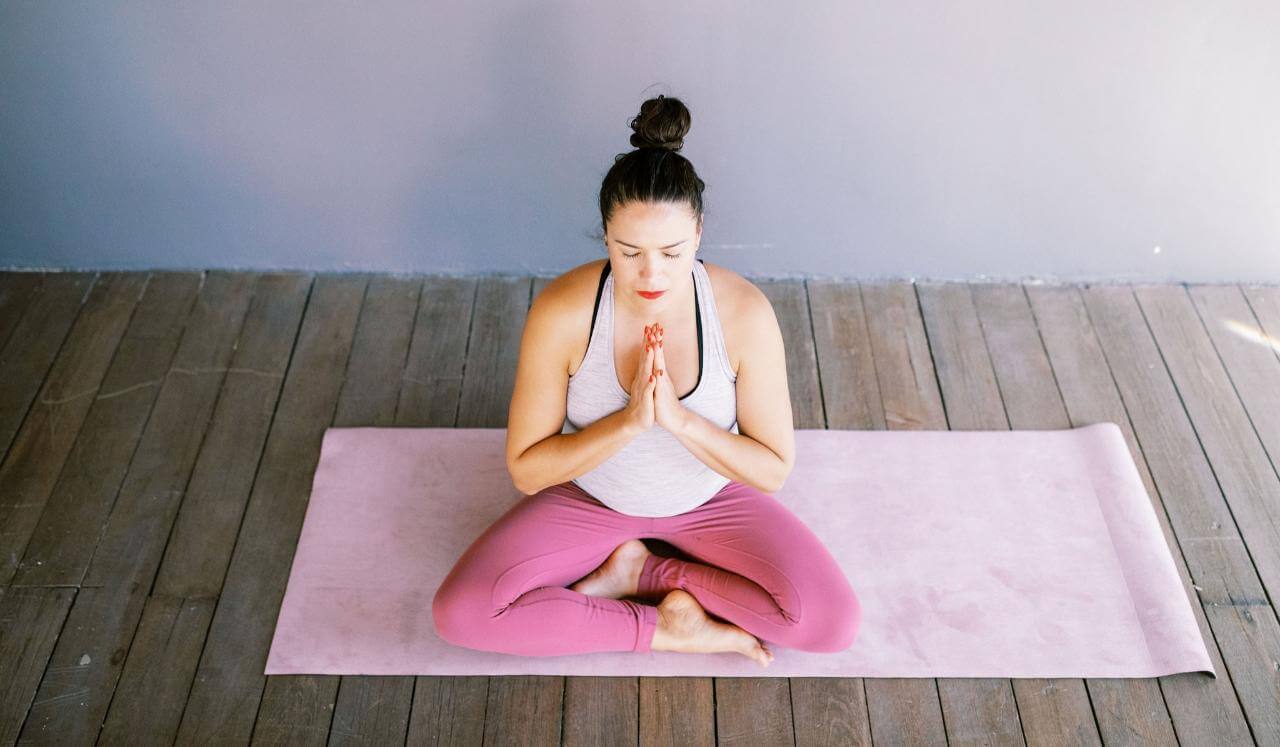
Reverse Breathing is best met calmly and unhurried, ideally in an upright seat with a qualified teacher who can check your form, since it works against your habitual breath and takes real effort. A sensible starting format is just a few gentle rounds rather than long sessions, keeping the abdominal effort light and letting the reversed movement grow familiar before you extend the time. Treat any breathlessness, lightheadedness, or keyed-up feeling as a cue to ease back to normal breathing rather than push through.
Begin in a comfortable upright position when you are calm and not rushed, so you can give full attention to a breath that runs opposite to your habit: the belly draws in as you inhale and softens out as you exhale.
Practise just a few gentle rounds at first rather than long sessions, letting the reversed movement become familiar before you extend the time. This is an effortful, technically demanding pattern, and reviews of breathing practices find they work best with structured, gradual training.
Engage the abdomen only enough to reverse the movement, and soften if the breath feels forced or the chest and shoulders start to grip. The aim is a steadier rhythm, not maximum strain.
Return to your normal breathing if you notice breathlessness, lightheadedness, or a racing, keyed-up feeling that does not settle. These are signals to ease back rather than push through.
Build duration over weeks rather than days, and where possible work with a qualified teacher who can check your form before you move on to more advanced practices such as Microcosmic Orbit or vase breathing.
This information is educational and is not medical advice. This practice is not a substitute for professional care and should not replace prescribed medication or treatment for any medical or mental-health condition. If you are managing a health condition or taking medication, talk with a qualified health professional before changing your practice. If you are in distress or crisis, seek professional support.
| Coherent breathing sets a slow, even rate of roughly five to six breaths a minute to steady the autonomic nervous system, and slower breathing tends to raise heart rate variability, a marker of balance between the body's arousal and recovery branches. Reverse Breathing is defined by its reversed belly movement and effortful engagement rather than a fixed slow tempo, so it can feel more activating than settling. |
| Microcosmic Orbit and vase breathing | Practitioners already grounded in Taoist breathwork who want a more elaborate, tradition-based progression. | Effortful and complex; sensible only after the basic reversed pattern feels comfortable and ideally under a teacher. | emerging EVIDENCE | These are advanced Taoist energy-circulation practices that Reverse Breathing is often taught to prepare for. They build on the same effortful, counter-habitual control of the breath and abdomen but layer on more elaborate visualisation and internal-energy work. Their support is tradition and source context rather than clinical study, so they carry no measured outcomes. |
Partly tradition, partly borrowed evidence. Reverse Breathing has not been tested directly, so its traditional uses for energy and focus remain unproven. Broader breathwork research shows small reductions in stress, anxiety and low mood, which points to promise for this pattern without confirming it (Fincham et al., 2023).
+
Partly tradition, partly borrowed evidence. No trial has tested Reverse Breathing itself, so its traditional claims about energy, focus and presence stay untested. The nearest support comes from general breathwork research: a meta-analysis found small drops in stress, anxiety and depressive symptoms versus non-breathwork controls (Fincham et al., 2023), and breathing practices tend to work best with guided, repeated training (Bentley et al., 2023). That research used calmer, slower patterns, and one careful trial found paced breathing did no better than a matched placebo (Fincham et al., 2023), so any benefit here is promising for the wider family of breathwork but not established for this pattern.
Possibly, but this is unproven for Reverse Breathing specifically. Breathwork in general may modestly ease stress and anxiety, yet no trial has tested this effortful reversed pattern, so any benefit remains inference rather than fact (Fincham et al., 2023).
+
Possibly, though the evidence is indirect. A meta-analysis of randomised trials found breathwork produced small reductions in stress and anxiety versus non-breathwork controls, and a systematic review reached similar conclusions for slow diaphragmatic breathing (Fincham et al., 2023), (Hopper et al., 2019). Reverse Breathing itself has not been studied, and its effortful, activating pattern differs from the calmer methods in that research, so any carry-over is an educated guess rather than a tested result. It is not a substitute for care when anxiety is significant.
Because it takes real effort. Drawing the belly inward on the inhale reverses your habitual pattern, and that extra respiratory work is thought to raise mild sympathetic arousal, the body's alert, ready-for-action response, rather than the settling of slower breathing (Goheen et al., 2023). This is a reasonable account, not something measured in Reverse Breathing directly.
+
Because the pattern is effortful. Reverse Breathing asks you to override an automatic rhythm, and how you breathe shapes brain activity and mood, with different patterns producing different effects (Goheen et al., 2023). The added muscular effort of the reversed movement is thought to raise mild sympathetic arousal, a shift toward the body's fight-or-flight branch, felt as more alertness and a quicker heartbeat rather than the settling that slower, gentler breathing tends to bring. This explanation is drawn from general breathwork research and tradition; Reverse Breathing itself has not been studied directly, so read it as a reasonable account, not a measured finding.
Possibly. The effortful, counter-habitual pattern is thought to raise mild sympathetic arousal, the body's readiness response, which can feel like a slightly quicker heartbeat. This is expected in principle rather than a measured effect, since Reverse Breathing has not been tested directly.
+
Possibly, but this comes from how breathing shapes the body rather than from measurements of Reverse Breathing itself. Because the pattern takes real muscular effort to override the habitual breath, it is thought to shift the body toward mild sympathetic arousal, its alert readiness response, which can register as a slightly faster heartbeat; how we breathe influences brain activity and physiological state (Goheen et al., 2023). The calmer slow-breathing research points the other way, tending to raise heart-rate variability, a marker of a settled, well-regulated nervous system (Buchanan & Janelle, 2022). No study has tested this reversed pattern directly, so a quicker heartbeat is expected in principle but untested here.
Use care. Because Reverse Breathing is an effortful, activating pattern, people prone to anxiety or panic may feel more keyed up rather than soothed. This caution is inferred from the mechanism, not a tested finding: build the pattern gradually with guidance, and stop if breathlessness, lightheadedness, or arousal does not settle.
+
Use care. Reverse Breathing raises respiratory effort and tends to produce mild fight-or-flight arousal, so for anxiety- or panic-prone people the pattern may feel activating rather than calming. This comes from how the practice works, not from a documented harm, because it has not been tested directly for safety. The practical guidance is to learn it slowly and ideally with a qualified teacher, ease off if you notice straining, breathlessness, lightheadedness, or a racing feeling that does not settle, and treat it as a support rather than a substitute for care when anxiety is significant.
Check with a clinician first. Reverse Breathing has not been tested directly in pregnancy or in heart or lung conditions, so its safety in these groups cannot be confirmed. Because the pattern is effortful and raises pressure inside the abdomen, it is best cleared with a doctor and learned with a qualified teacher.
+
Check with a clinician first. No study has tested Reverse Breathing in pregnancy or in people with cardiovascular or respiratory conditions, so this is a mechanism-inferred caution rather than documented harm or documented safety. The concern is that the reversed pattern is effortful and raises intra-abdominal pressure, the pressure inside your belly, along with mild sympathetic arousal, the body's alert, keyed-up response. Breathing practices are also safest when learned gradually with guided training (Bentley et al., 2023), so if you are pregnant or living with a heart or lung condition, clear it with your clinician and work with a qualified teacher rather than practising intensively alone.
Start seated and calm, and practise just a few gentle rounds of the reversed pattern, belly drawing in as you inhale, releasing out as you exhale. Keep the effort light, stop if you feel breathless, lightheaded, or keyed-up, and build up slowly, ideally with a teacher (Bentley et al., 2023).
+
Begin in a comfortable upright position when you are unhurried, and learn the reversed movement in a few short rounds before extending the time. This is an effortful, unfamiliar pattern, and reviews of breathing practices find they work best with structured, gradual, guided training rather than long solo sessions (Bentley et al., 2023). Engage the abdomen only enough to reverse the movement, ease back if the breath feels forced or you notice lightheadedness, and progress over weeks with a qualified teacher, especially before advancing to practices like Microcosmic Orbit or vase breathing. This guidance draws on general breathwork reviews and tradition, since Reverse Breathing has not been tested directly.
They are opposite movements. In diaphragmatic breathing the belly expands outward as you inhale, the body's natural, calming pattern; in Reverse Breathing the belly draws inward on the inhale, which takes deliberate effort and feels mildly activating rather than settling.
+
They move in opposite directions. Diaphragmatic breathing lets the belly expand outward on the inhale and fall on the exhale, the natural, relaxation-oriented pattern; Reverse Breathing inverts this, drawing the belly inward on the inhale, which takes active muscular effort and tends to produce mild alertness. Diaphragmatic breathing is also far better studied, with a small study linking slow belly breathing to lower stress-hormone levels (Ma et al., 2017) and a systematic review suggesting it may help lower stress (Hopper et al., 2019). Reverse Breathing has not been tested directly and no head-to-head comparison exists, so any carry-over remains inference rather than fact.
A glucocorticoid hormone released by the adrenal cortex as the end product of the hypothalamic-pituitary-adrenal axis, elevated during physiological and psychological stress.
Giving attention a single clear target, here the effortful breath, so it stops repeatedly slipping toward worry or distraction. It tends to feel like fewer spiraling thoughts and a steadier sense of being present.
The use of focused attention and attentional selection on a defined target to stabilise attention and reduce mind-wandering.
A standardised way of expressing how large an effect is across studies, letting researchers pool results from different trials. Values around 0.3 to 0.4 reflect small effects, the range seen in breathwork research for stress and mood.
A standardised mean difference effect-size estimate, similar to Cohen's d but with a correction for small-sample bias, used to pool outcomes across studies in meta-analysis.
Cited in: How it works
Guy W. Fincham, Clara Strauss, Kate Cavanagh (2023). Effect of coherent breathing on mental health and wellbeing: a randomised placebo-controlled trial. https://doi.org/10.1038/s41598-023-49279-8
Cited in: Research
Tanya G. K. Bentley, Gina M D’Andrea-Penna, Marina Rakic, Nick Arce, Michelle LaFaille, Rachel Berman (2023). Breathing Practices for Stress and Anxiety Reduction: Conceptual Framework of Implementation Guidelines Based on a Systematic Review of the Published Literature. https://doi.org/10.3390/brainsci13121612
Cited in: How to practice safely, Research, Use with care
Guy W. Fincham, Clara Strauss, Jesús Montero‐Marín, Kate Cavanagh (2023). Effect of breathwork on stress and mental health: A meta-analysis of randomised-controlled trials. https://doi.org/10.1038/s41598-022-27247-y
Cited in: Benefits, Research, Roots and tradition
Xiao Ma, Ziyun Yue, Zhu-Qing Gong, Hong Zhang, Naihua Duan, Yutong Shi (2017). The Effect of Diaphragmatic Breathing on Attention, Negative Affect and Stress in Healthy Adults. https://doi.org/10.3389/fpsyg.2017.00874
Cited in: What happens in the body
Susan I. Hopper, Sherrie L. Murray, Lucille R. Ferrara, Joanne K. Singleton (2019). Effectiveness of diaphragmatic breathing for reducing physiological and psychological stress in adults: a quantitative systematic review. https://doi.org/10.11124/jbisrir-2017-003848
Conlon Aodhagán, Arnold Rachel, Preatoni Ezio, Moore Lee J (2022). Pulling the Trigger: The Effect of a 5-Minute Slow Diaphragmatic Breathing Intervention on Psychophysiological Stress Responses and Pressurized Pistol Shooting Performance.. https://doi.org/10.1123/jsep.2021-0213
Cited in: Research
Josh Goheen, John A. E. Anderson, Jianfeng Zhang, Georg Northoff (2023). From Lung to Brain: Respiration Modulates Neural and Mental Activity. https://doi.org/10.1007/s12264-023-01070-5
Cited in: How it works
Beginner video for Reverse Breathing

★ 5.0
·
Guided
·
3 min
Monica Le Baron
How hard is Reverse Breathing?
This sits above the gentlest breathwork rows because reversing the normal abdominal pattern is effortful even without intense holds.
3
Mental Effort
2 / 4
▾Emotional Depth
1 / 4
▾Physical Intensity
3 / 4
▾Prior Knowledge
3 / 4
▾Editorially curated. Tracks are not themselves clinically studied; evidence on the page applies to Reverse Breathing as a technique.