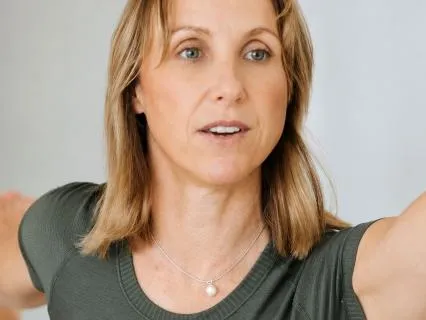
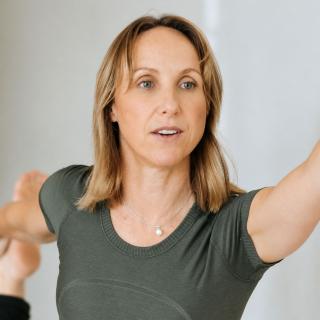
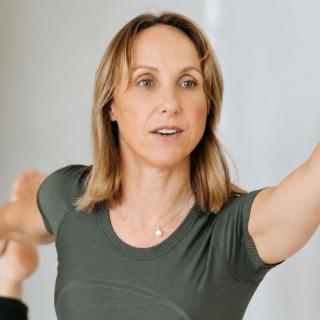
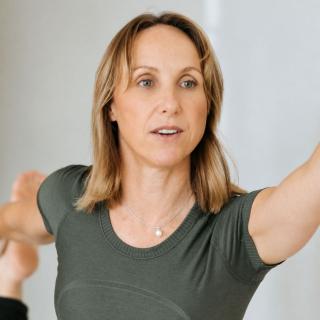
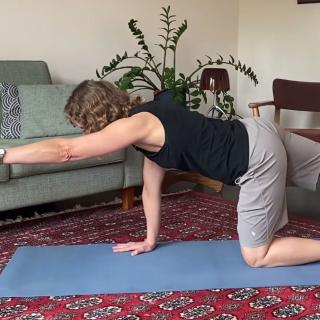
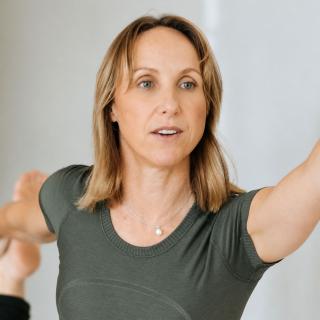
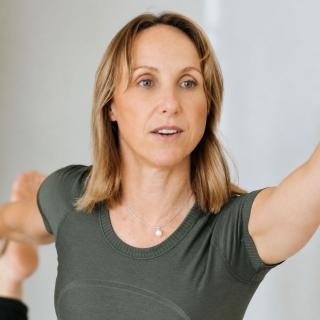
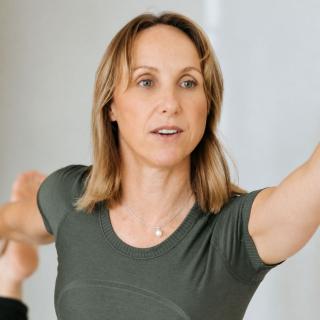
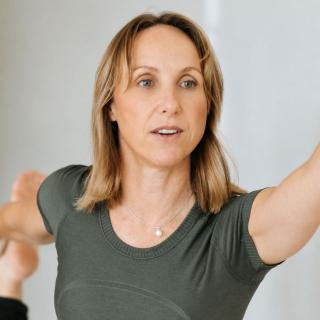
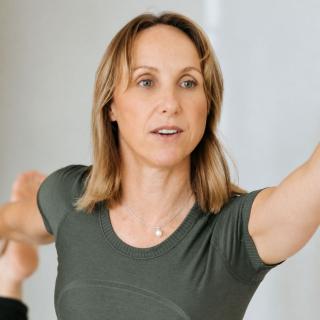
If you're not used to these exercises just start off with one big toe on the floor.
Head steady,
Eyes open,
Looking straight ahead.
With your arms,
You can have hands on your hips,
You can have arms out,
You're going to have hands across your chest.
I quite like prayer position.
And so you do about 10,
20 seconds.
But if that's too easy,
You have your foot off the floor.
So this is the first exercise.
You need to get good at this first before you progress.
So see how you go with that.
You might need to take a few weeks or months doing this,
But your body does and your brain does get better quickly.
It adapts to the exercise.
Try the other leg.
You'd have your big toe on the floor.
You'd have the foot off the floor and have your arms wherever you like.
This is too easy for me.
So I need to make it harder.
Some of you,
It'll be too easy.
So you need to make it harder.
So I'll teach you the next exercise.
But some of you just do this every day.
Maybe a couple of times a day,
10,
20,
30 seconds.
And when that gets easy,
The next one,
You can progress to one foot off the floor and eyes closed and head steady.
10.
One.
So I couldn't do that straight away.
So you start off just a few seconds.
You don't start off with 20 seconds.
So try the other leg.
And eyes closed,
Starting off with maybe two seconds or building up.
10,
Three,
Two,
One.
One.
So one leg is usually easier than the other.
That's completely normal.
Once you,
When you feel ready with balancing on one leg with your eyes open,
Looking straight ahead,
Then progress to this one.
So looking from side to side with one leg,
One foot off the floor,
And you just go slowly when you first learn this,
Slowly.
But I have progressed to faster.
So That took me a while though.
And I'm still wobbly but that's good because if you're playing it safe that's not going to improve your balance as much as getting wobbly.
If you're getting wobbly and stabilising,
Your muscles are working harder,
You're challenging your balance more in your brain and your body and that's going to help you more in your life.
So don't play it safe,
Challenge yourself with balance exercises.
Try the other leg.
And starting off slowly looking from side to side because I have practiced this for a while so I can do us.
Moving my head more and I feel a few creaks and that's quite normal.
When I move my head I can hear and feel creak,
Creak.
Totally normal,
It's okay.
Okay.
And then when you're ready,
And this will take a bit of practice,
It might take a few months.
Everybody progresses at different rates and depends where you're at,
How old you are,
How you're high,
There's a whole lot of factors of balance.
Your brain,
Your eyeballs,
How much you practice.
OK,
Lots of other things.
So this is the last one.
There is a harder one,
But you have your eyes open,
Eyes closed,
Balance on one leg and moving your head from side to side.
It's very challenging.
But you just do your best.
And you don't need to be good at it.
If you're good at it,
You get less benefit.
So do hard things,
Do challenging things.
Try your other leg.
And you might be still practicing eyes closed or eyes open or just moving your head,
But you build up to eyes closed and looking one way.
Looking the other way.
And then when that's it,
You go faster.
But I'm not ready for faster yet with eyes closed.
That's hard.
And then if you got to the next level,
You'd be standing on a pillow.
And then the.
.
.
If you can do it.
All of those things and you're over 50,
The older you get.
Just do your best where you're at and you know how important balance is in your life.
It might save your life one day.
These exercises regularly.
Three times a week at least,
Two,
Three,
Four,
Or a bit every day.
Just do one of them every day and build up to,
You can do the harder one.
And let's be bounding around with good balance into old,
Old age.