So you stopped drinking.
Or using.
You did the thing everyone told you would make your life better.
So why doesn't anything feel good?
Maybe you thought.
You'd feel relieved.
Grateful.
Energize.
Maybe you imagined finally enjoying your life again.
And instead?
Everything feels flat.
Food doesn't taste as good.
Music doesn't hit the same way.
You don't feel excited about things you used to enjoy.
People suggest doing something fun.
And your response is basically,
Eh.
And then your brain starts doing what brains do.
Is this how I'm going to feel forever?
Was I actually happier when I was using?
What's the point of recovery if I feel like this?
I want to talk about this because it can be one of the most confusing and discouraging.
Parts of early recovery.
And I also want to tell you as someone who has been in recovery myself for 18 years,
It's been a long time,
But I remember.
What it was like when recovery didn't yet feel complete.
Like the life I had before.
Expect it.
There is a huge difference between knowing intellectually that you're doing the right thing.
And actually feeling.
Like you're doing the right thing.
Sometimes.
Those two things take a while to catch up with each other.
Welcome to Resilience and Recovery Mind,
Body,
And Spirit.
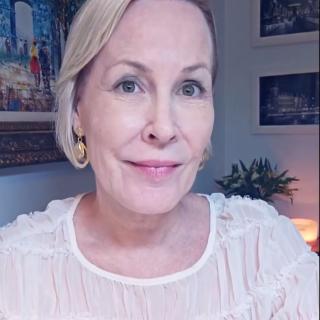
I'm Dr.
KJ Foster,
And in this series,
We're talking about recovery as something much bigger than simply stopping drinking or using.
We're talking about what happens to the brain,
The body,
Our emotions,
Relationships,
Identity,
And spiritual lives as we heal.
And today,
We're talking about an experience called anhedonia.
That's the clinical word for a reduced ability to experience pleasure.
But you don't need to remember the words.
What I really want you to understand is why life can feel so flat in recovery.
And why that feeling doesn't necessarily tell you anything about the life you're building.
Your brain learned what felt good.
To understand why this happens,
We need to talk briefly about your brain's reward system.
Your brain is designed to notice things that are rewarding.
Food.
Connection.
Accomplishment.
Movement.
Music.
Laughter.
Novelty these experiences.
Interact with the brain's reward and motivation systems,
And help teachers.
That mattered.
Do that again.
Alcohol and other drugs can powerfully affect those same systems.
And when that happens repeatedly,
Your brain adapts.
That's an important word in recovery.
Adapts.
Your brain isn't broken.
It's doing what brains do.
It's responding to repeated experience.
Over time,
The substance can become increasingly important within that reward system,
While ordinary sources of pleasure may become less compelling by comparison.
So then?
You enter recovery.
You remove this incredibly powerful familiar source of reward.
And you expect your brain to immediately become delighted.
By taking a walk.
And sometimes,
It doesn't.
You think.
Seriously?
This is what everyone was talking about?
Coffee and sunsets?
If you've been there.
I understand.
Because I remember periods in my own recovery when life felt incredibly small.
I was doing what I was supposed to be doing.
But that didn't mean I was waking up every morning thinking,
Recovery is amazing.
Sometimes I was simply getting through the day without going back to the thing my brain already knew could change how I felt.
And that was recovery too.
Your brain needs time to learn again.
This is something I wish more people understood.
Recovery isn't only about removing alcohol or drugs.
It's also about giving your brain repeated opportunities to rediscover ordinary reward.
And that process doesn't happen according to our preferred timeline.
You may know,
Logically,
Spending time with people I love is good.
But not feel much.
You may go outside because everyone tells you exercise will help.
And afterward,
Think.
That was fine.
You may go to dinner.
Watch a movie.
Attend a meeting.
Go to the beach.
Spend time with family.
And nothing produces the emotional payoff you expected.
That can be frightening.
Because we tend to assume.
Feelings are evidence.
If nothing feels good,
The brain concludes,
Nothing is good.
But those aren't the same thing.
Your current capacity to experience pleasure is not an objective measurement of the quality of your life.
That's worth hearing again.
How rewarding life feels today isn't necessarily evidence of how rewarding your life is becoming.
The comparison chop.
There's another problem that can show up here.
Your brain has a very unfair comparison available to it.
It can compare an ordinary Tuesday afternoon in recovery.
With the rapid change in state it remembers from drinking or using.
Of course,
Those experiences aren't going to feel the same.
And that's where people can start romanticizing the past.
The brain remembers.
That made me feel good.
But memory?
Can become selective.
It doesn't necessarily play the entire tape.
It doesn't always include what happened afterward.
The anxiety.
The shame.
The Consequences the relationships.
That suffered.
The promises we made to ourselves.
The things we said we'd never do again.
The exhaustion of living that way.
It just offers.
Remember how good that felt?
I've had to learn in my own recovery that a thought about the past isn't an instruction for the present.
I don't need to argue with the memory.
I don't have to convince myself.
That I never enjoyed anything about drinking or using.
That wouldn't even be honest for many of us.
There were reasons we kept going back.
Recovery asks us to hold the whole truth.
Maybe it provided relief.
Maybe there were moments that felt good.
And there was a cost.
Can be true.
Don't turn pleasure into another recovery task.
Here's something else.
I want you to watch for.
We can accidentally turn feeling good into another way of checking whether recovery is working.
You go for a walk and ask.
Do I feel better yet?
You attend a meeting.
Did that help?
You spend time with friends.
Am I enjoying myself?
You meditate.
Do I feel peaceful?
You wake up.
Am I happier today?
And now we're monitoring ourselves all day long.
The problem is that constantly checking for pleasure can make its absence even more noticeable.
It also sends the message.
I need to feel different before this experience has value.
But some of the most important things we do in recovery won't give us an immediate emotional reward.
Sometimes.
We go to the meeting.
Because that's the person we're becoming.
We exercise because we're caring for our body.
We call someone because we're building connection.
We show up for work because we're rebuilding responsibility.
We apologize because we're repairing relationships.
We sit quietly because we're learning to be with ourselves.
We practice recovery because we're building a life.
Not because every one of those things produces an immediate dopamine hit.
This is where resilience matters.
This is where recovery and resilience become inseparable.
For me at least.
Resilience means learning to keep moving toward what matters even when your emotional state isn't rewarding you for doing it yet.
That has been an important part of my own recovery.
There have been many moments over the years when I've had to practice something before I felt the benefit of that practice.
I didn't always feel motivated first.
I didn't always feel confident first.
I certainly didn't always feel peaceful first.
Sometimes the action had to come before the feeling.
And that's something I still believe deeply today.
We don't always wait for our feelings to give us permission to live.
Sometimes we live.
And allow our feelings to catch up.
Your world may have become small.
There's also a practical piece of this.
Addiction can gradually shrink a person's world.
Not always dramatically.
Sometimes almost imperceptibly.
Activities disappear.
Relationships change.
Interests fade.
Routines increasingly revolve around drinking or using.
Or recovering from drinking or using.
And then we remove the substance and discover.
I don't actually know.
What I like anymore.
That can feel scary.
But I want you to consider another interpretation.
Maybe that's not evidence that there's nothing left.
Maybe it's an invitation to discover who you are now.
Recovery gave me the opportunity to learn things about myself.
I couldn't have known while I was still living the way I had been living.
Some of that discovery.
Happened quickly.
A lot of it didn't.
And some of it continues even now.
Because recovery isn't just returning to who you were before addiction.
For many of us.
It's discovering.
Who we can become without organizing our lives around escape.
What do you do?
When nothing feels good.
First.
Stop demanding that ordinary life compete with intoxication.
We're building a different reward system now.
Give it time.
Second.
Keep participating before you feel motivated.
Do small things that align with the life you're building.
Take the walk.
Make the meal.
Go to the meeting.
Call the friend.
Sit outside.
Listen to the music.
Show up.
Not because you are guaranteed to feel wonderful afterwards.
Because participation gives your brain experiences from which it can learn.
Notice small moments instead of waiting for huge ones.
Maybe you're not experiencing joy just yet.
Okay.
Did you experience interest?
Relief.
Connection.
Curiosity.
A moment of laughter.
Five minutes when you weren't thinking about recovery.
A good cup of coffee.
The feeling of clean shape.
The sun on your face.
Don't demand fireworks from a nervous system that's learning to notice kindle light again.
Practice for the week.
So here's your practice.
For this week.
Choose one small activity every day.
That represents the life you're trying to build.
Not something you think will make you happy.
That's important.
Something that matters.
Maybe.
It's taking a 10-minute walk.
Calling someone.
Cooking something.
Going to a meeting.
Reading.
Praying.
Meditating.
Playing with your dog.
Sitting outside.
Whatever makes sense for you.
Do it without checking afterward.
Did that work?
Instead,
Say,
This is part of the life I'm building.
That's it.
You're giving your brain another experience.
Another opportunity to learn.
Another piece of evidence.
That life contains more than the old pathway.
If nothing feels good right now.
Please don't use today's feelings.
To predict the rest of your recovery.
You may be standing in a part of the process.
Where your life is changing faster than your brain's ability to feel the change.
I know how discouraging that can be.
I've lived through seasons of recovery when I couldn't yet see.
What all of this was going to become.
And I'm incredibly grateful today.
That I didn't require myself to know.
I just had to keep going.
Practicing.
One day.
One decision.
Sometimes one uncomfortable moment.
At a time.
Because recovery isn't only about learning how to stop drinking or using.
It's learning how to stay present long enough to discover that life can become rewarding in ways you couldn't yet imagine.
Next week on Resilience and Recovery,
Mind,
Body,
And Spirit,
We're going to talk about something every person in recovery needs to understand.
Relapse doesn't begin with the first drink or jug.
There is often a process.
Happening long before that moment.
And learning to recognize that process.
Gives us opportunities to respond much earlier.
Until then,
Remember.
You don't have to feel the reward yet.
To keep building a rewarding life.