Welcome to The Quiet Reset.
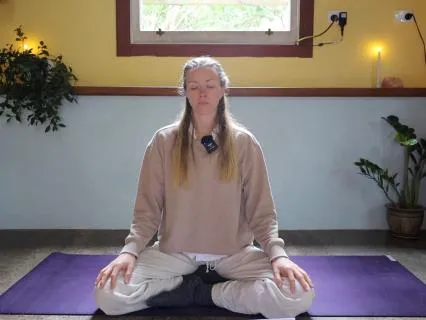
I'm Kirsty Lillis from The Quiet Body and I'll be guiding you through this practice today.
Hopefully you've got your little companion quiet reset manual.
Which has the introduction.
It also has a little list of everything that you might need for this practice as well as the list of all of the practices within this practice.
The main thing to know with this practice and with any of the practices that you encounter on the quiet body is that everything is invitational,
Which means that you're never expected to be doing things exactly the way that I am or to be doing exactly what I say.
Instead,
The invitation is to notice or feel into what I'm doing.
Feels right,
What feels most useful for you and your body.
There's no right way to move or breathe.
You're encouraged to notice,
To adjust.
To pause,
To stop,
To modify as much as you need to through these practices.
And to let your body lead the way.
This practice is about restoring relationship with your nervous system.
So.
.
.
Take what works for you,
Leave out what doesn't.
And,
Yeah.
Maybe allowing your body to find its own pace.
Towards wrist.
So let's get into the practice itself.
We're going to start with some gentle shaking out of the body.
I am going to do this one from seated today or you're welcome to do this from standing.
If you do choose to do the standing,
It does make it a little bit easier if you wanted to do a full body shakeout,
But that's not necessary.
You can do this from a seated position.
Whenever you're ready.
You might start by shaking out your hands or you might even start by shaking out your fingers.
And then in your own way and at your own pace.
You might gradually bring other parts of your body in.
Into this shaking.
So maybe the arms.
Maybe even a little bit of a movement through your shoulders.
And you can also move your arms,
Move your limbs,
Move your hands through the space.
Through the space around you,
You might even.
.
.
Bring your head into the movement,
And if you're standing,
You might bring the legs,
The feet into the movement.
And so you're welcome to just stay with this shaking for as long as you like,
As long as it feels useful to you,
Whenever you're Really,
You're welcome to just.
.
.
To bring your hands back down.
And find a just a moment of pause or a moment of stillness.
Quite possible that you might notice.
Some kind of residual sensation in the parts of your body that you were moving.
So if you were going like me with hands and arms,
It's possible that you might be noticing maybe like a tingling sensation.
For me it's definitely a tingling.
Kind of a tingling or a vibrating sensation.
There's no particular sensation to look for,
So you're just simply noticing what sensations are there,
If there is sensation at all.
So an absence of sensation is okay as well.
We're just noticing.
Okay,
From here.
We might move towards some movement rolls of the shoulders,
So you're welcome to bring your hands to your shoulders for these shoulder rotations or if you prefer to keep your hands down.
You can roll your shoulders with your hands down.
So the size and the speed of these rotations is your choice,
So you get to decide.
The size of these shoulder rolls,
The speed of your shoulder rolls.
You also get to decide when and if you change direction.
So maybe going back the opposite way.
And whenever you feel ready,
You can move out of this.
Shoulder rolling and come back towards center or a moment of stillness.
Oh.
Okay from here we might move toward a little stretch through the side of your neck so one way to do this could be just lowering your ear towards your shoulder.
And can be useful sometimes to drop that opposite shoulder down.
So it doesn't matter which side you choose to start on,
That's your choice to make.
But possibly here.
Reaching your ear towards your shoulder.
And you can also choose if you'd like to hold the stretch or you might choose to bring some movement.
So one way to move could be a a turning of your head.
Side to side,
Exploring some side to side movement within this shape.
Another way You could move here,
Could be a lifting and lowering of your chin.
So you're welcome to explore movements.
In this.
Next stretch.
You're welcome to stay in stillness if that feels more useful to you.
And always.
Your choice,
You can decide how long you stay.
Um.
.
.
And any shape.
Um,
But not necessary to stay here any longer than about a minute,
So between 30 and 60 seconds can be good.
A kind of a sweet spot.
Maybe noticing some sensation through the side of your neck.
Just being aware of what it is that you can feel in your body.
And when you're ready to change sides,
You might bring your head back through neutral.
Feel free to pause here in neutral for as long as you like before moving to the opposite side.
And on moving to the opposite side,
You might notice.
.
.
The difference in the sensation,
The quality of the sensation on each side.
For me,
Definitely I have often one side that feels much tighter than the other.
And on this side as well,
You have that option.
If you choose to.
Explore some movement.
Maybe side to side.
Or possibly up and down.
So up to you,
If you'd like to move,
You can bring some movement into the stretch.
Maybe noticing sensation.
Possibly down here through the side of your neck,
Maybe even radiating down.
Your shoulder or your arm.
And whenever you feel ready.
You can bring yourself back towards centre.
You're also welcome to pause for as long as you like between each of the sessions.
Exercises.
Um.
.
.
The last bit of somatic grounding that we're going to do.
Is fairly simple,
Fairly straightforward.
You can bring your hands to the to interlace behind your head,
But not necessarily that they interlace,
You can just bring your fingertips to the back of your head if that feels better for your body.
Once you've got your hands.
.
.
Behind your head you can take your gaze maybe over to one side so maybe turning your gaze to one side and again.
Not important which side you start with.
You get to choose left or right.
To looking over to one side and maybe staying here.
Between 30 to 60 seconds.
As always,
If you feel the need to move out of any exercise,
Any practice,
Or any shape before the allocated time,
You're encouraged to do so.
And so maybe noticing as you're turning your gaze to the side,
Any sensation,
Any experience in your body.
And if at any point any of these exercises feels a little bit overwhelming,
You're welcome to disengage completely,
Take a break.
Okay,
Maybe moving when you're ready to the opposite side,
If you feel the need to reset a little bit through center and maybe bring your hands down,
That's an option as well.
In your own time.
Finding that same shape.
Taking the gaze to the opposite side so it's just the eyes,
It's just your eyes moving to the side.
The head,
Your head stays relatively centered if that's possible for you.
And staying here is.
.
.
Long as you're comfortable.
As long as it feels right for you,
Up to about a minute.
And when you're ready,
Maybe bringing your eyes back to center and releasing your arms down.
So that brings us to the end of our somatic exercises and now we're moving towards the breathing segment of the practice.
Really important to note that if working consciously with your breathing isn't something that works for you,
Isn't something that feels comfortable for you,
You can skip this part of the practice entirely.
We're going to be working with a timed.
.
.
Breath or a counted breath.
Where we're slowing the inhalation to a count of five and bringing the exhalation also to a count of five.
We'll also be doing some vocalization with the out-breath after that,
So feel free to completely skip this if working with the breath isn't something that feels right for you.
If you do wish to try out some of the breathing practices,
I just invite you to do so.
Take a deep breath in.
And release all of your breath out.
And now we're going to introduce that breathing count.
So inhaling,
Breathing in for 5,
4,
3,
2,
1 and out for 5,
4,
3,
2,
1.
Breathing in 5,
4,
3,
2,
1 and out 5,
4,
3,
2,
1.
In 5,
4,
3,
2,
1.
Out 5,
4,
3,
2,
1.
In 5,
4,
3,
2,
1.
Out 5,
4,
3,
2,
1.
Okay so now allowing perhaps your breathing to just find its own natural rhythm and up to you whether you just stay with that awareness of your breath and maybe observe the shift.
Of your breathing.
Back to its own natural rhythm.
So you can stay with that for a few moments if you'd like and when you're ready we're going to move towards that humming breath.
So this is a vocalizing exhalation.
So the inhale stays roughly the same and then on the exhalation we just add a little bit of vocalization through humming.
So when you're ready,
Taking that breath in.
And on the exhale making a sound.
So as you're humming,
The breath is coming out of the nose and it just ever so slightly lengthens your breath.
So we'll do about four more of these together.
Breathing in.
And you're welcome to go at your own pace.
And again,
Possibly allowing your breathing to find its own natural rhythm or return to something that feels like its own natural rhythm.
You're welcome to take a pause here if you like.
If you've been sitting down on the floor with your legs crossed,
Know that you don't have to stay in that shape.
You can do this practice in a chair if you'd like.
You can stand up at any point,
You can also just extend your legs out in front of you if that works better for your body.
Or to kind of shift between any of those orientations.
Throughout this practice.
So now moving into some of the somatic movement.
So the first thing that we might explore is a Cat-Cow shape.
So in yoga this is known as Cat-Cow.
It's basically an alternating movement between a kind of convex and concave shape through your torso.
So the first movement is a lifting of your chest as you draw your shoulders back and tilt your tailbone out a little bit and then from here you shift into the opposite movement,
That more concave,
Through the front anyway,
More concave shape of rounding your back.
Dropping your chin in and tucking your tailbone under.
So those of you that are familiar with the hands and knees version of this Cat-Cow and you're comfortable to do it that way,
Or maybe you prefer to do it that way,
You're welcome to come onto your hands and knees and take that shape there.
Um.
.
.
So you're welcome to begin possibly exploring this cat-cow movement.
And The size of this movement and the speed of this movement are within your control.
So up to you how fast or slow you're going,
And also the depth of the range.
The extent of the range that you're moving through.
So it's not necessary that you go to your absolute end point and feel a really.
.
.
Strong sensation.
You might just be aware of a more subtle sensation of the shifting of your body weight across the floor as you're moving through this.
Um although if you're noticing some sensation through the muscles of your back or maybe even through your front You're welcome to keep your awareness on.
On these sensations in your body.
So anytime that you're aware of sensation in your body,
This is known as interoception.
Stay with this movement as long as it feels right for you.
When you're ready to move towards the next shape in yoga,
This one is called Child's Pose.
If you're familiar with the shape from a hands and knees position you're welcome to take that one where you move your hips towards your heels and you can have your arms extended out in front or you might rest your arms down beside you.
I'm going to offer an alternative from a seated position that offers a similar effect on your body.
So if you're in seated.
.
.
You can perhaps bring the soles of your feet to the floor.
And maybe with the soles of your feet on the floor,
You might hug your arms around your knees.
This serves to bring your torso a little bit closer to your thighs.
And from here,
You can choose whether you have your head up and your eyes open,
Or you might choose to lower your head down.
You might close your eyes.
So just noticing what feels right for you and your body in this moment.
Never necessary for you to close your eyes if it doesn't feel right for you.
And if you'd like to bring some movement into this and you're in a seated variation,
You could explore a rocking from side to side,
Or maybe even a forward and back rocking if that feels useful.
Maybe aware of the sensations in your body,
Possibly aware of your breathing.
May be aware of the fact that you're breathing.
Staying here for as long as you like but when you do feel ready to explore the next shape we're going to be working with a kind of twist.
So there are quite a few ways you can twist.
If you're already working from a tabletop shape,
A hands and knees shape,
You're welcome to bring yourself down onto your back.
Those of you that prefer to engage with these practices from a seated position,
I'll demonstrate that version of a twist to you now.
So one way you can twist from a seated position is to bring your hand across to your opposite knee,
The other hand to the floor behind you.
And you might take a little bit of a lift up through the top of your head before you draw yourself.
Into that twist.
So you can choose to stay on one side for as long as it feels right for you really and whenever you're ready.
Taking the same twist on the opposite side.
If you have come down onto your back,
You might have your feet on the floor and if you do.
.
.
You might take a twist.
From that orientation,
So maybe dropping your knees from side to side with your feet on the floor.
The other way that you can engage with or explore a twist from this reclining position is to possibly lift your feet up off the ground and maybe find a bit of a right angle at your knees.
And then bring both of your legs down toward the floor or to the floor.
And then noticing possibly the sensations through the middle of your body,
Maybe through your hips.
Maybe just aware of any sensation present in your body,
If sensation is available to you in this moment.
And up to you as well,
Your choice whether you are choosing to kind of flow between twisting one way and then over to the other way.
Or if you choose to hold the stretch,
Maybe for a few breaths or a few counts,
However you are measuring your time.
Okay and now coming towards the end,
The last of our shapes,
If you have a cushion nearby or even a folded blanket you might place that,
You could place that underneath your lower back.
We're moving towards a raised leg position.
So also if you were close by to a wall,
You could use the wall as a kind of a support for your legs and actually rest your legs up the wall.
If you aren't close to a wall or if the wall isn't.
A great place for your legs,
You can instead place a prop underneath your lower back.
And then raise your legs up toward the ceiling.
It's not important or necessary for your knees to be locked out or for your legs to be dead straight.
It's also not completely necessary to have something underneath your lower back.
You can do this with your lower back on the ground.
I just know that some people find it a little easier with a prop.
But again,
Just choose what's available to you and also what feels right for you and your body.
You can choose to adjust the position of that blanket or that prop or whatever it is that you're using to find something that feels right.
So maybe aware of the sensations in your legs,
Any sensation in your legs as you hold this raised leg position.
If you prefer to be in a shape where you're hugging your knees into the chest.
That's an option that's available to you as well.
So we might stay here for maybe five more breaths,
But if you decide that you'd like to stay here longer than that,
You're welcome to.
Okay,
And when you feel ready.
You can move if you have a prop and move it to the side and now coming all the way down onto your back And coming into your final resting shape,
So that might be with your legs extended out and your arms extended out beside you and lying on your back.
If it feels better for you,
You might opt to or choose to lie on your side.
And again,
Any of the props that you have nearby supports.
Cushions,
Pillows.
Blankets you might choose to cover yourself with a blanket So just find your most comfortable place.
Final resting shape.
And we'll move now into the.
.
.
Guided meditation,
Guided body scan.
Okay.
So once you're settled,
Just notice if there's any last little adjustments that you'd like to make or that you need to make to your shape.
To your body in order to feel more comfortable.
So once you're settled.
Um.
.
.
You might begin to notice or become aware of the parts of your body that are in contact with the floor.
And maybe feeling.
Parts of your body resting on the floor or the surface beneath you.
And you might bring now all of your awareness to the top of your head to the crown of your head.
Bringing your awareness to the crown of your head.
Maybe feeling sensation,
Maybe just holding your awareness here.
Before moving down to your forehead.
Moving your awareness to your forehead.
Resting your awareness here for a moment.
And then moving your awareness.
Down to your eyebrows and your eyes.
And down to your nose.
Your nostrils.
Your cheeks.
And cheekbones.
Over to your ears.
And from your ears.
To the space around your lips and the lips themselves.
Bringing your awareness to your lips.
Maybe even bringing your awareness to the inside of your mouth.
Or moving your awareness now to your chin and your jaw.
And from your chin and your jaw.
You can move your awareness to the area of your neck.
And from your neck to your shoulders.
And if at any point through this practice you encounter a part of your body that you're not able to be aware of or any part of your body that doesn't feel.
.
.
Good to rest your awareness on.
You're welcome to skip.
That part of your body,
You're welcome to pause the practice or disengage with the practice.
Maybe feeling.
Sensations in your shoulders as you hold your awareness in your shoulders.
And from your shoulders,
Moving your awareness down your arms towards your elbows.
Moving at your own pace from your shoulders.
Down through your upper arms to your elbows.
And from your elbows down through your lower arms to your wrists.
And from your wrist.
Into your hands.
Feeling the backs of your hands.
And palms of your hands.
Maybe into each of your fingers.
So possibly bringing your awareness to each of your fingers.
And the tips of your fingers.
Over to your chest.
So possibly becoming aware of your chest.
And your upper back.
Your whole upper torso area.
And then moving your awareness to your middle torso area,
The area of your ribcage.
And down to your lower torso.
Your abdomen.
Lower back.
Maybe noticing sensation.
Or maybe holding your awareness here.
And then coming down to the area of your hips.
And from your hips.
At your own pace,
Moving your awareness.
Down to your knees through your upper legs.
Down to your knees.
And then moving your awareness from your knees.
Down through your lower legs.
To your ankles.
To your heel.
And the soles of your feet.
And tops of your feet.
In each of the toes.
And you're welcome to move your awareness back up through the rest of your body.
Or explore spreading your awareness through the whole of your body.
Where you might feel ready to come out of the practice.
To know that you can.
Engage with this practice in your own way from this point maybe.
Scanning back up through your body.
Maybe resting with your awareness through the whole body.
Or maybe choosing to come out of this practice.
And when you are ready to come out of this practice,
You might notice the parts of your body that are in contact with the floor.
And then begin to introduce some movement.
When you do eventually make your way back up to seated,
You might choose then to.
.
.
Close your practice in your own way.
So take your time with this.
Always going at your own pace.
Thanks for sharing this practice with me and I'll see you next time.