Well,
Touristful journeys.
In this track,
I will continue reading the story,
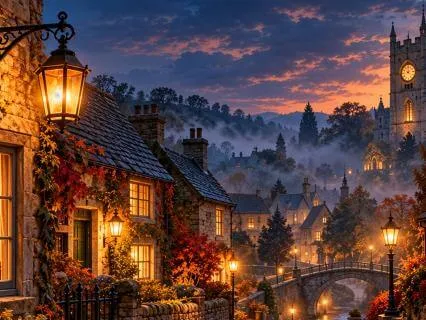
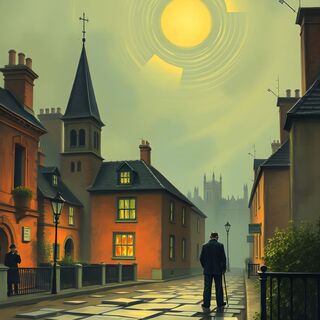
The Cozy Lantern of Briar Hollow.
This will be chapter three.
Please find a comfortable place to sit or lie down and relax.
Take a few moments to clear your mind and allow yourself to listen to these words.
Let's continue with chapter three,
The Vicar,
The Miller,
And the Locked Cabinet.
The vestry will,
That is to say,
The vestry has always been rather,
You see,
If one thinks of the vestry as The Reverend Josiah Thorne stopped,
Looked at the ceiling as though the end of the sentence might be penned there,
And reached across the desk for a pen.
He was already holding one.
It was in his right hand,
And his left hand patted down a heap of parish magazines in search of its twin.
There,
Vos said,
And pointed with her chin.
Thorn followed the line of her gaze to his own fingers.
So it is.
He beamed at her as if she had performed a small conjuring trick.
Very good of you.
One gets so used to losing things that one stops checking whether they've been lost.
Boss took the one chair with nothing on it and kept her satchel on her knees.
The second chair had a leaning tower of papers and the desk held several more.
Behind Thorn,
The window looked out over the slope.
The fog had trimmed up here and drifted low over the roofs below,
Snagging on the church weathercock.
Through one gap she could see the square,
Small as a tray,
And the stub of the tower.
Through the next,
There was nothing but white.
You were saying,
" Voss prompted,
About the vestry.
Was I?
Yes.
Yes,
I was.
" Thorn rubbed the side of his nose with his pen,
Which left a faint blue mark there.
The vestry,
As it were,
Takes an interest in the fun.
They always have.
The lady who chairs the flower committee takes an interest in everything,
But the vestry takes a proper one,
Which is neither here nor there.
He blinked.
Forgive me.
You've walked up my hill in this damp,
And I've not offered you tea.
Let me ring for you.
" He looked around the room for a bell.
There was a bell on the mantle under a ledger.
He did not find it.
I am well supplied with tea,
Thank you.
" Mawed at the hollow seeds to it before one is awake.
I came about the fund,
Mr.
Thorne.
I'm told you have a hand in it.
" a hand.
Yes,
A hand.
" He seemed relieved to have been handed a phrase.
I co-signed the account,
You see.
Along Dr.
Finch,
Who is the treasurer.
" two names,
So that neither of us can run off to Brighton with the pair's roof,
As it were.
" He laughed a little breathlessly,
And then looked at her to see whether it had gone over.
But not that Dr.
Fish would.
He hates the sea,
Sick on a ferry once in seventy-one,
And has never forgiven the Channel.
Two signatures on every payment then?
On every payment.
Or one signature and a note of the other,
If it's a smaller matter,
Or if one of us is out visiting.
I sign a great many things.
People bring them to me,
You see,
And they're so very apologetic about it,
Holding out the pen,
And what is one to say?
" He lifted his own pen to demonstrate and then seemed to remember it was the same one.
I'm told I'm a poor man to refuse.
The flower committee says I'd sign for a cow if it stood still.
Would you read it first?
Would I?
Thorn's brows rose.
Do you know?
That's rather a good question.
Is it better to read what one signs or to trust the person who asks?
The apostle has something to say on the matter,
Though I could not at this moment tell you which of his letters.
" He peered at her hopefully,
In case she would.
I don't know the apostles' views on estimates,
" Voss said.
I know mine.
I've been asked to restore the tower clock,
Mr.
Thorne,
And the work is ten days,
At least,
With parts to be made.
" Miss Vance has me starting on the drums today,
But before I do,
I'd like to know who will pay my fee.
She had put it plainly and then waited,
As she always did,
With her hands where they were.
Thorn's pen began to tap softly on the blotter.
Your fear.
He said.
Hmm,
Quite right.
Quite,
Quite right.
A laborer,
You know,
And so on,
Is worthy his hire,
And a laboress as well,
Naturally.
" I don't suppose the gospelmen to leave you out.
The fund is the—the fund was set up to—well,
The fund does,
As a rule,
When there's a call upon it,
And in the case of the clock It is,
Of course.
He frowned at the tapping pen.
The thing about the fun is that it is a little like the clock itself.
One looks at it every minute and assumes it is going and then one day someone puts a finger on the face and He stopped.
The sentence did not come back.
His eyes went to the window,
To the white patch drifting over the weathercock,
And then to Vos.
Goes to show he said.
That a vicar who compares his accounts to a timepiece is in no danger of being asked to sit on the committee for the Greenwich Observatory.
He gave a bark of a laugh,
A beat,
After he had finished speaking,
And then another,
Smaller one,
As if to make up for the delay.
Vos gave him the courtesy nod,
Unbuckled the strap of her satchel,
And took out her notebook,
Since it was plain the answer was going to have to be fished for.
Boss Uncaptor Pencil Let's start with something small.
Who counts the money in the fund?
Counted.
Oh,
We all counted,
In our way.
" Thorn pulled open a drawer,
Looked into it,
And shut it again.
Dr.
Finch keeps the book,
You see,
And I put my name to what he puts in front of me,
And between the two of us,
As it were,
The thing is perfectly counted.
" Where did I put the.
.
.
He lifted a stack of Paris newsletters,
Found a second pen under it,
And stood holding both.
I had a blank page somewhere.
For you to write down the figure.
I have a notebook.
So you have.
He squared the blotter against the edge of the desk.
The nudge did crook it again.
It's the Monday that has me troubled.
The vestry on it,
Miss Voss,
Set for Monday fortnight,
Which is,
Well,
A fortnight to the day from poor Eldred.
Nobody thought,
When they fixed the date,
That Eldred would.
The sentence went out like a candle.
He picked up a hem sheet,
Read the top of it with great attention,
And put it down.
The parish ladies will want to sit in on it.
They always do.
" There is a great deal of tea involved.
Monday Fortnite.
Vos said and wrote it down.
The pencil scratched loudly in the study.
There was no other sound but the draft whistling thinly under the window sash.
And my fee comes out of the fund.
Everything comes out of the fund.
The roof,
The bell rope,
The clock.
Your repairs to be paid from it?
Yes,
Quite properly.
It was voted in the spring.
He brightened.
I'd sign the vote myself.
I remember because the pen was leaking.
It leaks still if you want to see.
" He held up a pen.
The nib was dry.
Boss waited until he put it down.
Then I should like to see how the accounts stand.
Today,
If the book is in the house,
Only the page with the clock on it.
Thorn's raised hand went to his collar,
Which at once sat worse than before.
He looked at the shelf behind him,
Which held a row of bound sermons,
A stuffed owl with one glass eye missing,
And a tea caddy.
He looked at the desk,
Which held everything else.
Now,
The book,
You see,
As a rule.
He gave the little laugh,
And this time it arrived on time,
Which seemed to alarm him.
He stopped it.
Tell me,
Miss Boss.
Do you suppose any man truly keeps count of anything?
" the sparrows,
The hairs on his head,
One's own sins.
We are told it is all numbered,
But numbered by whom?
He turned a palm up as if the answer might land in it.
Somebody does for a clockmaker,
" Boss said.
Wheels have teeth and somebody counts them.
If they're miscounted,
The clock tells you so,
Loudly,
In about a week.
Does it?
How very honest of the clock.
He seemed pleased by this and sorry about it at once.
He pushed his chair back,
Went to the window,
And put a hand against the cold glass.
Thinner than yesterday,
I think.
It was quite a wall at dusk.
By noon it will have lifted entirely,
I should say,
And then will have the damp instead,
Which is worse for the chest.
Do you find it so?
" Boss do not look at the window.
She looked at the desk,
The two pens,
The unfinished hem sheet,
The paper drifts.
Nothing on it was the size or shape of a fun book.
I find it worse for brass,
" she said.
Nearly trodden on it.
Well then Monday had better find the book in good order,
" Boss said.
Oh,
I'm sure it will.
I'm quite sure.
He turned from the window with a look of such open anxious goodwill that it was hard to hold it against him.
You will have tea before you go down.
My housekeeper leaves a pot on the parlor hob,
And there's a seed cake that's rather good if you cut off the end.
I have a bench to find and a mill to find it in.
Boss closed the notebook on the pencil to keep her place and buckled the satchel.
But I'll hold you to the seed cake,
Vicar.
" on the day of the audit,
Perhaps once it's done.
You can tell me how the figures came out.
Monday.
Said Thorn faintly.
He took the top letter from the pile at his elbow,
Held a stick of red sealing wax to the candle until it dripped,
And pressed the little brass church seal into the blot,
All without looking.
It was the one thing Voss had seen him do that morning without losing anything.
Voss let herself out through the study door and found the vicarage step slick.
The hall had smelled of candle ends and old and the gate at the bottom of the garden stuck on its post until she lifted it by the latch and swung it through.
Behind her,
A window went up an inch,
And a mild voice said something about Monday.
She raised a hand without looking round.
The hill path ran down its loose turns and the gravel gave under her boots with a wet,
Grinding crunch.
Bramble hedges leaned in from both sides,
Beaded with droplets that dropped on her sleeve whenever she brushed one.
Up here the fog had gone apart into ragged strips that snagged on the thorns and tore loose as she passed.
At the second bend she could see the church roof and then the clock tower with its blind and then a whole stretch of slate roofs,
Each with a thread of smoke going straight up.
Seed cake,
" she said to a blackbird on the hedge.
I've been bribed with seed cake and I haven't even been given any.
The blackbird left.
The gravel gave out at the foot of the hill,
And the square began in cobbles.
Her boots rang on them differently,
Flat and hard.
A woman,
Beating a mat over the square shop's rail,
Stopped to watch her cross,
And Voss nodded to her and kept going.
She passed the tower shut door and the fourteen-iron post with their glass lamps.
Over a milk jug.
Then the ground tipped downward and she was in Mill Lane.
Here,
The air was clear.
The lane ran open and straight below its one bend,
Between its low houses toward the stream,
Six lampposts spaced down it like a row of tall guests who had arrived early.
It smelled of wet stone and something faintly sweet under it that she took for the mill.
She counted doors as she went,
The surgery shut and blank,
And directly across the lane from it,
A narrow house with a hen coop by its gate,
A scrub step and a pair of small boots set beside a larger pair.
Something at the edge of her sight made her stop.
She stood on the cobbles with her heel still half lifted.
In the upstairs window of the narrow house,
A face was pressed against the glass.
It belonged to a small girl,
Nine or ten,
With her nose flattened white and her breath making a patch of cloud on the pane that grew and shrank.
She wasn't peeping.
Her chin was prompted on her fist,
And her eyes were fixed on Boss.
Good morning.
Ball said,
Not loudly.
The girl didn't move.
Her eyes went over Voss's coat and satchel and back to her face.
The cloud on the glass shrank and bloomed again.
Down at the bottom of the lane,
The wheel thudded on and a gutter dripped somewhere behind the houses.
Voss found she was holding herself rather still,
The way one does with a bird on a sill.
Then the girl drew her face back from the glass,
Leaving a smear of nose and a forehead where it had been.
And the curtain swung across behind her.
It stirred once and hung flat.
Boss waited a moment longer.
Downstairs the door stayed shut.
Nobody called out and no other face came to the glass.
She walked to the house and stood at the edge of its step beside the two pair of boots.
The upstairs pane was well out of reach,
A good 10 feet above the sill of the lower window.
Even so,
She raised her hand,
Palm flat,
As if she meant to lay it against the glass over her head,
And held it there in the air.
The smear on the pane was faded from the edges in.
After a little,
She let her hand drop and found that she was smiling.
And that she did not entirely know why.
She said.
That's me,
Looked over.
She went on down the lane towards the mill,
Her boots ringing on the stones.
At the fifth lamppost,
She glanced back.
The curtain hung perfectly still.
The lane steepened as it went down.
The fog thickened with it.
By the sixth lamppost,
Vos could no longer see the top of the lane at all,
And the wet gravel at the verges had given way to cobbles slick enough to make her put her feet down flat,
Like a woman crossing a pond in February.
Somewhere ahead,
The male will thudded on.
Slow and heavy.
The mill gate stood open this time.
A hand cart was drawn up inside it,
Piled with sacks,
And a man in a coat the color of porridge was swinging one onto his shoulder with the ease of long habit.
Flour lay in the creases of his neck and on the backs of his hands.
He was red-faced under it,
And he carried his head forward as if the roof had always been a little low.
Mr.
Garrow?
" Boss said.
Who's asking?
He did not put the sack down.
Kaelin Vos,
I've come about the tower.
I'll be at it some days and the work wants a bench for small parts,
Somewhere dry and not a pub table.
I wondered if I might use yours.
Garo looked at her satchel,
Then at her coat,
And then at the lane behind her,
As though the request might have followed her down and been waiting its turn.
He carried the sack across the yard and dropped it inside the door.
When he came back for the next one,
He said,
Bench by the will,
Yours if you keep your hands off the stones.
I've no designs on your stones.
Mine are all brass.
He grunted,
Which might have been a laugh,
And might not.
The neck sack went up onto his shoulder.
Vos followed him across the yard without being told to,
And the grain dust settled on her sleeves as she went,
Fine as breath,
Smelling of wet flour and old stone.
Close to the stream,
The far bank was lost in the murk entirely.
Garo,
She noticed,
Did not glance at it.
He seemed to see exactly as far as his own door,
And to find that enough.
I was sorry to hear about Eldred.
She said.
I never met him,
But I'm told he'd have wanted the clock going.
The sex stopped halfway to the doorstep.
Garo's whole back went rigid,
Flower and all.
I was at home that night,
" he said.
I tell you.
I'm sure you were.
Home.
Where else would I be?
He heaved the sack down harder than the sack deserved.
Nobody's asked.
I'm saying.
I tell you,
I was in.
Boss waited.
Her father,
Who had mended church clocks for forty years,
Used to say that a mechanism left alone with its own noise would generally explain itself.
Garo looked at her,
Found nothing there to push against,
And went back to the cart.
Fussing,
He said to the sacks.
That's what he was,
Forever fussing over that lamp out front my door.
Wick once trimming,
Glass once wiping,
Move a foot to the left,
Move a foot to the right,
Every dusk.
He hauled out another sack.
Man's got 40 lamps in this village and he has to stand at mine like i couldn't see my own gate Did it not give good light?
It gave what it gave.
Lane was dark.
He said it flatly.
Not to her so much as to the cart,
And shoved the sack up onto his shoulder.
Dark as the inside of a boot,
Most nights down here.
Fog sits in the hollow.
Always has.
It's thick enough this morning,
" said Voss.
It's a mill,
It's by a stream,
What'd you expect?
Dry weather,
I suppose,
If I'm honest.
And a lion.
That time the grunt was definitely not a laugh.
Garo carried the sack inside,
And Vos followed as far as the doorway and stopped there with her toes on the sill.
The room was low and long,
The ceiling black with years of dust,
The great wheel housing shaking the floor with each turn so that she felt it in her heels.
A lantern hung unlit from a hook inside the door.
Beyond it stood the grain hopper,
A drift of flour on the flags beneath it,
And against the far wall,
Under the window,
A workbench with a vice bolted to one end.
A candle stub and a tin of nails stood on it.
Someone,
Presumably Garo,
Had been mending a sieve there,
And the frame lay half-rimmed across the planks.
That one?
She asked.
That one.
Move the sieve.
Don't move anything else.
I'll be here at odd hours,
I expect.
Clocks don't care what time it is.
Will that trouble you?
I'm up at four most days.
Grind when the stream's right,
Not when the clergy's awake.
" He dumped the sack on a stack of its fellows and wiped his palm down his front,
Leaving two pale stripes.
Come when you like.
Knock if the door's shut.
Don't ask me questions while I'm working.
That's the second one I'd saved for later.
" He stared at her,
Then at the sieve,
As if wondering whether to take the bench back.
Voss set her satchel on the floor beside the doorframe,
Where it would not be in the way,
And spoke before the silence could decide anything.
One thing,
And then I'll leave you.
On my way down,
There was a child at an upstairs window.
She was looking at me as if I'd come to read the meter.
Small,
Dark-haired,
A gap in her front teeth.
Do you know who she is?
Callaway Girl.
Garo had already turned back to the cart.
Mina,
House with the green shutters across from the doctor's.
Forever at windows,
That one.
Nose on the glass,
Never a word out of her.
Mother's given up.
She has an eye for strangers.
She has an eye for everything.
The next sack came off the cart with a slap of flour.
Go on then.
Bench is there.
Boss went in.
The floor shook under her boots with every turn of the wheel,
And the dust rose in the gap of light from the doorway and drifted across the sieve frame she was supposed to move.
She lifted it,
Found nowhere in the room it would be safe,
And set it down on the sill outside.
Where the lane could have it.
I'll bring the proper tools down after noon.
Vos told his back.
Garo answered with a grunt that could have meant anything.
She carried the sieve frame in from the sill,
Stood it against the bench leg where no sack could reach it,
And went out into the lane.
The fog had thickened since morning.
It sat on the stream so heavily that the mill wheel seemed to turn inside it,
And the cobbles were slick enough that she kept one hand near the wall.
Going uphill,
She walked out of it a few yards at a time.
By the last of the cottages,
She could see the whole upper floor of the house where the Callaway girl lived,
The curtain hanging straight and still.
Voss lifted a hand to her brow and looked at it a moment longer anyway.
Nothing moved.
By the surgery,
Delane had edges again.
By the time he gave out onto the square,
The tower had a top again,
A grey block with its clock face turned blind towards the church.
The cottage door was shut.
She knocked and waited,
And knocked again with her knuckles flat.
The way one knocks on a door,
One expects to be answered slowly.
A bolt drew back.
A key turned twice in the lock,
And Elora opened the door a hand's breadth,
Looked Passval set an empty square and then opened it the rest of the way and stood inside.
You're early.
She said.
I thought you'd be at the mill till noon.
The Miller has given me a bench and no conversation.
I got through both quickly.
Voss stepped over the threshold.
I've come for the key.
You said I could have it if I stopped asking you to wait for it.
" I said nothing of the kind.
But Alar was already moving.
The kitchen smelled of lamp-oil and old tallow,
And under both of those,
Faintly,
Of the peppermints Eldred must have sucked at the bench.
A vice stood clamped at the end of it,
With a half-trimmed wick still gripped in its jaws.
On the shelf by the door,
A row of ledgers lean together.
Behind the door,
A row of nails held a coil of cord,
A lantern hook,
And an iron key as long as Vos' hand.
Allara lifted the key from its nail without looking at it.
She crossed the flagstones and put it into Vos' palm and then,
In case that was not clear,
Folded Vos' fingers over it with her own.
It sticks if you lean on it,
" she said.
Lift the door little as you turn.
My uncle used his knee.
I've only the one need to spare,
" said Vos,
And weighed the key in her hand.
It was a good deal heavier than it looked.
I'll try lifting it.
Alara had turned back to the bench.
She took a small key from her apron,
Unlocked the drawer beneath it,
And drew it a few inches out for the wick scissors.
Voss,
Who read everything laid in front of her,
Whether it was meant for reading or not,
Saw a cloth-bound book lying inside,
Face up,
With a stub of pencil on top.
Alara took the scissors.
Alara looked at the drawer.
She looked at Voss.
Eyes had gone,
By habit and no worse purpose,
To the shelf where the round's ledger stood with its cracked spine out.
She had taken half a step towards it and drawn breath to ask whether she might see how the lanterns were ordered.
Ellara was quicker.
She pushed the drawer home with her hip and turned the small key still standing in the lock.
The click was sharp in the quiet room.
She dropped the key into the apron pocket and smoothed the cloth flat over it with her palm.
Drawers have better manners than clocks,
" Voss said after a moment.
Mine only strikes when they choose.
Allora laughed,
Short and unwilling.
It's only my uncle's untidy things.
Bits of everything.
Pencil ends,
Receipts from the chandler.
I can't face them yet.
I'd rather the whole lot stay shut until I can.
" Then it should stay shut,
" said Vos.
I have no quarrel with the drawer.
She had,
As it happened,
A mild one with a ledger on the shelf,
But she kept it to herself.
Would the lantern order be somewhere I could copy?
When you're ready.
I'd like to know which post goes dark first when the tower bell stops.
When I'm ready.
Alara said.
Tomorrow,
Perhaps,
After the tower.
She picked up the wick scissors,
Closed them,
And laid them down again beside the vice.
You'll want to be at the winding drum before dark.
The stairs are bad after dark.
So I gathered.
" Voss slid the key into the deep pocket of her coat,
Where it dragged the cloth down on one side like a stone.
She found she was standing very straight to carry it.
I'll bring it back tonight.
Keep it.
You'll need it in the morning.
Alar had not moved from the bench,
And her hand was still in her apron.
Vos went to the door,
Lifted the latch,
And stepped out onto the cottage step.
Behind her,
The room gave nothing back,
Not a drawer sliding or a footfall,
Only the small clink of metal inside cloth as Alar's fingers closed on the key again.
The square lay quiet around her.
Vos stood on the worn step with the key.
Key dragging in her coat pocket,
And one hand flat over it.
And across the cobbles the tower clock gave the hour a little late,
As it had since she came.
She padded the pocket,
Thought better of it,
And took the key out to look at it in the daylight.
It was plain iron,
Black with handling.
The bow worn smooth in the shape of a thumb.
She put her own thumb where the other had been.
Found the fit slightly wrong and set off for the tower to try the lock before anyone could tell her not to.
That concludes Chapter 3,
The Vicar,
The Miller,
And The Locked Cabinet,
From the story The Last Cozy Lantern of Briar Hollow.
Thank you so much for listening.
I hope that you've continued to enjoy this story,
Become relaxed,
And possibly fallen asleep.