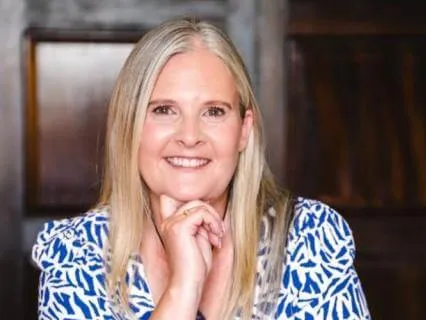
I'm going to be talking about why you already have what it takes to recover.
Welcome to I'm Julia Drahane,
Your host and eating disorder recovery coach.
And I lived in 40 years of anorexia,
Orthorexia and exercise addiction.
Before my recovery journey led me to complete freedom.
Well,
Let's get on with the episode.
Today's episode is dedicated to something really special actually.
And it's how can we turn?
The very things,
The very traits,
Characteristics we have.
That once fueled the eating disorder.
Into really powerful tools for recovery.
And you might be wondering,
Well,
How can the characteristics that contributed to my struggles possibly help me heal?
But the truth is many of the traits that drive an eating disorder.
Traits like determination,
Perfectionism,
People pleasing.
Black and white thinking.
Empathy for others and even OCD behaviors and rigid routines.
These aren't inherently bad.
It's how we've been using them that makes the difference.
So in today's episode,
We're going to explore how each of these traits has been used to drive the eating disorder.
And more importantly,
How we can repurpose them.
To support our journey towards healing.
So let's kick off with a trait that is often seen as one of the cornerstones of anorexia.
Determination.
This trait is a double-edged sword.
One that many of us use with relentless precision.
During our time in an eating disorder.
But determination isn't always negative.
It's incredibly powerful and a force that when harnessed correctly,
Can be the driving energy.
Behind your recovery journey.
So let's have a look at how determination works.
As determination is often channeled in ways that reinforce the eating disorders grips.
It's that iron will that allows you to refuse food.
Even when every single fiber of your being is crying out for nourishment.
It's that persistence that keeps you going with rigid diets or the intense exercise routines.
Even when your body is screaming for rest.
The research in the field of eating disorders has shown that People with anorexia often possess a heightened level of self-control and determination.
Which they use to apply to extreme weight loss and stick to strict diets and rules.
According to a study published in the Journal of Abnormal Psychology 2013,
This determination is linked to a reward-based learning process in the brain.
The brain's reward system,
Particularly the dopamine pathways,
Can become hyper responsive to the success of restricting food intake or losing weight.
And this actually creates a positive feedback loop.
Wet.
Determination to restrict food or lose weight is continuously reinforced by feelings of accomplishment and control.
Another study published in the International Journal of Eating Disorders in 2015 shows that the same cognitive processes involved in goal-directed behaviours such as planning and executing a diet are amplified in people with anorexia.
This means that the very brain regions that help us to achieve our goals,
Such as the prefrontal cortex,
Which is involved in decision making and impulse control,
Are highly active when one is engaging in disordered eating behavior.
But here's the thing,
This incredible determination,
This relentless pursuit of control and success,
Isn't a bad thing.
It's the target of that determination that needs to change.
During the eating disorder,
The focus has been on shrinking,
Controlling and denying.
And in recovery,
We can shift that focus towards growth,
Acceptance,
And self-care.
So how can we take this determination?
And turn it into a force for good.
The key lies in reframing your goals and using your natural tenacity to pursue recovery.
With the same vigor that you once applied to restricting.
So begin by setting clear positive recovery goals.
These goals should be specific,
Measurable,
Attainable,
Relevant.
And time-bound.
Smart.
Specific,
Measurable,
Attainable,
Relevant,
And time bound.
For instance,
A goal centered on weight or appearance.
Focus on goals like,
I will nourish my body with three balanced meals and snacks each day.
I will attend all.
All my coaching sessions this month.
When you set recovery orientated goals,
You give your determination a new and healthy focus.
Determination often thrives in the context of routine.
In the eating disorder,
This might have looked like a very strict eating or exercise routine.
And in recovery,
You can create different routines that support your health and well-being.
You can establish a routine that includes the regular meals and enough sleep.
And build into your routine time for relaxation and self-care.
The consistency of a routine can actually help you channel determination into maintaining habits that support recovery.
Just as the brain's reward system was activated by restrictive behaviours during anorexia,
It can also be trained to respond to positive recovery focused behaviours.
So when you engage in practices that reward your recovery efforts,
Whether it's treating yourself to a favorite activity after a coaching session or celebrating your progress,
By being kind to yourself and noticing how well you've done.
Over time,
These rewards help retrain your brain.
Associate determination with positive,
Health-enhancing actions rather than restrictive ones.
Recovery is not linear.
There will be setbacks and challenges.
But this is where your determination can be one of your greatest assets.
You can use it to build resilience by refusing to give up,
Even when the road gets tough.
Every time you face a challenge,
Remind yourself of the strength you've already shown in managing the eating disorder.
That same strength can be redirected to overcoming the obstacles in recovery.
Research from the Journal of Health Psychology in 2014 suggests that people who display a high degree of determination are more likely to persist in recovery efforts and are better equipped to cope with setbacks.
Which leads to more successful long-term outcomes.
Cognitive restructuring.
Cognitive behavior therapy techniques help you identify and restructure the thoughts that drive your determination.
For example,
If you're determined to avoid a certain food out of fear.
A good coach or therapist can help you challenge and change these thoughts.
Instead of thinking,
I can't eat this because it will make me gain weight.
You can reframe it to eating this food is part of nourishing my body and supporting my recovery.
By changing the way you think about your goals,
You can change the way you apply your determination.
Determination doesn't have to be harsh or punishing.
In recovery,
You can pair it with self-compassion and mindfulness practices,
Such as meditation or deep breathing.
Which can help you stay grounded and focused on your recovery goals.
Self-compassion allows you to be kind to yourself,
Especially when things don't go perfectly,
Which.
.
.
They don't in recovery or generally in life.
By combining determination with these more gentle practices.
You can maintain your focus on recovery.
Without falling into the trap of self-criticism or rigid thinking.
So determination is an incredibly powerful trait.
One that displayed a significant role in the eating disorder.
But it's also a trait that can lead you to recovery.
By setting positive goals,
Creating supportive routines.
Reinforcing healthy behaviours and practising self-compassion and mindfulness.
You can harness that determination.
To build a life that's healthy,
Balanced,
And fulfilling.
Remember the same strength that once fueled your eating disorder can now fuel your healing.
So let's look at another trait that plays a significant role in anorexia.
And that's perfectionism.
For many people,
The drive to be perfect is not just personality quirks.
It's a punishing force that pushes you to meet impossibly high standards.
Whether it's attempting to achieve the perfect body.
Maintaining the perfect diet,
Living the perfect life.
Perfectionism can feel like a motivator and a burden.
But just like determination,
Perfectionism is a trait that can be repurposed to support your recovery rather than undermine it.
During anorexia,
Perfectionism often manifests in obsessive behaviours and rigid thinking patterns.
The desire to appear perfect can lead to extreme dieting,
Excessive exercise.
And a fixation on achieving a certain weight or body image.
This pursuit of perfection is not just a psychological phenomenon.
It's deeply rooted in cognitive processes that affect how you perceive yourself and the world around you.
A study published in the International Journal of Eating Disorders in 2016.
Found that people with anorexia often exhibit a type of perfectionism known as maladaptive perfectionism.
This form of perfectionism is characterized by an unrealistic expectation of flawlessness.
Combined with harsh self-criticism when those expectations aren't met.
The study highlighted that maladaptive perfectionism is strongly correlated with the severity of eating disorder symptoms.
As it perpetuates a cycle of dissatisfaction and compulsive behaviours.
Research again from the Journal of Abnormal Psychology reveals that perfectionism is linked also to all or nothing thinking,
Which is a cognitive distortion where there's no middle ground.
You might think,
If I don't eat perfectly,
I've failed.
If I'm not thin,
I'm worthless.
And this black and white thinking fuels the perfectionist mindset.
Driving you to take more extreme measures in an attempt to meet impossible standards.
But the good news is perfectionism when approached differently.
Can be transformed into a really powerful tool for recovery.
It's not about getting rid of perfectionism,
But about redirecting it in a way that supports you.
So how do we reframe perfectionism for recovery?
The first step in repurposing perfectionism is to adjust your expectations.
Instead of striving for an unattainable ideal.
Set realistic and compassionate goals for yourself.
In recovery,
This might mean aiming for progress,
Not perfection.
Instead of trying to eat perfectly.
Focus on eating.
Balanced diet that includes a variety of foods including facing fear foods.
Understanding that recovery is a process and it's okay to have setbacks.
What matters is that the overall trend towards recovery is going up.
Embracing flexibility.
Perfectionism often comes with rigidity,
Where anything less than perfect feels unacceptable.
That in recovery,
We need to introduce flexibility into thinking and behavior.
For example,
If you miss a meal or eat something that wasn't on your plan.
You can be compassionate to yourself instead of critical.
Remind yourself that it's okay to deviate from the plan and that flexibility is a part of life.
Over time,
This approach helps weaken the perfectionist mindset and creates room for growth and self-acceptance.
Perfectionism doesn't have to be your energy.
Enemy It can be a powerful tool for mastering recovery skills.
Your attention to detail and high standards can be used.
To track your progress in therapy,
To prepare nourishing meals and making sure your body gets everything she needs,
Or to organize your recovery resources.
Channeling your perfectionism into productive activities can help you stay motivated and engaged in your recovery journey.
If you're caught in the thought,
I must eat perfectly or I'm a failure.
You can reframe this into a more balanced perspective such as,
It's okay to want to be healthy,
But perfection isn't required.
Mindfulness is another powerful tool for addressing perfectionism.
It involves staying present in the moment.
And noticing your thoughts without judgment.
When perfectionist thoughts arrive.
Mindfulness allows you to recognize them without getting caught up in them.
So while perfectionism is often seen as a negative trait,
It doesn't have to be.
When redirected,
It can really help you in your recovery.
By setting realistic goals,
Embracing flexibility.
And using techniques like mindfulness.
You can transform your perfectionism from pressure to progress.
Recovery is not about being perfect.
It's about making progress.
One step at a time.
Just a kind of quick drink.
People-pleasing is a trait that many people with anorexia share.
I certainly did.
And it's often rooted in the desire to feel accepted,
Valued,
And liked.
Which can lead you to prioritise other people's needs and opinions over your own.
When you're struggling with anorexia,
People pleasing behaviours might look like this.
Altering your habits to fit social expectations.
Hiding your struggles to avoid worrying people.
Or constantly seeking validation through appearance and behavior.
In recovery,
However,
People pleasing can be transformed into a form of self-compassion.
It can help you learn to care for yourself in the same way that you've cared for others.
Instead of sacrificing your well-being to keep others happy.
You can use your empathetic nature to prioritise your own health and boundaries.
People pleasing during anorexia often involve sacrificing your own needs to meet the expectation of others.
Whether it's conforming to the societal ideals of thinness.
Eating in ways that make you appear healthy in front of others,
Or denying yourself nourishment to avoid standing out.
People pleasing can drive harmful behaviours that feed the eating disorder.
You might find yourself constantly trying to make others happy.
Even if it means hurting your own health.
Research has shown a strong connection between people pleasing and eating disorders,
Particularly in women.
A study published in the Journal of Clinical Psychology in 2018.
Found that people with eating disorders often exhibit high levels of interpersonal dependency and a fear of rejection.
These individuals tend to rely on external validation,
Whether from family,
Friends,
Or society,
To feel a sense of worth,
Which can lead them to prioritize others' needs over their own well-being.
This behavior often translates to a fear of letting others down by not adhering to a certain body image or lifestyle.
People-pleasing is also often driven by a deep fear of rejection or abandonment.
The need to be liked or accepted can result in conforming to others' expectations,
Even when it's harmful to your health.
The fear of rejection can make it difficult to set boundaries,
Especially when it comes to food or recovery choices.
You might feel pressured to eat or not eat in certain ways to fit in or avoid conflict.
However,
This trait can be rechanneled.
In recovery,
People pleasing can help you build a compassionate relationship with yourself.
Where you learn to care for your own needs without guilt or fear.
First step.
To repurposing people pleasing is to recognize that your needs matter just as much as anyone else's.
During anorexia,
You may have spent so much time worrying about others that you neglected your own health.
In recovery,
It's really important to develop an awareness of what you need.
Whether that's more nourishment,
Rest or support.
Prioritise your needs without guilt.
And check in with yourself.
What do I need right now?
It is an act of self-care to meet your own needs with the same kindness you offer others.
Learning to set boundaries.
People pleasers often struggle to say no because they're worried about disappointing others.
But setting healthy boundaries is really important for maintaining your recovery.
If you know that diet talk is triggering for you,
Practice kindly but firmly setting boundaries with friends or family who have these conversations.
Let them know that your well being.
You'd prefer not to discuss diets,
Appearance or weight.
Setting boundaries doesn't mean you care less about others.
It means you care enough about yourself to protect your mental health.
Practicing self-compassion.
People-pleasing is often driven by a really harsh inner critic that tells you you're not good enough.
Unless you meet others' expectations.
In recovery,
Self-compassion can help soften that inner voice.
Instead of criticising yourself for not meeting these impossible standards.
Practice speaking to yourself the way you would speak to someone else,
A close friend.
For example,
If you struggle with guilt for not eating perfectly.
Remind yourself that everyone deserves nourishment.
Including you.
Self-compassion helps you recognize that your worth is not tied to pleasing others.
But to caring for yourself.
Focusing on authentic relationships.
Part of recovering.
From people pleasing is building authentic connections with others based on mutual respect and care.
Not on constantly meeting their needs at the expense of your own.
Focus on friendships that support your health and well-being.
Surround yourself with people who encourage your recovery and respect your boundaries.
These are the relationships that will sustain you rather than drain you.
Let go of the need to please everyone.
And focus on the people who uplift and support you.
Channeling empathy toward yourself.
People pleasers are often deeply empathetic and in tune with others' emotions.
In recovery,
You can use this empathy to nurture yourself.
When you're feeling overwhelmed or vulnerable.
Practice tuning into your own emotions and responding to them with care.
Ask yourself,
What would I say to a friend who's feeling this way?
And then offer yourself that same comfort and support.
By turning your empathy inward,
You create space for healing and self-compassion.
People pleasing is a trait that can feel overwhelming,
But it doesn't have to be a barrier to recovery.
By learning to recognize your own needs,
Setting healthy boundaries and practicing self-compassion.
You can change people-pleasing from self-sacrifice into a powerful tool for self-care.
You deserve the same kindness and empathy that you offer to others.
Black and white thinking.
This is a trait that many people with anorexia are all too familiar with.
Also known as all or nothing thinking.
This cognitive distortion simplifies the complexities of life.
Into extreme categories.
Success or failure,
Good or bad.
Perfect or unacceptable.
Black and white thinking often drives rigid behaviours and strict rules about food,
Exercise and body image.
Black and white thinking can be really harmful in an eating disorder because it leads to perfectionism,
Rigid routines,
And an inability to accept anything less than ideal.
This mindset can be reframed,
However,
To support recovery.
Helping you shift from rigidity to flexibility.
And find balance in your approach to food,
Body and your life.
So how does the black and white thinking fuel the eating disorder?
It's actually hallmark thinking in eating disorder.
It manifests as strict rules and beliefs about what is good or bad.
Leaving no room for flexibility or balance.
You might believe that eating one bad item like something high in calories means that you've ruined your whole day.
Which can trigger feelings of guilt,
Shame,
Or even compensatory behaviors like further restriction or over-exercising.
You might feel like missing a workout is failure,
Leading to anxiety and further unhealthy coping mechanisms.
And even labelling the foods good or bad.
Is black and white thinking.
All foods are okay.
Psychologically,
Black and white thinking is driven by cognitive distortions which are deeply ingrained mental filters that shape how we perceive the world.
There is research published in Behaviour Research and Therapy.
That says people with eating disorders often exhibit these distortions more intensely.
Viewing their actions and body image in extreme terms.
This kind of thinking leads to rigid behaviours and an inability to see the bigger picture.
Such as how nourishing your body is a long-term process rather than a series of perfect or failed moments.
The black and white mindset is also connected to a broader issue.
The intolerance of uncertainty.
Many people with anorexia struggle with uncertainty.
Whether it's around food,
Weight or life in general.
To combat this discomfort,
They adopt rigid rules to create a sense of control.
Unfortunately,
This only exacerbates the problem.
As life is inherently uncertain and food is never as predictable as a set of rules.
But here's the shift.
Black and white thinking can be redirected.
Recovery is all about embracing the grey area.
The space between extremes.
By doing so,
You can create a more flexible and compassionate approach to food,
Your body and your life as a whole.
So how do we reframe black and white thinking for recovery?
The first step is to challenge your extreme thoughts.
When you catch yourself thinking in all or nothing terms,
Ask yourself.
Is there any evidence for this thought?
For example,
If you find yourself thinking,
I ate a cookie so my whole day is ruined.
Take a step back.
Is that really true?
One cookie doesn't define your entire day.
Challenging these thoughts helps break the cycle.
Of extreme thinking.
Cognitive behavioral therapy is actually very effective in this area.
It encourages you to identify and reframe the cognitive distortions.
This might look like writing down your extreme thoughts and coming up with more balanced and flexible alternatives.
Over time,
This process helps retrain your brain to think in more realistic terms.
Black and white thinking thrives on rigidity,
But recovery requires flexibility.
Start by introducing flexibility into small aspects of your life.
For example,
If you're used to following a strict meal plan.
Try allowing for some variation.
Eat something outside of your usual comfort zone.
The goal is to loosen the grip of rigid rules and practice making choices based on how you feel in the moment.
Rather than adhering to a strict plan.
People that learn to embrace flexibility.
Whether in their approach to food,
Exercise or life,
Experience more sustainable recovery outcomes.
Because flexibility allows you to adapt to the complexities of real life.
Rather than clinging to the rules that only increase anxiety.
Focus on progress,
Not perfection.
In recovery one of the most important shifts is to learn to focus on progress.
Rather than perfection.
Black and white thinking tells you if you're not perfect,
You're a failure.
But recovery isn't about doing everything perfectly.
It's about making progress,
However big or small.
Remind yourself that setbacks are a natural part of the process.
And they don't wipe out the progress you've made.
Learning to tolerate uncertainty.
Black and white thinking often stems from a fear of uncertainty.
So learning to tolerate uncertainty is the key to breaking free from this mindset.
This might mean accepting that not every meal will be perfectly planned.
When your body may fluctuate in ways that feel uncomfortable.
But life like recovery is unpredictable.
So learning to sit with that discomfort and uncertainty without resorting to following those old rigid rules.
Can be really incredibly liberating.
Finally,
Transitioning from black and white thinking to a growth mindset is transformative.
A growth mindset focuses on learning from challenges rather than fearing failure.
When setbacks occur rather than seeing them as proof of a failure.
There are opportunities to learn and grow.
For example,
If something's gone wrong or you've had a triggering day,
Ask yourself,
What can I learn from this experience?
What can I take forward to help me?
And this shift in perspective encourages resilience and helps you stay focused on long-term recovery.
So while black and white thinking can feel like a safety net in a world that feels unpredictable often,
In reality,
It only limits your ability to fully recover and enjoy life.
By challenging extreme thoughts and embracing flexibility and focusing on progress rather than perfection.
You can transform black and white thinking into a more balanced and compassionate approach.
Recovery is not about doing everything perfectly.
It's about learning to navigate the grey areas with kindness and patience.
Many people with anorexia are deeply empathetic and compassionate towards others and you might feel a strong sense of responsibility to care for your friends and family,
Offering support,
Listening to their products,
Problems,
And pushing their needs before your own.
This empathy and compassion are beautiful traits.
But in the context of an eating disorder,
They can be used in ways that lead to self-neglect.
You may be so focused on taking care of others that you forget to extend that same kindness to yourself.
In recovery,
One of the most transformative shifts is learning to turn that empathy and compassion inwards.
By doing so,
You can give yourself the same love and care you've always offered to others.
Self-compassion.
Is a cornerstone of healing.
And allows you to build.
Beautiful caring relationship with yourself.
So how empathy and compassion for others has fueled the eating disorder?
During the eating disorder,
Your empathy and compassion for others can sometimes drive behaviours that harm your own health.
You may have found yourself taking care of everyone else,
Ignoring your own needs until you're exhausted.
Or even using food as a way to control or suppress emotions in an effort to be strong for others.
People with eating disorders often have a heightened sense of responsibility towards others,
Which leads to self-sacrifice and neglect of personal needs.
This self-sacrifice can manifest in various ways,
Whether it's skipping meals so that you can stay productive and helpful.
Or suppressing your emotions to avoid being a burden to others.
You may have felt taking care of yourself was selfish and less important than being there for others around you.
The fear of being a burden or causing distress to others is deeply tied to the eating disorder.
By maintaining the facade of control and perfection,
Often through restrictive eating and overexercise,
You may have felt like you were protecting others from your internal struggles.
The issue,
However,
Is that this external control is masking deep emotional pain.
And in the long run,
Ignoring your own needs has only fueled the cycle of the eating disorder.
So whilst your empathy for others is a truly beautiful trait.
Recovery invites you to shift that empathy inward.
It asks you to recognise that your needs,
Emotions and wellbeing are just as important.
As those of the people you care about.
So how can we refame it?
We start by practicing self-compassion.
The first step in turning empathy inward is to practice self-compassion.
Which is all about treating yourself with the same kindness and understanding that you so readily offer to others.
Instead of criticizing yourself for struggling or not meeting certain standards,
Self-compassion allows you to acknowledge your pain and respond to it with care.
When practicing self-compassion,
Start by recognizing your own suffering.
This is hard for me.
Then remind yourself that suffering is part of the human experience and it's okay to feel this way.
Then finally offer yourself kindness.
I'm doing the best I can.
And I deserve care.
This practice often softens the harsh inner critic.
That accompanies an eating disorder.
Allowing you to approach recovery from a place of understanding and patience.
Creating boundaries around helping others.
Empathy for others is a beautiful trait,
But it can become overwhelming if you're constantly giving without filling up your own cup and taking time for yourself.
So in recovery,
It's really important to establish boundaries about how much emotional energy you give to others.
You might be used to being the go-to person for everyone else's problems.
But you need to protect your own wellbeing too.
Boundaries are not about shutting people out.
They're about creating space for yourself to heal.
For example,
If a friend or family member is going through a tough time.
It's okay to support them without taking on their emotional burden as your own.
You can say things like,
I care about you,
But I need to take care of myself right now.
Establishing these boundaries allows you to conserve your emotional energy for your own healing journey.
Learning to receive help.
One of the challenges that people with anorexia often face is the difficulty in asking for or accepting help.
You might be just so used to caring for others that you feel uncomfortable receiving support.
But it's really important to learn that you deserve care just as much as anyone else.
Learning to receive help is an act of self-compassion.
It acknowledges that you don't have to go through recovery alone.
Whether it's having a coach,
A therapist.
Or other forms of support.
Receiving help is a way of helping yourself.
Allowing others to support you doesn't make you weak,
It makes you human.
In fact,
Research published in Eating Disorders,
The Journal of Treatment and Prevention 2020.
Shows that support plays a critical role in sustained recovery.
People who feel supported are more likely to make lasting progress than those who recover in isolation.
Tuning into your own emotions.
Empathy for others often involves being highly attuned to their emotions.
In recovery,
It's important to direct that same attentiveness towards your own emotional landscape.
This means checking in with yourself.
How am I feeling right now?
What do I need emotionally?
Often anorexia suppresses these feelings,
Leading to disconnection from your emotional needs.
By tuning into your emotions,
You can better understand what drives certain behaviours and learn to respond to your emotional needs in a healthier way.
If you're feeling overwhelmed,
Stressed or sad,
Recognize that these emotions are valid.
You're allowed to have them.
And give yourself permission to take care of them.
Without resorting to unhealthy coping mechanisms.
Journaling,
Meditation,
Mindfulness,
Therapy and coaching are all great tools.
For staying connected to your emotions and learning to respond to them rather than pushing them down.
Balance compassion for others and yourself.
Compassion for others is a wonderful quality,
But recovery requires a balance between giving and receiving.
You have to fill up your own cup in order to be able to be there for others.
You can continue to care deeply for others,
But you must also recognise that your own wellbeing is just as important.
This balance might look like setting aside time each day to focus on self-care.
Whether that's nourishing your body with the breath.
Balanced meal,
Taking time to relax.
Or finding a creative activity that brings you joy.
This balance can also extend to how you interact with others.
If a friend is going through a difficult time,
You can offer support while maintaining your boundaries.
You could say,
I'm here for you,
And I also need to take some time to take care of myself.
This way you're able to offer compassion without sacrificing your own needs.
Empathy and compassion are powerful traits.
But they're not just for others,
They're for you too.
By turning them inward and practicing self-compassion.
You can nurture yourself through the recovery process.
Learning to receive help and tuning into your emotions are all ways to balance your care for others with your care for yourself.
Remember,
Your wellbeing is just as important as the wellbeing of those you care about.
Now let's talk about another common trait that often revolves around control.
OCD behavior.
People with anorexia often develop obsessive compulsive tendencies.
Such as strict rituals around food,
Exercise,
And daily life.
As a way to create a sense of order and control.
These routines can be comforting in the short term.
Providing a sense of security in an unpredictable world.
Over time they become restrictive and harmful.
In recovery,
However,
The discipline structured part of these behaviours can be repurposed.
Rather than being about restriction and control,
They can be transformed into supportive,
Balanced structures that help you maintain a healthy lifestyle.
The goal is to shift from rigidity to flexibility.
Whilst still using the strengths of discipline and organisation to support your recovery.
During an eating disorder.
Rigid routines and OCD-like behavior often serve as a way to manage anxiety and uncertainty.
There may be strict rituals around eating,
Such as eating at certain times or in specific ways,
Or consuming only safe foods.
Exercise routines may become similarly rigid with intense rules about how much and when you could exercise,
Regardless of how your body felt.
I also actually had to have volume on an odd number or a multiple of five.
Otherwise things felt unsafe.
And these behaviors are closely tied to the need for control.
There's a relationship between obsessive compulsive tendencies and eating disorders.
These rigid routines can provide temporary relief from anxiety,
But they ultimately reinforce the disorder by preventing flexibility and reinforcing fear around change.
The rules that govern your food intake,
Exercise and daily routines become non-negotiable.
Which leaves no room for spontaneity,
Relaxation or enjoyment.
The obsessive nature of these routines leads to isolation.
As they can dominate your daily life and prevent meaningful social interactions.
People with anorexia often have heightened anxiety around uncertainty and unpredictability.
And these rigid routines can serve as a coping mechanism providing a predictable framework.
In a world that feels chaotic.
This sense of control and safety comes at a high cost because it fuels the disorder and limits your ability to live a full and flexible life.
The positive aspect of these behaviours is the inherent discipline and attention to detail they represent.
These strengths can be repurposed in recovery to create healthy,
Sustainable routines.
One of the first ways to reframe rigid routine recovery is by turning them into supportive structures.
Rather than using routines to restrict or control.
Use them to provide balance and stability.
For instance,
Instead of adhering to a strict meal plan that focuses on restriction,
Create a balanced meal plan that ensures you're getting the nutrition your body needs.
This might well involve working with a therapist or a coach to help you design a plan that feels structured but flexible.
A study in the International Journal of Eating Disorders 2021 emphasizes the importance of structured yet flexible routines in recovery.
The routines can provide a sense of security and reduce anxiety,
But they leave room for variation,
Spontaneity and growth.
A recovery-focused eating plan might include regular meals and snacks at set intervals,
But it also allows for flexibility in food choices and quantities so that you're not trapped in rigid patterns that fuel the eating disorder.
You can focus on consistency and not perfection.
It's essential in recovery to shift the focus from rigid perfection.
Consistency.
The discipline which may have driven the disordered behaviors can be used to be consistent to make choices that support your wellbeing.
Instead of obsessing over perfect adherence to rigid rules.
Focus on consistently nourishing your body,
Listening to its needs and treating it with respect.
The shift from perfection to consistency is supported by research in Psychiatry Research 2019,
Which highlights the people who develop a more flexible consistent routine in recovery.
Such as regular meal times and adequate sleep are more likely to maintain recovery long term.
Key is to find balance where the structure supports your health rather than restricts your life.
Using discipline for self-care.
The discipline that often drives OCD-like behaviours can be really valuable when redirected to self-care.
Recovery is a long and sometimes challenging process.
And having the discipline to stick with it,
To show up for yourself,
Eat regular meals and practice self-compassion can make a huge difference.
So the key is to use your discipline to support behaviours that nourish and heal you.
Rather than behaviours that restrict and control you.
Finding joy in new routines.
Another important part of recovery is discovering the joy in routines that are no longer focused on restriction or control.
This might mean creating a morning routine that involves a lovely breakfast,
Time to relax or meditate.
Maybe a gentle walk in nature.
You can find new hobbies or activities that bring you happiness like art,
Reading,
Crochet.
Allowing space for rest.
In the context of rigid routines,
Rest can often feel like a forbidden luxury.
However,
In recovery,
Learning to rest and allow your body time to heal is an absolutely crucial part.
Of the whole recovery process.
Whether it's physical rest from over-exercising or mental rest from obsessive thoughts,
Giving yourself permission to pause is essential.
As we've explored today.
These traits that have fueled the eating disorder.
Determination,
Perfectionism.
People-pleasing,
Black and white thinking.
Empathy and OCD.
They aren't inherently negative.
They're powerful qualities that when redirected can become real assets in your recovery journey.
It's all about how you use them.
Recovery isn't about becoming someone entirely different.
It's about taking the best parts of who you are.
And using them to build a life that's healthy,
Balanced and fulfilling.
You already have the strength,
The discipline,
The empathy,
And the determination to heal.
By using these traits and repurposing them for recovery.
You can create a life that leads not just to survival,
But to thriving.
Thank you so much for joining me on the podcast today.
I hope you found this episode helpful and that it inspires you to see your strengths in a new light.
Remember you're not alone in this.
There is support and I'm here for you every step of the way.
Until next time,
Take care of yourself.
Be kind to yourself.
And keep moving forwards.
You're worth it.
Lots of love.