Hi,
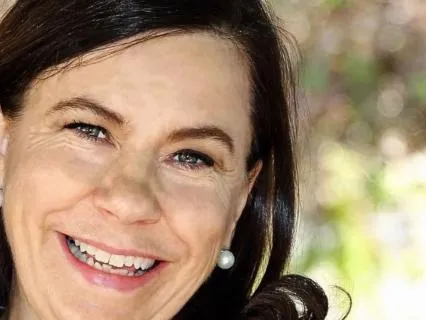
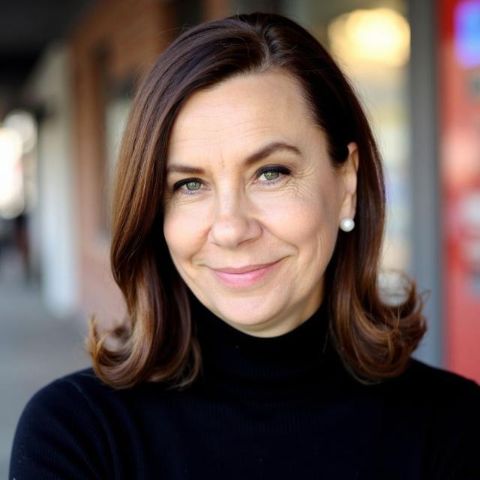
My name is Hannah Studley from the MindBody Institute and I have a question for you.
What if nothing is wrong with you?
I mean,
I don't mean that nothing difficult ever happens to you.
And I don't mean that you haven't made mistakes or that you don't have things in your life that you would like to change.
And I certainly don't mean that difficult experiences don't matter.
They really do.
But I'm asking you to consider something a little different.
What if underneath everything that has happened to you,
Underneath the difficult thoughts,
The uncomfortable feelings,
The mistakes,
The disappointments,
And the things you may wish were different,
What if there is nothing fundamentally wrong with you?
It's an interesting question because most of us have been taught in one way or another that we need fixing.
Maybe we're told that we need to become more confident,
More successful,
More disciplined,
Maybe less anxious or less angry,
Less sensitive or less afraid.
Perhaps we're told that we need to change the way we think.
Change the way we behave,
Change our bodies,
Change our relationships,
Change our circumstances.
And sometimes,
Of course,
Making changes is exactly what we need to do.
But there's a subtle assumption underneath all of this.
The assumption that who we are right now isn't quite good enough.
That somewhere inside us there is a problem that needs to be solved.
I spent many years working with people who believed that something was wrong with them.
People struggling with pain,
With anxiety,
With difficult emotions,
With trauma,
With their relationships with food,
With thoughts they didn't like.
And very often the struggle wasn't only what they were experiencing,
It was with what they believed their experiences meant about them.
I'm anxious,
Therefore there's something wrong with me.
I'm struggling,
Therefore I'm failing.
I keep having these thoughts,
Therefore I must be broken.
I can't seem to get myself together,
Therefore there must be something fundamentally wrong with me.
Can you see the difference?
There's the experience,
And then there's the story we create about the experience.
Imagine for a moment that you have a difficult thought.
Perhaps it's a thought about yourself.
Maybe it's a worry about the future.
Maybe it's a memory from the past.
The thought appears.
And because we're human,
We don't simply see it as a thought.
We experience it.
We can feel it in our bodies,
We can react emotionally,
We can believe it.
And sometimes,
Without even realizing it,
We begin to build a whole identity around it.
This is who I am.
This is how I am.
This is what's wrong with me.
I know I certainly did this.
But here's something I'd love you to notice.
A thought can feel incredibly real.
Without necessarily being a fact about who we really are.
Think about how many different thoughts you've had about yourself throughout your life.
You probably thought that you were wonderful at some times and terrible at others.
You've probably felt confident at one point and completely unsure of yourself at another.
You've probably looked at the same situation differently depending on how you were feeling.
So which version of you is really real?
Which one is you?
Perhaps there's another possibility.
Perhaps you are not the thoughts that pass through your mind.
Perhaps thoughts are something you experience rather than something you are.
And if that's true,
Then maybe we don't have to spend our lives trying to get rid of every thought we don't like.
Maybe we don't have to win the battle with our own minds.
Maybe we don't even need to become a completely different person before we can feel okay.
This brings us to the idea of innate well-being.
Innate simply means something that is already there,
Not something you have to manufacture,
Not something you have to earn,
Or something you have to become worthy of.
The possibility I'm inviting you to consider is that well-being may be more like this.
It may be something fundamental to being human,
Something that can become obscured by our thinking,
But isn't destroyed by it.
Think about the sky.
Sometimes it's bright and completely clear.
Sometimes it's covered in clouds.
Sometimes there's a storm.
But we don't usually conclude that the sky itself has disappeared.
We know that behind the clouds,
The sky is still there.
I'm suggesting that human well-being may be somewhat like that.
Sometimes our minds are full of difficult thoughts.
Sometimes we're overwhelmed.
And sometimes we're frightened,
Sometimes we get angry or deeply sad,
And sometimes life hurts.
And in those moments,
It can be very difficult to imagine that anything else is possible.
But perhaps the difficult experience doesn't tell us what we fundamentally are.
Perhaps it tells us what we are experiencing right now.
And right now is capable of changing.
You've experienced this yourself.
There have probably been moments when you felt absolutely certain about something and then a few hours later or a few days later you saw it completely differently.
The circumstances may not have changed.
Your thinking has changed.
Your state of mind has changed and suddenly the world looked different.
This is something incredibly important to notice.
We don't experience life directly.
We experience our thinking about life.
And our thinking is constantly changing.
So,
Perhaps the answer isn't always to try harder to create the perfect state of mind.
Perhaps it's not about controlling every thought.
Perhaps it's not about becoming someone who never feels anxious or never gets upset,
Never overeats or never worries and never makes mistakes.
That person doesn't exist.
We're human beings.
We have changing thoughts and changing feelings,
And that's okay.
What if you could become a little less frightened by your own mind?
What if a difficult thought didn't automatically mean that something was wrong?
What if an uncomfortable feeling didn't need to be immediately fixed?
What if you could allow an experience to be there without turning it into a verdict about yourself?
I'm feeling anxious is very different from I am an anxious person.
Or I'm having a difficult day is very different from my life's a disaster.
I'm having thoughts about food is different from I have no control over food.
Can you feel the difference?
The first statement describes an experience,
The second creates an identity.
And identities can feel very heavy.
So I'm not asking you to believe me.
I'm simply inviting you to be curious.
The next time you notice a difficult thought or feeling,
See if you can notice it without immediately deciding what it means to you.
You don't have to change it.
You don't have to fight it.
You don't even have to get rid of it.
Just notice,
Ah,
This is what I'm experiencing right now.
And then remember,
Right now is not forever.
Your thoughts will change and your feelings and your state of mind will change.
And you don't have to make that happen.
It's already happening.
Perhaps this is what it means to begin looking in a different direction.
Instead of asking,
How can I fix myself?
We might be asking,
What if there is nothing fundamentally wrong with me?
You don't have to answer that question today,
Just let it sit there for a while.
What if nothing is wrong with me?
What if beneath all the stories I've collected about myself there is something okay?
What if well-being isn't something I have to create,
But something I can rediscover?
And what if I don't need to become somebody else to experience it?
So thank you for spending these few minutes with me.
I'm Hannah Studley,
And I hope you'll carry one question with you today.
What if there is nothing wrong with you?