The world’s largest free audio library for everyday wellbeing
Breathwork
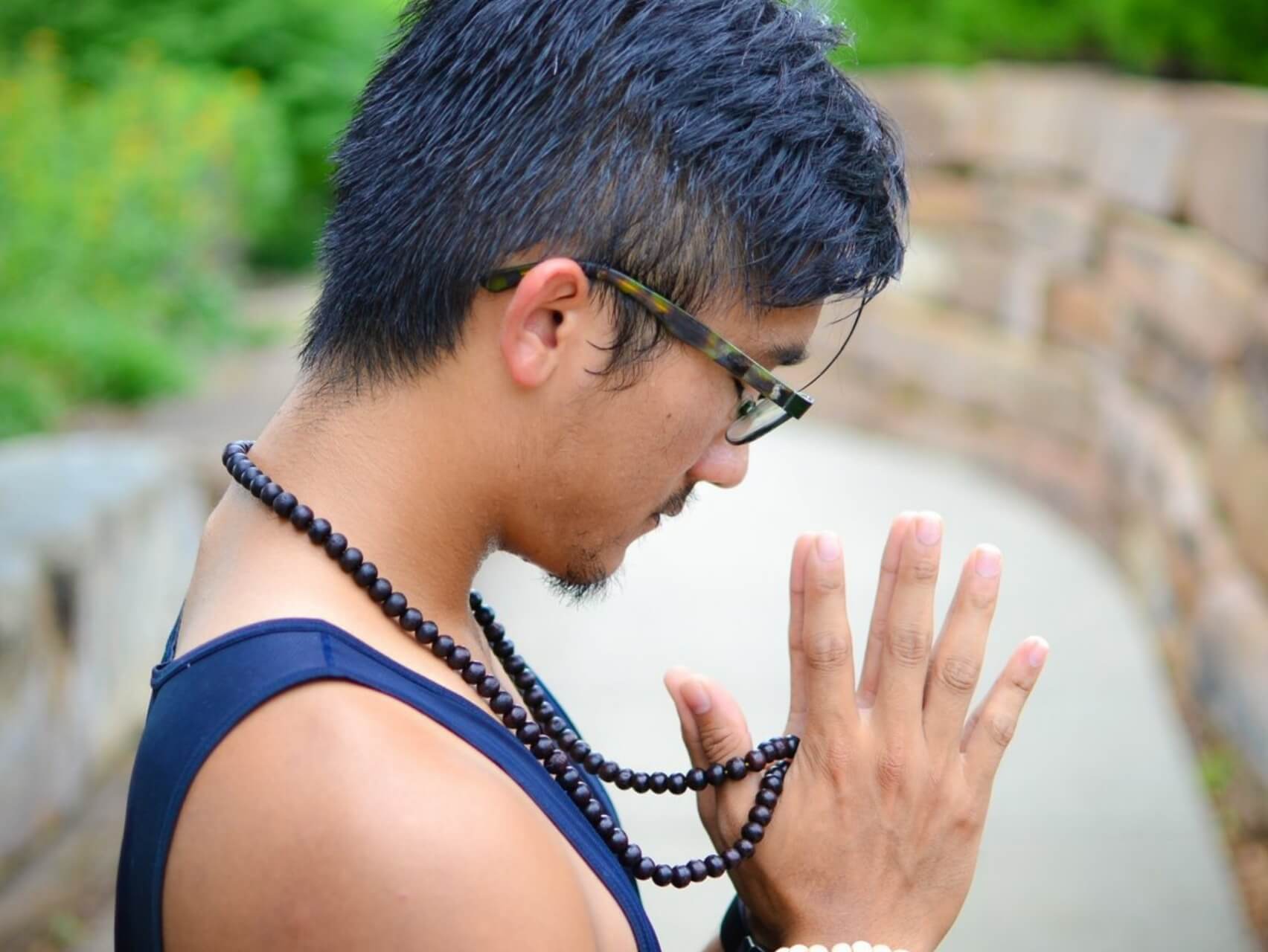
Vase Breathing is an advanced Tummo and Tibetan-yoga technique in which a deep inhalation is held while the pelvic-floor and abdominal locks engage, sealing a pressurised hold of breath in the lower torso.
Last Updated
3 Jul 2026
We are still reviewing this page. Our research team checks every technique page for accuracy and evidence quality before final release. Details may change as that review completes. The evidence badge shows our current reading of the published research.
RECOMMENDED DOSE
Vase breathing has not been dose-tested directly. The nearest evidence is a large randomised trial of slow coherent breathing (~5.5 breaths/min) practised for about 10 minutes a day over 4 weeks; this range extrapolates from that closely related slow-breathing protocol, with a conservative 5-minute floor for newcomers.
A randomised trial of a closely related slow-breathing practice used roughly 10 minutes daily for 4 weeks. This intermediate dose mirrors that established daily protocol, extrapolated to vase breathing.
No study tested longer vase-breathing sessions, so the 15–20 minute session length is an editorial synthesis for experienced practitioners building on the daily-practice pattern seen in related slow-breathing trials.
Session length
Session length: 5–10 minutes
5
MIN
How long each individual practice session should last from start to finish.
Frequency
Frequency: 5–7 days
5
DAYS
The number of days per week to fit a session into your routine.
Session length
Session length: 10–15 minutes
10
MIN
How long each individual practice session should last from start to finish.
Frequency
Frequency: 6–7 days
6
DAYS
The number of days per week to fit a session into your routine.
Session length
Session length: 15–20 minutes
15
MIN
How long each individual practice session should last from start to finish.
Frequency
Frequency: 6–7 days
6
DAYS
The number of days per week to fit a session into your routine.
About this card. These recommendations are extrapolated from trials of closely related slow-breathing techniques rather than from direct studies of vase breathing, and should be treated as starting points. These recommendations are not a substitute for personalised guidance from a qualified practitioner.
Quick answers to what people most often ask. Each card links to the deeper section below.
evidence
No trials have tested Vase Breathing directly, so support is borrowed from the wider breathwork family, where a meta-analysis of 12 trials in 785 adults found small-to-moderate reductions in stress, anxiety, and low mood. Two placebo-controlled trials found retention breathing helped no more than a matched comparison practice.
good for
Vase Breathing suits adults wanting a demanding, focus-heavy way to settle stress that sits in the body when the mind will not quiet. The structured hold gives busy attention something firm to rest on. It is not a first choice for beginners, nor a substitute for care when anxiety, mood, or trauma symptoms are severe.
Read moresafety
Most healthy adults can practise Vase Breathing safely when holds stay comfortable and are never forced. Because retention with the pelvic-floor and abdominal locks raises internal pressure and slows blood returning to the heart, it can cause lightheadedness. People with heart, blood-pressure, respiratory, or eye conditions, or who are pregnant, should seek medical sign-off and qualified instruction first.
Read morehow it works
Holding the breath while engaging the pelvic-floor and abdominal locks gives attention a demanding physical anchor, occupying the mind so fully it has little room to circle back to worries. This inward focus may sharpen your felt sense of internal signals, and related slow-breathing research shows lowered cortisol, the body's main stress hormone.
Read moreVase Breathing is an advanced Tummo and Tibetan-yoga technique in which a deep inhalation is held while the pelvic-floor and abdominal locks engage, sealing a pressurised hold of breath in the lower torso.
You take a deep inhalation and hold it while engaging mula bandha, the pelvic-floor lock, and uddiyana bandha, the abdominal lock, then press the upper body gently down to seal a pressurised shape in the lower torso. This builds marked internal pressure and muscular effort, which generates heat. Traditionally the hold is paired with inner-fire visualisation and sometimes with trul khor movements, and the breath is released and the body reoriented before the next round. It is considered an advanced practice that calls for qualified instruction.
Vase Breathing is not simple slow or diaphragmatic breathing; it is a specific breath-retention technique with pelvic-floor and abdominal locks, drawn from Tummo and Tibetan yoga, and it usually sits inside a larger inner-fire practice rather than standing alone as a relaxation exercise. Do not confuse it with gentle paced-breathing methods aimed purely at calming, because the marked intra-abdominal and thoracic pressure it generates makes it an advanced practice best learned with guidance. Its evidence is distinct too, since findings come from breathwork in general rather than from studies of Vase Breathing itself.
Not to be confused with
Wim Hof Method
Often called 'modern Tummo', the Wim Hof Method is a secular derivative built around rapid over-breathing, cold exposure, and holds. Vase Breathing is the traditional Tibetan retention-and-lock component of classical Tummo, without the hyperventilation phase.
Kumbhaka (general pranayama breath retention)
Kumbhaka names breath retention broadly across yogic breathing. Vase Breathing is a specific kind of retention defined by the sealed 'vase': the hold is combined with pelvic-floor and abdominal locks to generate deliberate downward pressure, not a plain pause between breaths.
Valsalva maneuver
The Valsalva maneuver is a medical bearing-down against a closed airway used clinically. Vase Breathing produces comparable intra-abdominal pressure, which is why it needs care, but it is a contemplative practice with sustained attention and imagery, not a diagnostic or clinical procedure.
Coherent / resonance breathing
Coherent breathing is slow, continuous, and hold-free, aimed at calming the nervous system through pace alone. Vase Breathing is intense and retention-based; the two are easily confused as 'breathing exercises' but sit at opposite ends of effort and pressure.
Vase Breathing is thought to work by giving attention a demanding physical anchor and turning awareness inward toward the body's own signals, though these pathways come from breathwork research broadly rather than from studies of this technique. Holding the breath and engaging the locks occupies attention so fully that it has little room to circle back to worries, a shift toward focused attention that many practitioners feel as a quieter, less scattered mind (Nakamura et al., 2023). That same inward focus may sharpen interoception, the felt sense of what is happening inside your body, which emotion research links to catching a stress signal early rather than after it has already escalated (Greenwood & Garfinkel, 2024). Long holds also let carbon dioxide accumulate, and this rising CO2 may shift blood flow and fluid movement in the brain, though that mechanism stays speculative for now (Vakhtin et al., 2025).
As attention narrows to what's happening inside, breath moving, pressure building, warmth spreading through the torso, Vase Breathing may sharpen interoception, the felt sense of your body's own internal signals. Early, indirect evidence links this kind of inward attention to clearer emotional awareness and to catching a stress signal before it escalates (Greenwood & Garfinkel, 2024), (Nakamura et al., 2023).
When your thoughts keep circling back to the same worries, the structured breath-hold gives attention a single physical thing to hold onto, so focus settles on the count and feel of the breath instead of drifting back to rumination (Nakamura et al., 2023). Many people notice looping thoughts loosen and a steadier sense of being present, moment to moment.
The clearest measured signal comes from slow-breathing studies rather than Vase Breathing itself: in healthy adults, a session of controlled breathing lowered cortisol, the body's main stress hormone, and improved sustained attention (Ma et al., 2017). A drop in cortisol is often felt as the edge coming off alertness, shoulders loosening, and the mind less braced for what comes next. During the retention, carbon dioxide builds and stirs air hunger, the mounting urge to breathe; practitioners expect repeated holds to make that urge feel less threatening over time, though that adaptation has not been measured for this technique.
That braced, can't-quite-come-down feeling is partly cortisol, the body's main stress hormone, keeping you on alert; after a session of slow, controlled breathing, healthy adults measured lower cortisol, often felt as the shoulders dropping and the jaw unclenching (Ma et al., 2017). Vase Breathing hasn't been tested on its own for this, so the signal comes from the wider breathwork family rather than this specific practice.
During a long hold, the urge to breathe can rise sharply and feel alarming. That signal comes from the chemoreceptors, the body's carbon dioxide sensors, and repeated retention practice is expected to make them react less to rising CO₂, so breath discomfort becomes easier to stay with rather than something to panic over. This hasn't been measured directly in Vase Breathing; the nearest evidence links slow breathing to lower cortisol and steadier attention in healthy adults (Ma et al., 2017).
As attention turns inward during the retention and locks, breath movement, pressure, and warmth become easier to notice. That growing clarity is interoceptive accuracy, how well you can sense and read internal body signals. It has not been measured directly for Vase Breathing, so this is inferred from related slow-breathing research; in one small study of healthy adults, that kind of practice lowered cortisol, the body's main stress hormone, and steadied attention (Ma et al., 2017).
Focus tends to hold longer and wander less after slow breathing practice: in healthy adults, sustained attention improved while cortisol, the body's main stress hormone, dropped (Ma et al., 2017). People often describe this as a quieter, less scattered mind, where returning to the task in front of them takes less effort.
Moderate evidence from the wider breathwork family supports lower stress, anxiety, and depressed mood; Vase Breathing sits within that family rather than having trials of its own (Fincham et al., 2023). Breathing techniques also show early, limited promise for adults with diagnosed anxiety disorders (Blerida et al., 2023), and a small study of a breathing, movement, and meditation program pointed to better mood and lower inflammation markers in people with inflammatory bowel disease (Gerbarg et al., 2015). What remains unsupported is any trial of Vase Breathing on its own, evidence for its traditional heat and energy effects, and any claim that it treats a diagnosed condition.
When a stressful day leaves you wound up and unable to switch off, structured breathing can help that braced, tight feeling loosen as the paced breath gives crowded attention something steady to settle on. Vase Breathing belongs to the wider breathwork family, which lowers self-reported stress across studies, though the finding comes from breathwork broadly rather than this specific practice (Fincham et al., 2023).
Across randomized trials, breathwork produced small-to-moderate reductions in stress, anxiety, and low mood. A meta-analysis of 12 trials in 785 adults found a Hedges' g of -0.35 for stress versus non-breathwork controls, meaning the average breathwork participant reported less stress than roughly three in five people in the comparison groups (Fincham et al., 2023). The main areas studied are stress, anxiety, and mood, with early promise for people with diagnosed anxiety disorders (Blerida et al., 2023). The central limit is that none of this tested Vase Breathing itself, and two placebo-controlled trials found paced and retention-based breathing helped people but no more than a matched comparison practice (Fincham et al., 2023), (Fincham et al., 2024).
1
Meta-analyses
3
RCTs
1
Systematic reviews
0
Observational
6
Pilot
Studied populations
Interoceptive Mechanisms and Emotional Processing
2024
Finding: This review maps how the brain senses and interprets signals from inside the body, such as the breath and heartbeat, and how that internal sensing shapes the way we experience emotions. The authors argue that approaches which sharpen this inner awareness may help with conditions where emotional processing has gone off balance, which offers a plausible reason why attention-to-breath practices like Vase Breathing might support emotional steadiness. It is worth being clear that this is a theoretical review of how interoception works, not a test of Vase Breathing itself, so it points to a likely pathway rather than proving the practice changes how you sense your body.
See full citation in referencesBreathwork Interventions for Adults with Clinically Diagnosed Anxiety Disorders: A Scoping Review.
2023
Finding: This review gathered 16 studies of breathing practices in adults living with diagnosed anxiety disorders, and across that research a range of breathwork techniques brought clear reductions in anxiety symptoms. For someone drawn to a slow, controlled practice like vase breathing, it's a promising sign that working deliberately with the breath can ease the kind of tension that fuels anxiety. Two things are worth keeping in mind, though: the studies looked at breathwork as a broad family of methods rather than vase breathing on its own, and the review described consistent improvements without combining the results into a single measured effect, so the size of the benefit isn't pinned down.
See full citation in referencesVase Breathing comes from Tibetan yoga and the Tummo, or inner-fire, tradition, where a deep breath is held and sealed with the pelvic-floor and abdominal locks and paired with visualisation of building heat. These roots help explain the practice's form, its pressurised hold, bandha engagement, and imagery of gathered warmth, rather than proving any clinical effect. In its traditional setting the technique is understood as a stage of contemplative training, sometimes combined with trul khor movements.
For most healthy adults, Vase Breathing is low-risk as long as the holds stay comfortable and are never forced. Its one built-in caution comes straight from the mechanics: holding the breath while engaging the pelvic-floor and abdominal locks raises pressure inside the chest and belly and slows the blood returning to the heart, which can bring on lightheadedness or a brief faint feeling if a hold is pushed too far. This is a physiology-inferred caution, drawn from how the technique works rather than from measured harm, and because no trials have tracked adverse events for this practice specifically, it is best learned with qualified instruction rather than self-taught, a practice-informed caution supported by a systematic review of guided breathing training (Bentley et al., 2023).
Some people should modify Vase Breathing or check with a clinician before starting. Anyone with cardiovascular conditions, uncontrolled high blood pressure, respiratory illness, glaucoma or other eye conditions, or who is pregnant should approach it with particular care, because the pressurised breath-hold acts much like a Valsalva maneuver, the internal straining you feel when bearing down. This is a mechanism-inferred caution drawn from the pressure changes the technique creates. People who feel panicky as the urge to breathe builds may also find the air hunger, that mounting drive to inhale, distressing, and should lengthen holds slowly under guidance rather than pushing through them.
Vase Breathing seals a deep inhalation with the pelvic-floor and abdominal locks, generating marked pressure in the chest and abdomen, so it is treated as an advanced technique rather than a beginner practice. Because no trials have tracked adverse events for this practice specifically, learn it with qualified in-person instruction who can pace your holds and check the lock engagement, rather than self-teaching from written cues. Guided-breathing research supports learning technical breath practices with adequate instruction.
| Technique | Best for | Use with care | Evidence strength | Distinction |
|---|---|---|---|---|
| Full Tummo (inner-fire meditation) | Practitioners committed to the complete Tibetan inner-fire path, with visualisation and lineage guidance, rather than an isolated breathing drill. | Both involve intense pressurised holds; the full practice is demanding and traditionally taught in stages under a qualified teacher. | emerging EVIDENCE | Vase Breathing is one component of full Tummo, not the whole practice. Complete Tummo wraps the pressurised breath-hold inside sustained inner-fire visualisation and sometimes trul khor movement, treating the sealed 'vase' as an image of gathered vital energy. On its own, Vase Breathing is the mechanical breath-and-lock core; full Tummo is the entire contemplative path it belongs to. |
| High-ventilation breathwork with retention (e.g. Wim Hof style) | People wanting a secular, remotely teachable retention practice with structured guidance and a growing trial base. | Also a retention practice with pressure and breath-hold effects; caution with cardiovascular, respiratory, or pregnancy contraindications. |
Because of its shape. A deep inhalation held with the pelvic-floor and abdominal locks engaged and the upper body pressed gently down seals the breath into a rounded, pressurised 'vase' in the lower torso, an image drawn from the Tibetan Tummo inner-fire tradition.
+
The name describes the technique's shape, not any proven effect. You hold a deep inhalation while engaging the pelvic-floor lock, or mula bandha, and the abdominal lock, or uddiyana bandha, and press the upper body gently down, which seals a rounded, pressurised shape of breath in the lower torso. That 'vase' image comes from the Tibetan Tummo, or inner-fire, tradition, where it evokes a container gathering and holding vital energy. These roots explain the form of the practice, not its clinical effects.
Not proven for this practice specifically. No trial has tested Vase Breathing on its own, so its benefits are borrowed from the wider breathwork family, which shows small-to-moderate reductions in stress and anxiety (Fincham et al., 2023). Two placebo-controlled trials also found breathing helped, but no more than a matched comparison practice (Fincham et al., 2023).
+
Not proven for this practice specifically. No randomised trial has studied Vase Breathing on its own, so every supportive finding is borrowed from the wider breathwork family, where a meta-analysis reports small-to-moderate reductions in stress, anxiety, and low mood (Fincham et al., 2023). That support is suggestive rather than settled: two placebo-controlled trials found paced and retention-based breathing helped people, but no more than a matched comparison practice (Fincham et al., 2023), (Fincham et al., 2024). Treat it as a promising practice with indirect support, not an established treatment for any condition.
A Tibetan yoga practice of deliberately kindling and circulating inner heat as a stage of contemplative training. Vase Breathing is one of its core breathing components, traditionally paired with inner-fire visualisation.
A muscular 'lock' engaged during yogic breathing to direct pressure and energy in the body. In Vase Breathing, bandhas seal the lower torso to build the pressurised 'vase'.
The pelvic-floor lock, engaged by gently drawing up the muscles at the base of the pelvis. It forms the lower seal of the Vase Breathing hold.
The abdominal lock, engaged by drawing the belly inward and upward. Combined with the pelvic-floor lock, it creates the sealed, pressurised container the practice is named for.
The yogic term for breath retention, the deliberate holding of the breath. Vase Breathing is a specialised, lock-assisted form of kumbhaka.
Tibetan yogic movements sometimes combined with Tummo breathing practices, coordinating physical motion with breath and visualisation.
The ability to sense and interpret internal body signals such as breath movement, heartbeat, tension, and temperature. Practices that turn attention inward, like Vase Breathing, are thought to sharpen it.
Visceral afferent processing and its integration into conscious awareness and emotional experience.
The body's carbon-dioxide sensors that trigger the urge to breathe. Repeated breath-holds are thought to make rising CO2 feel less alarming, an adaptation described as CO2 tolerance.
Peripheral and central receptors mediating the hypercapnic ventilatory response; adaptation is termed hypercapnic tolerance.
Benedict M. Greenwood, Sarah N. Garfinkel (2024). Interoceptive Mechanisms and Emotional Processing. https://doi.org/10.1146/annurev-psych-020924-125202
Cited in: How it works
Banushi Blerida, Brendle Madeline, Ragnhildstveit Anya, Murphy Tara, Moore Claire, Egberts Johannes (2023). Breathwork Interventions for Adults with Clinically Diagnosed Anxiety Disorders: A Scoping Review.. https://doi.org/10.3390/brainsci13020256
Cited in:
Explore guided sessions to deepen your Vase Breathing technique.
Outcomes measured
| Outcome | Effect size | 95% CI | N | Comparator | Source |
|---|---|---|---|---|---|
| self-reported stress | Hedges' g = -0.35 | 95% CI -0.55 to -0.14 | 785 | non-breathwork controls | Fincham et al., 2023 |
| anxiety | Hedges' g = -0.32 | — | — | — | Fincham et al., 2023 |
| depressive symptoms | Hedges' g = -0.4 | — | — | — | Fincham et al., 2023 |
| subjective stress (group x time) | reported non-significant; p=0.765 | — | 400 | attention-placebo breathing | Fincham et al., 2023 |
| stress (group x time) | reported non-significant; p=0.16 | — | 200 | placebo breathwork comparator | Fincham et al., 2024 |
| HAD anxiety at 6 months | reported narratively | 95% CI 0.2 to 1.9 | — | asthma education | Thomas et al., 2008 |
| C-reactive protein at week 26 | reported significant; p=0.01 | — | 29 | educational seminar | Gerbarg et al., 2015 |
No randomized trials have tested Vase Breathing in isolation, so every supportive finding is extrapolated from the broader breathwork literature, which pools many different techniques. That literature relies heavily on self-reported outcomes, varies in study quality, and includes placebo-controlled trials where breathing helped no more than a matched comparison practice. Some reported statistics give significance values without full effect-size estimates, which further limits how precisely benefits can be gauged for this specific practice.
Effect of coherent breathing on mental health and wellbeing: a randomised placebo-controlled trial.
n = 400
Finding: In a large four-week trial, 400 adults practised about 10 minutes of paced breathing a day, with half slowing to roughly 5.5 breaths a minute and half using a faster comparison pace. Both groups felt less stressed and reported similar gains in anxiety, mood and overall wellbeing, but the slower pace offered no measurable edge over the comparison practice. For someone taking up a breathing routine, that is encouraging in a practical sense: the daily habit itself appears to help, even if no single pace has been shown to be the magic number. Worth noting, this study tested coherent breathing rather than vase breathing specifically, so it speaks to breathwork broadly rather than to this technique in isolation.
reported non-significant; p=0.765
Breathing exercises for asthma: a randomised controlled trial
2008
Finding: In this randomised trial, 183 adults with asthma in primary care were assigned to either breathing training or standard asthma education, then followed for six months. Those who learned breathing techniques reported better asthma-related quality of life and lower anxiety and depression scores than the education group, though their actual lung function, airway inflammation, and airway sensitivity stayed the same. For someone with asthma, this suggests breathing practice may help you feel calmer and cope better day to day, but it works on how you feel rather than on the underlying condition, so it is not a substitute for prescribed medication or medical care.
reported narratively
Effects of brief remote high ventilation breathwork with retention on mental health and wellbeing: a randomised placebo-controlled trial.
n = 200
Finding: In a three-week trial with 200 healthy young adults, a remotely delivered breathwork routine that combines rapid breathing with breath holds was compared against a closely matched comparison practice. Both groups reported feeling less stressed, anxious and low over time, but the retention-based breathing was no better than the comparison at improving stress, mood, wellbeing or sleep, and it was well tolerated throughout. For someone considering this style of practice, that means it appears safe to try and people did feel better, though the benefit here looks like it comes from the act of practising rather than anything unique to the breath-hold technique. Worth noting: this trial tested a general high-ventilation-with-retention protocol in young, healthy adults over a short window, not vase breathing on its own, so it can't confirm technique-specific effects.
reported non-significant; p=0.16
Breathing Practices for Stress and Anxiety Reduction: Conceptual Framework of Implementation Guidelines Based on a Systematic Review of the Published Literature
2023
Finding: This systematic review gathered clinical trials that tested slow, controlled breathing practices as a standalone way to ease stress and anxiety, the same family of techniques that vase breathing belongs to. Two reviewers independently sorted through the published trials to see which breathing approaches were studied and how they were put into practice, so the value here is a broad map of the evidence rather than a single measured result. For someone considering vase breathing, it points to regulated breathing as a widely researched, low-cost tool worth trying, while noting that this review looked at breathing practices as a group and did not isolate the effects of any one method on its own.
See full citation in referencesHarnessing brain rhythms to activate the glymphatic pathway via controlled breathing and intermittent CO <sub>2</sub>
2025
Finding: This review maps out a theory rather than testing it on people: it explains how slow, controlled breathing and the rhythmic rise and fall of carbon dioxide it produces could set off gentle pulsing in the brain's blood vessels and help move the fluid that bathes the brain. For a breath-holding practice like vase breathing, where CO2 naturally builds up during retention, that offers a plausible reason why the technique might influence blood flow and fluid movement inside the skull. Keep in mind this is a proposed mechanism, not a measured result, so it does not show that vase breathing clears waste from the brain or delivers any clinical benefit; it simply outlines a pathway that future studies would need to test directly.
See full citation in referencesEffect of breathwork on stress and mental health: A meta-analysis of randomised-controlled trials
n = 785
Finding: Pooling trials of breathwork as a whole, this meta-analysis found that people who practised breathing techniques reported lower stress than those who did not, with a small-to-moderate effect drawn from 12 randomised trials and 785 adults; anxiety and low mood eased by a similar margin across the wider set of studies. For someone drawn to vase breathing, that offers reason for cautious optimism about the broader family of breath practices it belongs to. It is worth being clear, though, that none of these trials tested vase breathing itself, and the studies varied in quality, so this points to the promise of breathwork generally rather than proof that this specific retention technique works.
Hedges' g = -0.35
“Brain–breath” interactions: respiration-timing–dependent impact on functional brain networks and beyond
2023
Finding: This neuroscience review traces how the rhythm of breathing, and especially the moment you switch between breathing in and breathing out, lines up with brain networks tied to attention, thinking and emotional state. In plain terms, when and how you breathe appears to shape the same circuits that govern focus and how you handle stress, which offers a plausible reason why deliberately slowing and shaping the breath, as in Vase Breathing, might steady the mind. Keep in mind this is a review of how the brain and breath connect rather than a trial of Vase Breathing itself, so it points to a mechanism rather than proving a specific benefit of this technique.
See full citation in referencesThe Effect of Diaphragmatic Breathing on Attention, Negative Affect and Stress in Healthy Adults
2017
Finding: In a controlled trial with 40 healthy adults, eight weeks of very slow breathing, around four breaths a minute across 20 sessions, lowered levels of the stress hormone cortisol, eased negative mood, and sharpened people's ability to stay focused compared with a group that didn't practise. For anyone drawn to Vase Breathing, this hints that slowing the breath itself can steady the nervous system and clear the mind, though the study looked at plain slow diaphragmatic breathing rather than the breath-holding and internal-lock techniques specific to this practice. It was also a small, short study that reported the direction of these changes without a precise measure of how large they were, so treat it as an encouraging signal about slow breathing generally rather than proof about Vase Breathing itself.
See full citation in referencesThe Effect of Breathing, Movement, and Meditation on Psychological and Physical Symptoms and Inflammatory Biomarkers in Inflammatory Bowel Disease
n = 29
Finding: In a small trial with 29 people living with inflammatory bowel disease, a 26-week program combining breathing, gentle movement and meditation eased anxiety and depression, raised quality-of-life scores, and lowered C-reactive protein, a marker of inflammation in the body, compared with those who attended an educational seminar instead. For someone drawn to breath-based practice, this hints that pairing breathing with movement and meditation may support both mood and physical symptoms over several months. Keep the scope in mind, though: the study was small, and because it bundled several practices together it can't isolate what breathing alone did, so these results reflect the full program rather than vase breathing on its own.
reported significant; p=0.01
Holding the breath while engaging the pelvic-floor and abdominal locks raises pressure inside the chest and belly and slows the blood returning to the heart, which can bring on lightheadedness or a brief faint feeling if a hold is pushed too far. This is a physiology-inferred caution, drawn from how the technique works rather than measured harm. Keep every hold comfortable, practise seated and supported, and return to normal breathing at the first sign of dizziness, chest pressure, or any change in vision.
Anyone with cardiovascular conditions, uncontrolled high blood pressure, respiratory illness, glaucoma or other eye conditions, or who is pregnant should approach Vase Breathing with particular care, because the pressurised breath-hold acts much like a Valsalva maneuver, the internal straining you feel when bearing down. This is a mechanism-inferred caution drawn from the pressure changes the technique creates. Check with your clinician before starting and learn it under qualified guidance.
As the breath is held, carbon dioxide builds and drives air hunger, the mounting urge to inhale, which people who feel panicky around breath sensations may find distressing. Treat this as a reason to go gently rather than evidence that the practice eases panic. Release the breath the moment air hunger becomes strong, lengthen holds only slowly under qualified guidance, and seek appropriate care rather than pushing the practice if anxiety or panic symptoms are severe.
Vase Breathing is best approached gently and with qualified instruction, since so much of it depends on pacing your holds and engaging the locks correctly, which is hard to judge from written cues alone. A sensible starting format is a seated, supported session where the retentions stay comfortable and you have room to pause the moment anything feels like too much. Treat it as something you grow into slowly rather than a practice you push, and check in with a clinician first if any of the cautions apply to you.
Begin Vase Breathing under in-person guidance rather than from written cues alone, so someone can pace your holds and check the pelvic-floor and abdominal lock engagement before you practise on your own.
If you have heart, blood-pressure, respiratory, or eye conditions, or you are pregnant, get medical sign-off before starting, since the breath-hold raises pressure inside the chest and abdomen.
Never force or maximise a retention. Release the breath the moment air hunger becomes strong or unpleasant rather than holding through it.
Sit rather than stand, so that if lightheadedness arises you stay stable and can pause safely without any risk of falling.
Stop and return to normal breathing if you feel dizzy or faint, notice chest pressure, or have any change in vision, and rest before continuing.
Add length and intensity slowly across weeks rather than pushing hard in a single session, letting your tolerance develop at its own pace.
This information is educational and is not medical advice. This practice is not a substitute for professional care and should not replace prescribed medication or treatment for any medical or mental-health condition. If you are managing a health condition or taking medication, talk with a qualified health professional before changing your practice. If you are in distress or crisis, seek professional support.
| moderate EVIDENCE |
| Both use breath retention, but the mechanics differ. High-ventilation breathwork front-loads rapid over-breathing before the hold, whereas Vase Breathing uses a single deep inhale sealed by pelvic-floor and abdominal locks to build downward pressure. High-ventilation styles are secular and cold-oriented; Vase Breathing is embedded in a contemplative heat practice. |

| Coherent (slow-paced) breathing | Beginners or anyone wanting a low-intensity daily practice for winding down, with no pressure or breath-holding involved. | moderate EVIDENCE | Coherent breathing is gentle and continuous, pacing the breath to roughly five to six cycles a minute with no holds or muscular locks, working mainly through calming the nervous system. Vase Breathing does the opposite: it holds the breath under deliberate pressure. People often lump both under 'breathing exercises', but one soothes through slowness and the other trains tolerance through effortful retention. |
| Diaphragmatic (belly) breathing | Everyday stress relief that is easy to learn alone, with minimal risk and no advanced instruction required. | emerging EVIDENCE | Diaphragmatic breathing is a simple, accessible slow-breathing practice that emphasises full, relaxed belly breaths and carries no retention, locks, or pressure. It is the practice closest to the mechanism studies borrowed for Vase Breathing, where slow breathing was linked to lower cortisol and steadier attention. Vase Breathing adds the demanding retention-and-lock layer that diaphragmatic breathing deliberately avoids. |
No. No trials have tested Vase Breathing on its own, so every supportive finding is drawn from the broader breathwork literature rather than from studies of this specific practice (Fincham et al., 2023).
+
No. Studies of Vase Breathing specifically are currently lacking, and the supportive signals come from the wider breathwork family it belongs to, where a meta-analysis found small-to-moderate reductions in stress and anxiety (Fincham et al., 2023). Related placebo-controlled trials of paced and retention-based breathing exist, but they tested other techniques and found breathing helped no more than a matched comparison practice (Fincham et al., 2023), (Fincham et al., 2024). Read the evidence as indirect and borrowed, not as proof that this exact technique works.
Partly yes. The warmth you feel is real, but it comes mainly from muscular effort: holding the breath while engaging the pelvic-floor and abdominal locks generates heat and briefly slows blood returning to the heart. The deeper metabolic inner-fire heat is traditional and unproven for this practice.
+
Partly yes. Holding a deep inhalation while the pelvic-floor and abdominal locks engage and the upper body presses down produces genuine internal pressure and muscular heat, and that felt warmth is a real effect of effort and restricted venous return, the slowed flow of blood back to the heart. The traditional claim of a metabolic, brown-fat inner-fire effect stays suggestive, not yet confirmed, because no trials or temperature measurements exist for Vase Breathing itself.
Because the pressurised breath-hold raises pressure inside your chest and abdomen and briefly slows venous return, the flow of blood back to your heart, which can leave you lightheaded if a hold is pushed too far. This is inferred from how the technique works, not measured harm, so keep holds comfortable, sit supported, and stop if you feel dizzy.
+
Lightheadedness comes from the mechanics of the hold. Engaging the pelvic-floor and abdominal locks while retaining the breath builds marked pressure in the abdomen and chest and slows venous return, the blood flowing back to your heart, much like a Valsalva maneuver, the internal straining you feel when bearing down. This is a physiology-inferred caution based on how the practice works rather than adverse-event data, since no trials have tracked this effect for Vase Breathing specifically. Because it is an advanced, pressurised practice, learn it with qualified instruction: keep every hold comfortable, practise seated and supported, and return to normal breathing at the first sign of dizziness.
Use particular care. Vase Breathing's pressurised breath-hold acts much like a Valsalva maneuver, the bearing-down strain you feel when pushing against a closed airway, so if you have high blood pressure, get clinician sign-off before trying it rather than treating it as simply safe.
+
Use particular care. The retention with pelvic-floor and abdominal locks raises pressure inside the chest and abdomen and slows blood returning to the heart, a pattern similar to a Valsalva maneuver, the bearing-down strain against a closed airway, which is why high blood pressure warrants caution. This is a mechanism-inferred caution drawn from how the technique works, not from measured harm data, since no trials have tracked adverse events for this practice. Check with your clinician first, learn it under qualified guidance, and keep every hold comfortable.
Not established. Vase Breathing is not confirmed safe in pregnancy and should not be self-started, because its pressurised breath-hold with the pelvic-floor and abdominal locks raises internal pressure much like bearing down, a Valsalva maneuver. If you are pregnant, get clinician sign-off before trying it.
+
Not established as safe. No trial has tested Vase Breathing in pregnancy, so this is a caution based on how the technique works rather than measured harm: the retention combined with the pelvic-floor and abdominal locks builds marked pressure in the abdomen and chest and briefly slows blood returning to the heart. Because of that pressure effect, pregnancy is a reason for particular care, and this advanced practice should be cleared with your clinician and learned with qualified guidance rather than started on your own.
Use care. If breath-holds make you feel panicky, the rising air hunger, the mounting urge to breathe, can feel distressing, and Vase Breathing is not a treatment for panic or a substitute for care when symptoms are severe. Keep holds comfortable, never force a retention, and extend them slowly under qualified guidance.
+
Use care. As the breath is held, carbon dioxide builds up and drives air hunger, the mounting urge to inhale, which people who feel panicky around breath sensations may find especially unsettling. This is a mechanism-inferred caution drawn from how retention works rather than from safety trials of this specific practice, so treat it as a reason to go gently, not as evidence it eases panic. Keep every hold comfortable, release the breath the moment air hunger becomes strong, sit supported, stop at any warning sign, and lengthen holds only slowly with a qualified teacher; if anxiety or panic symptoms are severe, seek appropriate care rather than pushing the practice.
Strongly recommended. Vase Breathing is an advanced breath-hold with pelvic-floor and abdominal locks that build real internal pressure, so a qualified teacher who can pace your holds and check your technique is the safest way to start rather than self-teaching (Bentley et al., 2023).
+
Strongly recommended, though not a strict rule. Vase Breathing seals a deep inhalation with the pelvic-floor and abdominal locks, generating marked pressure in the chest and abdomen, which is why it is treated as an advanced technique. Guided-breathing research supports learning technical breath practices with adequate instruction, so a teacher who paces your holds and checks the lock engagement is a sensible safeguard rather than a proven requirement (Bentley et al., 2023). This reflects the mechanics of the practice, not measured harm from practising alone.
The main difference is mechanics. Vase Breathing is the traditional Tibetan Tummo technique, a single deep inhalation held and sealed with the pelvic-floor and abdominal locks, while the Wim Hof Method is a secular derivative built around rapid over-breathing, cold exposure, and holds. Both use breath retention, but no study has directly compared the two.
+
The difference is both in how you breathe and the setting each belongs to. Vase Breathing holds one inhale under deliberate pressure using bandha, the muscular locks, with no hyperventilation phase, and sits inside the contemplative Tummo inner-fire tradition. The Wim Hof Method front-loads rapid over-breathing before its holds and pairs them with cold exposure in a secular format. Both use breath retention, but the supporting evidence comes from the broader breathwork literature rather than head-to-head trials of either practice (Fincham et al., 2023), (Fincham et al., 2023), (Fincham et al., 2024).
The body's production of internal heat. In Vase Breathing, muscular effort and restricted blood return are thought to contribute to a building sense of warmth from the core outward.
Non-shivering thermogenesis, including brown adipose tissue activation, proposed in Tummo research.
Giving attention one clear target to hold, here the count and feel of the breath, so it stops drifting to worry or distraction. This often shows up as fewer spiraling thoughts and a steadier sense of being present.
The flow of blood back to the heart. The pressure built during Vase Breathing temporarily restricts it, which is part of why holds can cause lightheadedness if pushed too far.
Fincham Guy W, Strauss Clara, Cavanagh Kate, Guy W. Fincham, Clara Strauss, Kate Cavanagh (2023). Effect of coherent breathing on mental health and wellbeing: a randomised placebo-controlled trial.. https://doi.org/10.1038/s41598-023-49279-8
Cited in: Research
Mike Thomas, Robert K McKinley, Sarah Mellor, G Watkin, Elizabeth A Holloway, Jane Scullion (2008). Breathing exercises for asthma: a randomised controlled trial. https://doi.org/10.1136/thx.2008.100867
Cited in: Research
Fincham Guy W, Epel Elissa, Colasanti Alessandro, Strauss Clara, Cavanagh Kate, Guy W. Fincham (2024). Effects of brief remote high ventilation breathwork with retention on mental health and wellbeing: a randomised placebo-controlled trial.. https://doi.org/10.1038/s41598-024-64254-7
Cited in: Research
Tanya G. K. Bentley, Gina M D’Andrea-Penna, Marina Rakic, Nick Arce, Michelle LaFaille, Rachel Berman (2023). Breathing Practices for Stress and Anxiety Reduction: Conceptual Framework of Implementation Guidelines Based on a Systematic Review of the Published Literature. https://doi.org/10.3390/brainsci13121612
Cited in: How to practice safely, Use with care
Andrei A. Vakhtin, Henry C. Lin, Sarah E. Pirio Richardson, Nicholas A. Shaff, Sephira G. Ryman (2025). Harnessing brain rhythms to activate the glymphatic pathway via controlled breathing and intermittent CO <sub>2</sub>. https://doi.org/10.1177/0271678x251399120
Cited in: How it works
Guy W. Fincham, Clara Strauss, Jesús Montero‐Marín, Kate Cavanagh (2023). Effect of breathwork on stress and mental health: A meta-analysis of randomised-controlled trials. https://doi.org/10.1038/s41598-022-27247-y
N. Nakamura, Yoshitaka Oku, Masaki Fukunaga (2023). “Brain–breath” interactions: respiration-timing–dependent impact on functional brain networks and beyond. https://doi.org/10.1515/revneuro-2023-0062
Cited in: How it works
Xiao Ma, Zi-Qi Yue, Zhu-Qing Gong, Hong Zhang, Nai-Yue Duan, Yu-Tong Shi (2017). The Effect of Diaphragmatic Breathing on Attention, Negative Affect and Stress in Healthy Adults. https://doi.org/10.3389/fpsyg.2017.00874
Cited in: What happens in the body
Patricia L. Gerbarg, Vinita Jacob, Laurie Stevens, Brian P. Bosworth, Fatiha Chabouni, Ersilia M. DeFilippis (2015). The Effect of Breathing, Movement, and Meditation on Psychological and Physical Symptoms and Inflammatory Biomarkers in Inflammatory Bowel Disease. https://doi.org/10.1097/mib.0000000000000568
Cited in: Benefits
Editorially curated. Tracks are not themselves clinically studied; evidence on the page applies to Vase Breathing as a technique.
Beginner content for Vase Breathing

★ 4.8
·
Guided
·
33 min
Alfie Meneses
How hard is Vase Breathing?
Vase Breathing belongs at the top end of Tummo because the pressurized retention and bandha work make it both physically intense and instruction-heavy.
4
Mental Effort
3 / 4
▾Emotional Depth
1 / 4
▾Physical Intensity
4 / 4
▾Prior Knowledge
4 / 4
▾