
Hyperventilation Relief
With Kristof Lambregts - Akshara SoundhealingChronic hyperventilation often develops slowly and quietly. It’s not always dramatic, but it can deeply affect how you feel in your body and in your daily life. You may experience dizziness, tingling in the hands or lips, or tightness in the chest. Very often, these symptoms are not caused by chronic hyperventilation. In this course, you’ll learn how to gently restore your natural breathing and relief hyperventilation. Through simple, accessible breathing techniques inspired by pranayama, you’ll begin to slow your breath down and bring it back into balance. These practices are not meant to replace your everyday breathing, but to train your system so your body can relearn how to breathe calmly on its own. The focus is on awareness, repetition, and softness. By practicing the exercises once or twice a day, you allow your nervous system to gradually settle and your breathing to become more stable and controlled, even in moments of stress. As a sound healer, I’ve added singing bowl recordings to the breathing exercises to help deepen relaxation and support nervous system regulation. For the best experience, I recommend practicing with headphones. This course guides you step by step: - Understanding what chronic hyperventilation is and how to recognize it - Learning two breathing techniques to calm and regulate your breath so you will re-learn how to breathe - Integrating these practices into daily life through simple repetition This is a calm and grounded approach, not about forcing change, but about allowing your body to return to a way of breathing that is natural. Love, Kristof
Breathing techniques supported by sound to gently restore natural breathing.
About this course
Chronic hyperventilation often develops slowly and quietly. It’s not always dramatic, but it can deeply affect how you feel in your body and in your daily life. You may experience dizziness, tingling in the hands or lips, or tightness in the chest. Very often, these symptoms are not caused by chronic hyperventilation. In this course, you’ll learn how to gently restore your natural breathing and relief hyperventilation. Through simple, accessible breathing techniques inspired by pranayama, you’ll begin to slow your breath down and bring it back into balance. These practices are not meant to replace your everyday breathing, but to train your system so your body can relearn how to breathe calmly on its own. The focus is on awareness, repetition, and softness. By practicing the exercises once or twice a day, you allow your nervous system to gradually settle and your breathing to become more stable and controlled, even in moments of stress. As a sound healer, I’ve added singing bowl recordings to the breathing exercises to help deepen relaxation and support nervous system regulation. For the best experience, I recommend practicing with headphones. This course guides you step by step: - Understanding what chronic hyperventilation is and how to recognize it - Learning two breathing techniques to calm and regulate your breath so you will re-learn how to breathe - Integrating these practices into daily life through simple repetition This is a calm and grounded approach, not about forcing change, but about allowing your body to return to a way of breathing that is natural. Love, Kristof
Meet your Teacher

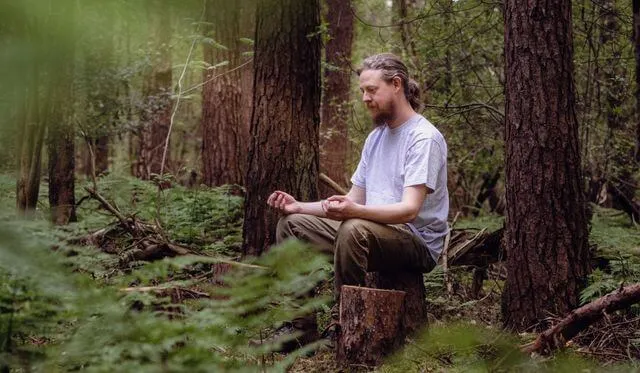
Kristof Lambregts is a yoga teacher and professional sound healer with a strong focus on breath awareness, nervous system regulation, and deep relaxation. His work is rooted in a holistic approach that integrates breath, sound, and embodied awareness. Earlier in his life, Kristof experienced chronic hyperventilation as a result of prolonged stress. Through consistent yoga practice and the study of pranayama, the yogic science of breath regulation, his breathing gradually became calmer, deeper, and more balanced, and the symptoms of hyperventilation disappeared over time. This personal experience strongly informs his teaching approach. Kristof combines breathing practices inspired by pranayama with sound healing, using the vibrational qualities of instruments such as singing bowls to support relaxation and nervous system balance. His teaching style is gentle, accessible, and grounded in direct experience, offering practical tools that can be integrated into daily life.