Hi,
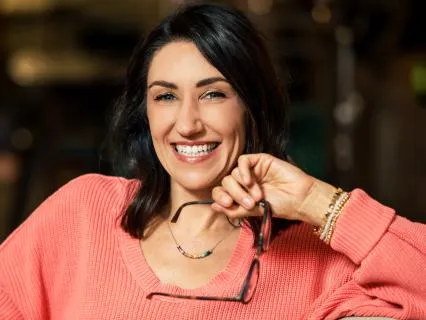
I'm Cori,
And I'm a late diagnosed ADHD therapist.
If you're here,
There's a good chance you found out about autism and neurodivergence the way a lot of adults do right now.
On your phone,
Some stranger on social media described their sensory stuff.
Or maybe their social hangover.
Or maybe even the way that they rehearse a phone call five times before they dial.
And maybe you sat there thinking,
Wait,
That's me.
Why is that me?
That's how many people are finding their way here.
Social media showed people what autism looks like from the inside years before most clinical training caught up.
And then a lot of people went looking for answers and hit a wall.
If that's you.
Maybe you took a standardized test.
Online or in an office,
And maybe it came back inconclusive.
A lot of those tests were built around the same outdated picture of autism,
But they frequently missed the nuance of someone who spent years learning to hide.
But maybe you finally did bring it to a provider,
Maybe a doctor,
Maybe a therapist,
Maybe a psychologist.
And for a lot of us,
We were told you couldn't possibly be autistic.
Maybe they pointed out that you make appropriate eye contact or that you have friends.
Or that you're married.
You have a job.
You're dressed well.
You're too social,
Too funny.
Maybe even too successful.
Unfortunately,
A lot of providers haven't updated their training on autism in many,
Many years.
Some haven't received new information since the 80s or 90s.
High-masking autism is often what's showing up in adults in my office.
And if your provider doesn't know anything about high-masking autism,
They're likely comparing you to a picture of autism that was outdated before you walked in the door.
If that happened to you,
I'm really sorry.
It happened to me too.
It's a really lonely place to be when you want answers.
You know something about yourself and the person who's supposed to be helping.
Says that it can't be.
Here's where I come in.
As a therapist with this specific specialization,
I sit with high-masking autistic people all day.
I assess them.
I work with them.
And I train other clinicians to understand them.
And I'm also one of them.
I was diagnosed as ADHD in my late 30s.
So I have the tools to help you understand what you're looking at,
And maybe this will make your life a little bit easier.
Maybe it might help you find the right provider.
One who actually gets it.
Or maybe it'll help you recognize yourself clearly enough to self-diagnose,
And that's a completely valid place to land,
Too.
Over this 10-part series,
We're going through the diagnostic criteria together,
One criterion at a time.
I'll tell you what it says in the DSM-5.
And then I'll tell you what it looks like from the inside,
Especially if you learned early in your life to hide it.
Stuff you haven't yet heard about high-masking autism.
So just get comfortable however you need to.
Eyes open.
Eyes closed.
If you'd like to paste.
Go for it.
If you're fidgeting,
Me too.
If you're doing the dishes,
Putting away laundry,
Or sitting in bed,
All of that works for me.
The comfier you are,
The more you're likely to take in.
Let's start with where these criteria come from.
The diagnostic criteria for autism in the United States comes from the DSM-5.
This version came out in 2013.
There was a small update in 2022.
But the core of this diagnosis is that we're a decade old.
And the research it was built on is far older than that.
Most of it came from studies on young white boys.
In clinical and institutional settings.
Most women.
Most girls.
Most gender diverse people.
Most people of color.
And most people who learn to hide.
We've all spent our lives being measured against a standard that was never built for us.
And for the people that I just mentioned.
We were barely studied at all until very recently.
And so a lot of us got missed.
Where we got diagnosed with several other things first.
Maybe anxiety.
Maybe depression.
Maybe even borderline.
We might be told that we're treatment resistant.
We might be told that we're not doing what we need to do to be successful in therapy.
And some of us were in treatment for other things that are commonly comorbid with autism and ADHD.
Like addiction.
Eating disorders.
And OCD.
Does any of that sound familiar to you?
Now let's talk about the language.
The DSM describes autism almost entirely in terms of what's wrong.
Even the title,
Autism Spectrum Disorder,
Presents autism.
In deficit-based language.
Calling autism a disorder.
Is still an opinion.
This is an opinion that many clinicians don't share.
The language that's used about autism in the DSM.
Talks about deficits.
It uses the word abnormal.
It says things like failure to initiate.
And other very negative language.
Some say that this criteria is what autism looks like from the outside.
The way a neurotypical person would experience an autistic person if they only paid attention to the behaviors that they don't understand.
Every criterion is about something that's missing or broken in the autistic person.
That language shapes you.
If you grew up hearing yourself described in terms of deficits.
You would learn to see yourself as deficient.
And that framing comes from one direction only.
And that's the neurotypical people or non-autistic people,
Watching autistic people from the outside.
Writing down and studying what looks different.
It doesn't actually describe what it feels like to be autistic.
It doesn't ask what a behavior is doing for the autistic person.
Or what needs its meeting for them.
So you and I are going to tackle those questions instead.
Here's one of the most important ideas in autism research right now.
It's called the Double Empathy Problem,
And it comes from an autistic researcher named Damian Melton.
The idea is pretty straightforward.
When two people who experience the world differently try to communicate.
The breakdown belongs to both of those people.
Neurotypical people are just as hard to read for autistic people.
As autistic people are to neurotypical people.
But because neurotypical communication is treated as the default,
Only one side of this communication gets called a deficit.
And here's the part that I really love.
Autistic people tend to communicate really well with other autistic people.
Easily.
Naturally,
Deeply.
That's what a different language looks like.
You will not find the double empathy problem in DSM.
But in all my years of working with other autistic people,
You will find that they report a sense of ease when they communicate with other people that think like them.
They report quickly connecting with other autistic people.
They often report a sense of safety.
And a feeling that their nervous system took a deep breath.
When they connected with someone.
Who communicated and interacted like they do.
The research doesn't need to confirm this for it to be true.
It's happening all around you.
This is also the reason why many neurodivergent people don't realize they're neurodivergent,
Because the majority of the people around them,
Often their family,
Because of genetics,
And their friends,
Because these are the people they connect with.
Show up just like them.
Their friends and family may be neurodivergent as well,
But show up with different traits.
No two neurodivergent people look exactly the same.
Now let's talk about masking.
Masking is hiding or replacing autistic traits with ones that look more neurotypical.
Sometimes people do it on purpose.
And sometimes people have done it for so long that they don't even know that they're doing it.
It's incredibly common,
Especially in women,
Girls,
And gender diverse people.
And it's exhausting to the autistic or neurodivergent person.
Masking is linked to much higher rates of anxiety,
Depression,
And burnout,
Specifically autistic burnout,
Which is different than the generic concept of burnout.
But when we talk about unmasking,
We have to keep in mind that it's frequently unsafe for most autistic people to just unmask.
We mask to show up in the way that people expect.
We mask to fit in.
We mask to push down the autistic traits that people find annoying.
Irritating.
Or inappropriate.
And most of us have been masking since before we can remember.
So if a clinician tasked with assessing you is only looking at your surface behavior,
And you're really good at masking like most of us are,
They'll see almost nothing.
Meanwhile.
.
.
You might be working really hard to show up like that.
Lots of adults have also spent decades building their lives around needs they didn't understand.
Choosing jobs.
Homes and people carefully.
Avoiding the situations they can't handle.
And by the time they get assessed.
The visible signs are buried.
The autism is still there.
It always will be.
This is how you're wired.
This is how you're built.
But you've been working really hard for as long as you can remember.
To make it less visible to everyone else.
One final thing.
In order to get diagnosed,
You need to show what's called clinically significant impairment.
And this is a concept that gets misunderstood by clinicians all the time.
What that phrase is really measuring is unaccommodated autism.
That means what does it look like when an autistic nervous system has to function somewhere that doesn't meet its needs?
So if you have soft clothes.
Safe food.
Quiet.
A predictable routine.
Chance to clear your head.
Maybe a dog at your feet.
And maybe certain ways that you need to get your work done.
You'll probably look like you're doing okay.
You might even look like you're thriving.
But that doesn't mean you're not autistic.
It means you're accommodated and autistic.
Accommodation doesn't remove autism.
It removes some of the suffering that comes from the mismatch of being in a neurotypical world.
What changes when you're accommodated is how much harm you're being asked to absorb.
Before we go,
Here's something I'd like you to take into the rest of this series.
No single trait makes someone autistic.
There are many,
Many autistic traits that show up.
At the opposite ends of the same spectrum.
Some autistic people might talk a lot.
They might present as extremely extroverted.
While other autistic people might be very shy.
Or person of very few words.
Both are autistic.
Sometimes the same person is incredibly outgoing in certain comfortable,
Safe situations.
And can be totally shut down and quiet,
Maybe even unable to speak in others that are more overwhelming.
All of those traits are present in autistic people.
What we're looking for when we assess is a pattern.
Almost like a constellation.
Even when some of the stars are dim or hidden or arranged differently than the textbook said they would be.
Think for a moment about your own presentation.
What are some of the traits that might be present for you?
Think about the traits in yourself.
That you might wonder.
They're related to neurodivergence.
Think about some of the things that people have told you about yourself when you were younger.
Think about areas where you may have been told that you're too much.
Maybe the way you communicate or the way you interact with your interests.
Or the way you talk.
Or the way you show up.
We're not going to do anything with those thoughts.
Just keep them nearby.
We might find out where it fits somewhere in this series.
In part two,
We'll start with the first criterion,
How autistic people connect.
I can't wait to see you there.