The ego is not your enemy.
It is your most intimate stranger,
The part of you that you mistake for the whole.
Understanding its anatomy is the first step toward freedom,
Not freedom from the ego,
But freedom from the belief that that is who you are.
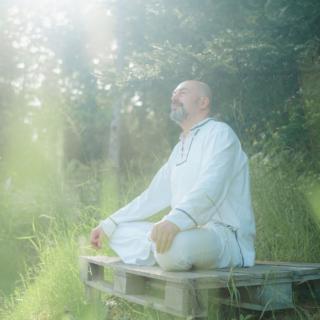
Claude Vaduva has spent years studying this architecture through the lens of yoga,
Psychology,
Buddhist practices,
And also his own inner exploration.
In his workshops,
He teaches people how to see the ego's components very clearly,
Not to destroy them,
But just to stop being run by them.
And our intention with this episode is to take those teachings to the microphone and to you.
Claude,
Welcome to this episode.
It's going to be very interesting to have that conversation with you.
Yes,
For me it's always very interesting,
This topic.
Let's just start with the beginning.
What is the ego?
What is the ego or why is the ego?
And why are we having this conversation?
These are very important topics.
We can say that the ego is a conglomerate,
An aggregate of patterns.
Which together with a feeling of we can say of I am-ness,
Of identification.
Of ownership of these patterns,
A sense of me that exists there,
It brings a feeling of identification,
A feeling of of a persona.
A feeling that is something here which is me That is.
.
.
An image,
A pattern.
Of behavior,
Pattern of emotional thinking,
Of beliefs.
And we take all of these things to be a me,
A personal me.
From a spiritual perspective we can call it a personal consciousness,
A personal consciousness,
A consciousness that is of a personal type.
A consciousness that is necessarily separate because the ego is an individual,
It's an individual consciousness.
A consciousness that believes to be separate from everything else.
And the reason why I said,
Why is the ego or why are we having this conversation?
Is.
.
.
Because.
Actually,
I consider the ego to be.
.
.
Quite an amazing.
Expression a miracle of life something that is very beautiful if you look at anything as a work of art or work of beauty or a mastery of anything,
The ego is absolutely incredible,
Beautiful.
In the same time.
When we remain unknowingly.
Only at the level of.
Understanding life.
And who we are from the perspective of the ego.
Then in that moment our.
.
.
Connection with life is limited.
There are still many miracles and many,
Many beautiful things that exist there,
But a particular connection,
A specific connection with the depth of our being,
With an essence of this reality,
Is automatically,
To the perspective of the ego,
Separated.
So if there's any spiritual insight or depth,
From the perspective of the ego it's just an idea,
It's a concept.
It's the conceptual understanding.
Of the spiritual.
Reality.
Through the ego is an act of separation.
Is that the reason why there is a saying of let the ego die,
The death of the ego?
Yes,
We often speak about the death of the ego on the spiritual path.
And actually the only thing we can speak about,
We can speak about a transformation of the ego,
In these particular patterns that are flowing in certain ways,
What would be called the samskaras.
Samskaras are very interestingly described in the yogic psychology because they are qualities and elements of our being.
Which are.
I would call them maybe analog.
You don't think.
About how to respond to something.
It's immediate.
They are described as almost like channels of water.
So imagine like a river bed.
And when it rains,
Then the water,
How should the water flow?
From the top of the of the hill,
Of the mountain,
To the bottom.
There's a gravity to it.
So in general.
.
.
Through that rain,
Through those conditions that appear there,
Through that impetus that exists for the rain to go down and the movement through that triggers that exists there.
And the water goes and it finds a particular pathway in your being,
A response.
That pathway could be something we learn from our parents,
Our society,
And so on.
And.
The repetition of this creates the sanskara.
That riverbed,
That channel.
And the thing is that it's always,
It's like an analog response.
Trigger appears as soon as the condition arrives.
And the energy exists there,
We unconsciously allow that energy,
That thought,
That emotion to flow in that particular way.
This is the analog response to that situation.
So imagine a myriad of connections like this related to the many possible situations that exist out there.
We would have this incredible complexity of patterns.
In the yogic tradition,
They also speak about vasanas.
The vasanas are general tendencies.
The samskaras are the particular riverbed.
The vāsanā would be the fact that there's a mountain or there's like a hill here.
So to give you an example,
You may have the tendency to be fiery.
About something,
You know,
Just in general,
You are a fiery person.
But the particular response they have to a particular situation.
You happen within the realm of being fiery,
Let's say like this,
But that particular response is something that starts to develop or express according to the vasana.
The hill is the fire nest so whenever the situation arises the water falls on the top of this hill and the water will go down on this hill so you follow these tendencies but the specific way you express that fire it could be unique or it could be specific to you or what you say to you to this soul in this lifetime you know so I may become angry,
Or frustrated,
Or cutting,
Or efficient about something,
Or whatever that firing is,
Or I become more ambitious,
Or I may bring a particular quality of taking charge or control of a situation,
Or directing a particular quality of power related to it.
So you see how you respond to a situation.
You challenge it,
But in a particular way,
And try to resolve it through that.
Tendency of fireness you see.
So we have all these complexes.
We can call the ego.
The superimposed ideas related to the different koshas,
To the different layers that the yogis speak about,
Different bodies,
Different koshas,
Different layers,
The physical,
The energetic,
The pranic,
The pranamaya kosha,
Anamaya kosha,
Pranamaya kosha.
The we can say emotional Manomayakosha,
Including the senses,
Dignanamayakosha,
The higher mental body,
The conceptual body.
The question said that we can ask ourselves,
Related to the ego to the death of the ego is Are we killing these responses?
Are we killing these tendencies?
Are we killing this,
When we say kill the ego?
How we.
We are trying to become non-reactive,
We are trying to become non-responsive to things.
What is the thing that we are actually doing?
So we can speak about two movements.
One movement is we can learn to transform the ego.
So when the impetus arises,
When the trigger arises,
Then instead of following in the fiery or unfrustrated kind of way,
Let's change,
Let me become.
Let me hold that response a little bit.
Let me find another pathway.
Now let me.
.
.
Challenge that situation or address the situation.
I'm still fiery because it's my nature,
But maybe I address it in a different way,
You know,
So it's like,
Let's sit down,
Let's find a solution to this,
Let's work through this,
You know,
So instead of me being frustrated or judgmental and so on.
But the other movement is not a transformation of the ego.
By the removal of the identification data.
Which becomes the spiritual movement.
The spiritual movement contains both purification of the ego allows the capacity.
For the ego,
The mind,
To become more transparent.
So becoming a generous person,
Becoming a person that is compassionate,
That is loving,
That is kind.
Yes,
All of these things support the transparency of the ego.
It brings less grasping and self-reiteration of the ego.
In Patanjali Yoga Sutras they call this some positive samskaras,
Some samskaras that you can use like becoming more loving to spiral.
Out of your ego.
So if you bring love and compassion in your life,
Then you have the possibility to spiral.
Out of the identification with the ego.
But if you bring grasping and hatred and judging.
Then you tend to reiterate.
Yes,
This negative.
Subscribers' negative tendencies.
And.
Positive or negative.
Of course,
The passive sanskaras support the purification of the ego,
Which could be a spiritual movement of purification.
And then there is the awakening from the identification with the ego,
Which is actually the true spiritual movement.
So the spiritual path is not about.
.
.
Purifying the ego.
Is an approach to awakening from the identification of the evil.
Or we can say the expression of the spiritual path is not necessarily that you now become a good human being into the world and help others.
That is a natural unfolding of awakening from the identification with the ego.
Want this.
Awakening from the identification of the ego mean?
What do you think it means?
That's a good question.
I was actually wondering because you were talking about positive and negative and the example of I'm a good person,
I'm a kind person.
There also can be ego with that.
Yes,
Definitely.
So how do you distinguish,
How do you make the distinction and what are the subtleties behind the identification with the ego when it comes to that?
Yes so first of all let's clarify a positive samskara doesn't refer to a moral thing good bad right wrong it refers to things which can have the tendency the possibility to take you out of identification with the mind yes so not positive in that good bad kind of way So there is quite technical,
You know,
Very scientifically,
Spiritually scientific,
If you want to call it.
Yes.
But it turns out,
Indeed,
That what we consider morally positive,
You know,
Ethically positive,
Tends to be also connected to positive samskaras.
I'm not making a one-to-one correlation,
But it's being kind.
And being generous.
Being compassionate,
Being forgiving,
Being gentle.
They tend to be Or we can say.
.
.
Some divine or spiritual qualities.
That are expressing to the human being.
When the human being is more transparent.
They are naturally here.
Because you have this intuition of this depth,
You see.
So the ego whose main concern is the fear of survival starts from this need to survive,
To exist,
To survive.
And there's a fear of death,
The fear of survival is there.
And in that moment when you have that intuition of that reality.
Which is beyond the ego.
Then also that need to survive in an individual way,
In a separate way.
Also starts to become more transparent,
Starts to release a little bit.
Or a lot.
And because of this you can be generous.
Sorry for that.
You be greedy.
You could be greedy.
It's like,
I don't have enough,
Let's get from me,
It's important for me.
Because you love yourself and you love the ego.
You love you who you are that sense of not egoism but this self-centered approach let me do the best for me let's support this because this is what I know this is who I am this is what life is so you can be greedy and generosity only comes when you feel like very secure and you have so much and but others they have an intuition.
That even if I don't have enough,
I can still be generous because I have a trust.
Or there's an intuition,
There's a transparency,
That there's something more than this.
So.
Being a good person.
You can still be very much identified with the ego.
It's just you are living a life that is somewhat different.
More transparent,
More available.
To to this maybe divine radiance through the mind,
Through the emotions.
The samarasa resonating having the same taste,
Sama rasa,
Same taste as the divine.
Having the same taste,
Resonating with divine qualities.
Now the.
Freedom from the identification of the ego doesn't require necessarily that you transform the ego.
It just requires that you wake up from the belief,
From the veil.
From that.
Self-reiterating idea,
Vision,
Or perspective that I am separated from.
And how do you do that in the practical?
How do you start to separate from your ego and dis-identify to it?
You want to know.
We said that we would bring the teachings of the workshop to this podcast,
So I think I'm not the only one that wants to know.
But yeah,
Of course I want to know.
The shortest way,
You know?
That is the big question.
That is the spiritual path.
Um.
.
.
Yes,
It is a very interesting topic,
Actually.
First of all,
Do you want to do that?
Yes?
So there are some interesting questions that arise there.
Are you truly,
Truly interested in wanting to do that?
And even if you do it as an experiment,
Let's say that you do.
A 10-day retreat.
Let's attend the silent Hidaya retreat about the spiritual heart.
Are you willing in that 10-day silent retreat?
To experiment with this.
Surrendering and giving up.
The personal identity,
But completely.
Which means like,
Am I willing to let go of everything that I invested myself in,
Including my opinions,
My point of view,
My perspective,
My sense of entitlement,
The things that I know that are right and wrong.
Of course,
You have to do this with discernment,
And you have to do this in a place that is safe,
In a place that you can trust,
That you can take your ego back.
After this you know but it'll be an amazing experiment to do that you know it can be very scary also because if you leave everything that you know then what is what is left it feels like death it feels like um It's like everything that you invested yourself into to survive,
Your image of yourself,
Your opinions,
Who you are,
How you should respond to things,
Everything that has meaning in your life,
Including your need to help others,
Your messianic compulsion.
To be good and change the world and save everyone,
Which brings meaning to many people's lives.
But everything.
.
.
Now it's rendered for a little bit of time So how to do this maybe 10 day retreat is a long one,
But how about try for a day or for one hour,
For two hours to do this,
You see.
How do you do this?
In the old tradition,
Uh ancient tradition.
From the East,
And not only the East actually,
It spontaneously appeared in the West in many traditions,
They have this practice of self-inquiry.
Which is called Atma Vichara,
The inquiry into the essence of the Self.
And is the one that at Ayurvedic Yoga we are very much using as a very foundational practice even during the Hatha Yoga,
The yogic path of the Hatha Yoga and through all the teachings in the retreat.
And it is.
Just this simple question,
Who am I?
Who am I?
But it is a question that comes from that.
Foundational.
Desire and longing.
To experience what it feels like.
To be free from the.
.
.
What remains if you illuminate everything?
So.
We can say.
A simpler beginner practice is not 100%.
We can say atma vichara,
The self-inquiry.
But you'd be this netty-netty.
They start to become aware of my ego and let it go.
So you can ask the question,
Who am I?
It's like,
Well,
My name is Cloud.
Car with you it's like oh.
Okay,
How about.
.
.
Are you your name?
Yes or no?
Even in a contemplative way,
Yes,
You can start.
To look at the things that you are and that you are not.
And it's important to understand these aspects.
Why?
Because you.
.
.
Again.
Know when they appear in your meditation.
In your life.
Because you are familiar with them,
You know.
Do not cherish them,
You know to let them go,
You know to surrender them.
So imagine right now.
That you say to yourself.
I'm starting to clarify to myself I'm not my name.
And I'm not my story.
And I haven't yet had the experience.
But it has been told to me by those who have been there that I'm not even this physical body.
I'm not only this physical body.
And my identification with this physical body is the only thing that I am.
Seems to not be true according to the sages.
So now you contemplated on these things.
How would you live life?
How are you going to view yourself?
How are you going to invest yourself in your image or in your name?
Or even in this physical body.
Now it doesn't mean to push your name away or your story to deny it or the physical body,
But your relationship with them are different.
Whereas before this physical body was the very source of who you are in your existence and became your sacred temple,
When you start to.
Awaken!
And you start to recognize or to choose to experiment.
Because different beings are a different place in the exploration.
You will start to awaken instead of to the journey of the body.
This expression of this physical body.
As a physical entity in this physical domain,
You start to awaken to the journey of the soul.
You start to look at other things.
Where it does.
My identity.
Sit.
Where do I sit?
To where do I write?
What is the essence?
Of me that I rest into.
And when,
So there's this mapping of who I am,
Who I'm not,
This neti neti.
When you start to touch this deeper looking into the essence,
Then you start to enter into that true atma vichara.
So you're no longer contemplating with the mind.
Is no longer a discursive process of contemplation.
Now you start to look directly.
So if I ask you,
Who are you?
And don't answer anything.
Don't answer.
With your mind,
With your concepts.
But try to know.
Try to feel,
Don't know based on your story.
Don't know based on your name.
Try to know,
Of course,
Experientially,
This is.
Try to be the essence of who you are.
So I can ask you or I can ask the audience this question.
Where are you hearing these words right now?
Who is hearing these words?
Is it your name?
Your story?
Your body,
You may get stuck to say my ears are hearing,
My brain hears,
But where in your body,
In your brain,
Where is the sense of me?
What is the sense of me,
Of I,
The sense of I am?
And once you start to go deeper.
Into this investigation in a live way.
Then remember that original question that we started to say,
If you want,
If you're interested in surrendering your ego,
At that time it was a conceptual thing.
Oh yeah,
I'm interested in seeing what does the loss of identification of the ego comes.
Now,
When we start to come into this light wave,
Now it becomes a fascination,
A curiosity,
A mystery.
Wait a minute.
But who am I really?
Where am I hearing these words from?
Like Rumi has that poem that was translated by Colman Barks.
He says,
Who says words with my mouth?
Who hears?
Who hears with this ear?
Who am I?
What is the soul?
And there's that fascination that is there.
If I can taste one sip of this answer,
I can get out of this prison for drunks.
I can get out of this prison.
For drugs,
Anything.
Drunks could mean anything.
Here could mean even people that are in bliss,
Even people that are having an amazing life.
For people who are.
Unaware maybe but I can get out of this place where I don't feel Like now I'm starting to wake up.
That becomes somehow the divine grace.
That mystery.
What is it?
Who am I?
What is my life about?
Interestingly enough.
Um.
.
.
Our God.
For.
Most human beings is the ego.
Why so?
Because everything we do is in the name.
Awesome.
Even when you judge yourself,
You do it so you can improve.
You because you love you.
But I feel it's a very thin balance.
And it also goes to the question,
When does it stop?
Because let's imagine.
You work with that question,
Who am I?
You detach from a bunch of layers of identities,
Beliefs,
Your physical body also,
And you touch upon something that goes really deeper,
Like an essence,
A purpose.
Does it stop there?
Is there a moment that you can just state,
I am.
.
.
This,
My purpose is this,
Or is that also ego?
Does that ever stop?
Yes,
It's a very good question.
So.
This letting go of the identification of the various egos could be something that happens through repetition.
So it seems like it's a journey through time.
So I'm more detached from my mind,
From my opinions.
How are you now after five years,
Ten years?
I'm more transparent.
But in reality,
It's always something that happens in the present moment,
Or a diving that happens.
So in a particular session of meditation,
Of contemplation,
Then this surrender happens in the present moment.
That release of that layer is that longing that calls you towards that depth.
And eventually what you come to rest to through your own personal efforts.
Is to come.
To the foundation of the ego,
Which is the I am feeling.
This feeling of existing in a separate way.
I exist,
I am,
And I feel that I exist,
This sense of existence.
But that feeling of I am,
The feeling of I exist,
Is a part of,
There is a personal sense that is there.
And because of this,
I am and I exist.
Everything that happens in our life becomes the story.
Of who we are.
Because actually a thought that appears in your mind is just a thought that appears.
But there is a quality of the ego we can call it maybe the vanity of the ego,
The specialness.
But because I thought appear and because I'm special,
And are you special?
Of course you are.
Yes,
I am.
It's very sacred.
It's something very beautiful.
It's quite a miracle.
So,
Because of that beauty of the Siam,
Because of this miracle of the Siam,
Because of this sacredness of the Siam.
.
.
But we don't look at those things,
It's just an intuitive knowingness of that.
Because of this magic of this I am,
When a thought appears,
Because of this specialness of I am,
Now this has become my thought.
My thought and because it's my thought that quality of the vanity of the ego the specialness appears because it's mine and it is important then I'm gonna try to portray it to others then I make it my opinion and then the story starts to build upon this.
So it seems that it's more about how we react when the ego is playing and how we respond when the ego,
More reactant,
When the ego is playing.
Yes,
If you start to wake up more to this feeling of I am and resting into it,
If you start to recognize when a thought appears or an emotion or any of the samskaras of patterns in a more detached,
In a more spacious way,
In a more simple way,
Or we can shift the quality from mental,
Emotional things to a quality of being.
I'm resting into a sense of presence or witnessing.
Then,
In this moment,
We start to become free.
From the baggage,
We can call it,
Or from the story,
Or from the complex,
From the aggregate of the ego.
Yet their sense of I am-ness still remains as a separateness.
And now to get back to your question,
Is there ever a stop to this?
Yes.
Really?
That is interesting.
When does it stop?
It stops,
Well in the spiritual tradition they would say I say they would say.
It turns out to be experiential.
And repeat it again and again is that an act of grace of spiritual grace,
Of divine grace arises.
Were even this sense of separateness.
Existence dissolves.
If you remain constantly into the feeling of I am.
You can or you are on a bridge.
We can say,
Like this,
Maybe it can be described in a wiser way,
And then on one side of the bridge you can see ego,
Life,
Interest,
And everything that is personal.
And then on this other side.
On this other side.
You start.
To perceive.
Taste have the intuition.
Of the spirit of the freedom of that.
Which is still existence but in a non-individual way.
So remaining in this I am feeling,
You can look still towards life and be more free from it,
Which is wonderful.
Spiritual.
Purification,
Progression,
Depth,
Beauty,
Whatever.
Life becomes a miracle.
Peace is there,
So a lot of beautiful things happen.
You can also be.
And a deeper what Ramana Maharishi called antarmukha,
Inner looking,
In you facing God.
You are having that devotional longing and love for the solution.
And this is the true question of non-existence as the ego.
So you say,
Can I ever be free from the ego?
And the answer is no.
Because you cannot be free from the ego.
When the you disappears,
Who is free from what,
You see?
But the event.
.
.
Of the disidentification.
From the ego,
The spirit as the ego,
That veil could arise as an act of grace.
And especially when that burning and that longing and that devotion and that surrender towards that union.
So it's almost like an act of death we can call it like this conscious death where we say I And.
Available.
I am willing to surrender.
My deepest,
Most sacred existence.
Even as this individual,
I'm willing to die,
I'm willing to dissolve.
Into that.
Divine reality into that spirit into that spirit which is which I already started to intuit,
To feel,
That thing that I feel,
That deep.
.
.
Formless love,
A deep formless existence,
That deep formless bliss and peace,
That deep stillness,
That deep deep infinite boundless silence.
I'm willing to become it and to be nothing,
To be no one.
Sometimes it spontaneously arises.
Even when the devotion is not there.
Sometimes when you take some plant medicine,
It could appear.
I heard LSD,
I never tried.
So some experiences sound very much like this.
But it's triggered by something.
It's different than a person.
It still leaves an imprint,
But it's triggered by something.
And it's very different when it becomes a willingness,
An availability,
A surrender.
Into.
That even then that experience can remain within and then a kind of karmic like a momentum of the personal identification can bring you back.
So a repetition of this again and again can create a stability and deepens the significance.
Could be that single dip.
Already brings a significance that can never ever truly be erased,
Not in a conceptual way,
In a direct way.
And that significance becomes the transformer and the changer.
Life who is nobody's life anymore in the same way or It's minimally my life.
Or social in my life.
But also is not.
What would you say then about authenticity?
Can we be authentic if there are still layers of ego that are playing in our lives?
Yes.
There are two paths related to uh not two paths i can i can think of two ways to answer this question one of them is these are particular authentic what we consider authentic aspects of ourselves which are in the realm of negative samskaras So if you just follow your own authenticity as what you think your authenticity is,
You know,
Just like eat ice cream,
Chill out,
Have pizza,
Do the good stuff,
You know,
Magic world.
Yes.
Then in that moment,
In that moment you can very much be trapped into the repetition and reiteration of the ego patterns and what not.
So.
However,
I want to bring a different quality of an authenticity.
Which is a deep authenticity that I would call the authenticity of the heart.
How do you connect in an intimate way?
To something that is sacred.
We can even say this,
I am feeling.
Is the very expression of god of the spirit within the human being and the first step that he takes is I am I am here that's why we love the ego because we have that spiritual intuition that this is the supreme reality you see so here this I am or so sacred because it's the very vibration of the divine reality starts to express its karmic movements.
Through this human life.
You see,
It starts to blossom.
It's just like,
Build a house,
Do this,
Get married,
Have children.
You know,
So these very alive movements are here.
But this,
They travel,
Ramana Maharishi was expressing through this atma,
Nadi,
They travel to the mind and now the mind takes these impulses of happiness and joy and fulfillment and dharma.
We can call it the dharma,
The what should you do with this life.
And he starts to make strategies.
So now we start to approach life in a strategic way.
And as soon as we enter in the strategic life,
Then we also look to other people's strategies,
Society's strategies,
What makes me happy strategies,
And we remain somehow in this domain.
So sometimes you can feel alienated.
So of course the body may want to eat pizza or whatever feels good for the body,
You know?
But that is a relative authenticity.
Why do you want to eat pizza?
Because you want to feel relaxed,
Safe,
Fulfilled.
You want to feel that hole of hunger,
Or that emotional,
Because you want peace,
You see.
Because you secretly want that peace,
That resting,
Which is a deep authenticity.
So now you start to look and the deep authenticity of your being,
Even as a human being.
Who is not interested in a spiritual endeavor.
You start to rest in this alive movement of the heart.
And let go so much of the strategies.
The strategies must be connected with the felt alive.
Feeling within your being and ask soon.
As this starts to move.
That connection starts to appear there.
You need to contemplate,
Feel it.
Understand why are you doing what,
Feel it to something that is alive.
Then you start to connect.
To this very sacredness that expresses through your being.
That,
I consider,
It's a wonderful and very direct path,
A wonderful way to live as a human being,
And a very direct path that leads you to the mystery,
That leads you to the spiritual path.
Because eventually.
.
.
Even the sacredness that is here is actually a pointer towards union,
Towards peace.
Towards freedom,
Towards recognition,
Towards wanting to remembering that,
That we were.
But maybe you're not in touch with that,
But maybe.
.
.
Something else feels alive.
I want to be creative.
I want to enter into this project.
I want to have this enthusiasm and chaos with God movement that exists there,
You see.
The Sakhidaya,
Like we'll call it in Hridaya yoga.
She ain't.
This movement with the heart,
You see,
And you start to live there,
That can only go deeper and deeper.
So what should I do as a human being?
Live your deepest authenticity,
But not just at the level of strategies.
But at a level.
Of deep connection something that you feel the joy of doing something,
You know,
The joy of baking a cake.
Why?
Just.
.
.
I don't know why,
It's just.
.
.
Feels like alive right now.
They shouldn't be confused with just running around and do anything that you want because it's also the path of effort,
Of curbing different samskaras and patterns that exist within you so they don't keep you trapped in patterns that are detrimental.
So it should be something that awakens deep love,
Compassion for others,
Wanting the joy.
Bliss,
The miracle of this life,
The beauty of existence,
Wanting to connect with others,
To support life,
To look at sunsets,
To smell the flowers.
And this starts to move your life.
And does it matter if you have the job that pays a lot or if you live in a field,
In a tent.
Or you start to build a farm.
It's like this matters more,
This aliveness,
This connection,
Than any material gains.
That you can have.
Unless those material gains are something that are very alive for you,
This is what you want.
You want to build an empire.
As long as it's alive,
Then follow that for some time.
It feels like asking ourselves the question why,
Why we do what we do,
And why we do that specific thing,
Going for pizza,
Or even doing a certain job,
Or resting,
But asking ourselves why is a pathway to open some doors.
Yeah openness and really reflection on what is driving yes why is like a spiral It starts to go deeper.
So it's not a surface swipe.
Why?
Okay,
Let's go deeper.
What really is moving me?
What?
And that why?
At some point becomes,
Who am I?
You know,
Who wants pizza?
Like,
Why do I want pizza?
But,
Ooh.
Which comes back to the witnessing.
We haven't spoken so much about witnessing,
But yes.
Yes so at one point asking the question who am i as the different layers and aspects starts to dissolve you can start to see what remains.
And at some point,
This I am feeling remains.
In special moments of naturalness or in special moments of meditation.
Even this.
Dissolves.
Even the union,
The I am feeling,
Dissolves.
And what remains?
The sense of presence,
Awareness,
Existence,
And the recognition of existence,
Awareness,
Existence,
Consciousness,
Which feels very blissful,
Very peaceful.
They call it the Sat Chit Ananda,
Pure existence,
Pure awareness,
Consciousness,
Pure bliss.
But when that remains,
Or it's witnessed,
Or witnesses itself,
Or recognizes itself through its own being,
A self-effulgent recognition.
Even when you get pulled back into the human consciousness,
Behind the veil of the ego.
That remains like a blessing.
Into the mind,
Into the ego,
Into the emotions.
It's like a song.
It's like a song,
A sweet song that starts to transform everything and brings honey and.
.
.
Transformation.
It may be not always pleasant as the ego starts to shift because two movements start to happen within.
Might not be pleasant because we are grasping because.
The things that we are,
Our personality starts to erode.
But that is always sweet.
You see,
It's always sweet and loving.
And clear and undeniable.
It's a beautiful way to say it.
Thank you for sharing those perspectives.
If there was a last contemplation,
Question that you would leave our audience with concerning the ego,
What would it be?
Thank you very much for this question.
I would say.
Because the audience or anyone can be at a different level of understanding.
On the journey.
But I feel a very important shift that can happen in one's life.
Can be change from the journey of the ego in this lifetime.
To an inner living.
An inner living.
And a recognition of the journey of the soul.
And that is a sufficient shift.
For the beginner,
To continue this inner conversation.
What is my soul?
What is this movement of the soul in this lifetime,
In other lifetimes,
In all existence?
The beginner this would be a wonderful way because you already start to detach yourself from certain ideas and so on you start to look into that depth what is something within but also for the advanced practitioner or medium practitioner what starts to arise there is a stability a deep stability that starts to go towards the I am feeling so the journey of the soul resting in this feeling of I am Within this journey,
The question,
Within this movement,
The question who am I spontaneously arises in an alive,
Earnest way.
Not in a conceptual way because this is what meditation is and that's what has been taught or so-and-so said.
In a curious mysterious way because you are already in that self-inquiry,
In that movement.
When you start to awaken to this.
Journey of the soul which ultimately transcends,
Melts back into the very source.
On the soul,
Which is the self,
The spirit.
Thank you,
Claude.
Thank you so much for sharing your amazing insights on the topic.
Thank you.
Thank you.
It's a joy.