What if aging well was less about luck and more about what you know,
And more importantly,
What you do?
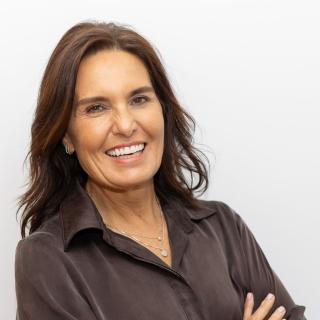
I'm Dr.
Linda Friedland,
And this is the Longevity Blueprint.
People often ask me what I believe is the single most powerful intervention for healthy aging.
They expect me to say exercise or nutrition or perhaps meditation because I speak about it so often.
They're usually surprised when I answer with one simple word.
Sleep.
I genuinely love to sleep.
At the end of a busy day,
I look forward to my little evening ritual,
A hot bath,
A warm drink.
Few pages on my Kindle,
Then lights out.
Like many women,
I went through a difficult period during early menopause.
When sleep became frustratingly elusive.
Thankfully,
Some adjustments help restore the deep restorative sleep I'd been missing.
Today,
I really try to protect my sleep.
It's a very powerful mechanism and modern science keeps reinforcing this.
For decades,
We thought sleep was simply a period when the body switched off.
There is so much more to sleep than simply rest.
When you sleep,
Your body and brain are incredibly busy.
Your immune system is strengthened.
Growth hormone?
Is released from the brain and repairs your muscles and tissues.
And your metabolism is recalibrated.
Your heart and your blood vessels recover from the demands of the day.
Emotions are processed.
Memories are organized.
And perhaps most remarkably of all,
Your brain begins its night shift.
One of the most exciting discoveries in neuroscience of the past decade is something called the glymphatic system with a G.
Glymphatic,
Think of it as your brain's overnight cleaning crew.
Throughout every day,
Normal brain activity produces waste products.
If these waste products accumulate over many decades,
They may contribute to neurodegenerative diseases,
Including dementia.
But during deep sleep,
For all of us,
Something extraordinary happens.
The spaces between brain cells actually expand,
Allowing fluid to wash through your brain and clear away much of this metabolic debris.
Including something called beta amyloid.
You may have heard of this,
One of the proteins linked to Alzheimer's disease.
In other words,
Every good night's sleep is a little like putting your brain through a cleaning cycle.
It's one of the reasons that scientists now see sleep as one of the foundations of brain longevity.
A really important thing to note is that it's the quality and the quantity.
We do need,
Most of us,
At least seven hours,
Preferably eight.
Throughout the night,
Your brain moves through different stages of sleep in beautifully coordinated cycles.
Slow wave sleep,
Deep sleep,
REM sleep.
Some stages repair your body,
Others consolidate memories,
And yet other stages regulate your emotions and your learning.
You need all of these stages.
Many people are choosing to track and measure sleep with smart watches or rings.
I do think they can be very useful.
I occasionally glance at my own sleep data along with what's my resting heart rate and what's called HRV,
Heart rate variability.
These can reveal interesting patterns.
But they're only one piece of the story.
And we should be mindful to not get over anxious about this data.
There's actually even a new term in sleep medicine called orthosomnia.
You might have heard of it.
It describes people who become so anxious about achieving the perfect sleep score,
That the anxiety itself begins disrupting their sleep.
I've certainly seen that happen.
Remember this,
You are much more than any of your sleep scores.
The goal isn't perfection.
The goal is restoration.
And recovery,
And as we spoke about the clearing pathways.
What happens as we grow older?
It becomes even more important because deep sleep naturally declines with age.
Men and women,
But for women particularly,
The menopause period of time can make sleep considerably more difficult.
Hormonal fluctuations,
Fectal sleep and poor sleep.
Affects almost everything we care about.
A memory,
Our mood.
Our metabolic pathways such as blood sugar,
Blood pressure,
Our appetite and immune function,
Exercise recovery,
Even the rate at which we age.
The encouraging news is that many of the best sleep interventions cost absolutely nothing.
Get outside into morning sunlight.
It stimulates your hormones and particularly melatonin and what's called your circadian rhythm.
Move your body every day.
Exercise is a vital part of creating a much deeper sleep cycle.
Build your muscle through strength training.
Try and keep a relatively consistent bedtime.
Limit or avoid alcohol,
Particularly at night.
Reduce caffeine later in the day.
Stop your caffeine by late morning.
Manage your stress through mindfulness and meditation.
Keep your bedroom not just dark and quiet,
But also cool.
It's far better to sleep in a cooler temperature.
Simple Habits with Powerful Biology.
I often remind people that longevity isn't built through one dramatic decision.
It's built through thousands of ordinary ones,
Repeated consistently over many years.
Sleep may be the best example of that.
Every single night you have the opportunity for your body to quietly repair,
Restore and prepare you for tomorrow.
So don't think of sleep as time lost.
Think of it as one of the foundations and one of the most important investments you're making in the health of your future self.
This is the Longevity Blueprint with Dr.
Linda.
Until next time,
Age boldly and live well.